

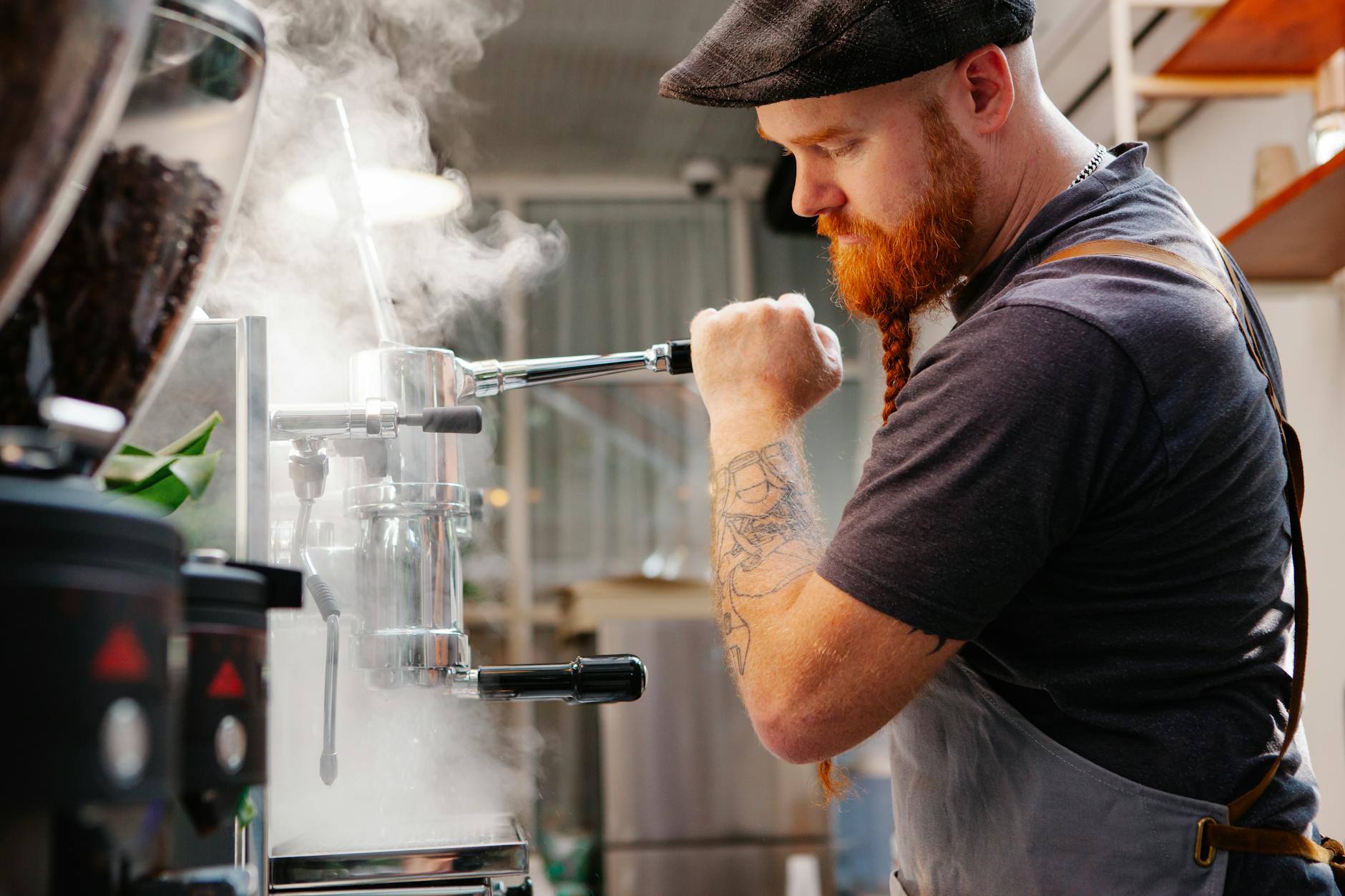
A barista’s guide to troubleshooting shot channeling on lever espresso machines
The allure of a lever espresso machine is undeniable. It promises a tactile connection to the coffee-making process and the potential for a truly exceptional shot, rich with crema and complex flavors. However, that potential can quickly turn to frustration when you witness the dreaded signs of channeling: erratic spurts from your bottomless portafilter and a thin, sour-tasting shot in the cup. This phenomenon, where water bypasses parts of the coffee puck by carving a path of least resistance, is the enemy of a good extraction. This guide is designed to help you systematically diagnose and solve channeling issues specific to lever machines. We will explore the entire process, from puck preparation to the nuanced art of the pull, transforming your frustrating shots into consistently delicious espresso.
What is channeling and why does it happen?
At its core, channeling is a problem of uneven water flow. Ideally, when you pull the lever, water should pass through the entire coffee puck at an even rate, extracting flavors, oils, and solids uniformly. Channeling occurs when this uniformity breaks down. Water, being opportunistic, will find any weak spots in the puck—cracks, fissures, or areas of lower density—and rush through them. This creates a dual-problem extraction. The coffee around the channel is over-extracted, blasted with too much hot water too quickly, leading to bitter and astringent flavors. Meanwhile, the rest of the puck remains under-extracted, as it was largely bypassed, contributing sour and weak notes. The result is a cup that is simultaneously bitter and sour, lacking the sweetness and body of a well-pulled shot.
On a lever machine, this issue is both more apparent and more controllable. The direct feedback from the lever and the visual cues from a bottomless portafilter give you a front-row seat to your extraction. While a pump machine might mask some minor channeling with its constant pressure, a lever machine’s manual pressure profile can amplify mistakes in preparation or technique, making it crucial to build a solid foundation.
The foundation: Puck preparation perfection
More often than not, the solution to channeling lies in what you do before the portafilter ever touches the machine. An impeccably prepared puck is a dense, uniform, and resilient barrier that encourages even water flow. Rushing these steps is the most common cause of channeling.
- Grind distribution: After grinding, coffee grounds are often clumpy and unevenly distributed in the basket. Tapping or shaking is not enough. The single most effective technique to combat this is the Weiss Distribution Technique (WDT). Using a tool with very fine needles (like acupuncture needles), you stir the grounds in a circular and crisscross pattern. This breaks up all clumps and homogenizes the coffee bed, eliminating density variations that would otherwise become channels.
- Level tamping: The goal of tamping is not to press as hard as you can, but to create a level and evenly compacted surface. An uneven tamp, where one side is lower than the other, creates a significant density difference across the puck. Water will naturally flow faster through the less dense side, initiating a channel. Focus on keeping the tamper perfectly parallel to the rim of the basket throughout the press. Tools like self-leveling tampers can be a great investment to ensure consistency.
Dialing in your grind, dose, and headspace
Once your puck preparation technique is solid, the next variables to master are the grind size and dose weight. These factors determine the puck’s resistance to water and its interaction with the machine’s group head. This interplay is especially important on a lever machine, where pressure is not a fixed constant.
Getting the dose right is about finding the sweet spot for your specific basket to ensure proper headspace—the gap between the top of the tamped coffee and the shower screen. If you overdose (too much coffee), the shower screen will press into the puck when you lock in the portafilter, fracturing its surface before the shot even begins. If you underdose, the excess space can lead to a soupy, easily eroded puck that lacks the structural integrity to withstand the initial rush of water. A simple way to check is the “nickel test”: place a nickel on your tamped puck, lock in the portafilter, and remove it. If the nickel leaves a clear indentation, your dose is likely too high.
Grind size is a balancing act. If your grind is too coarse, water will flow through too quickly, preventing you from building enough pressure with the lever. If it’s too fine, the puck can become so dense that the initial pressure from the lever struggles to penetrate it, eventually breaking through at a weak point and creating a forceful channel.
The art of the pull: Pre-infusion and pressure control
This is where the unique character of a lever machine comes into play. Unlike a semi-automatic machine with a fixed pre-infusion pressure, you are in complete control. This is both a great power and a great responsibility.
Pre-infusion is the gentle, low-pressure phase where you introduce water to the puck to allow it to saturate fully and swell. A properly pre-infused puck becomes more uniform and forgiving, making it more resistant to channeling when you apply full pressure. A common mistake is rushing this stage. Lift the lever just enough to allow water to flow onto the puck and wait until you see the first drips appear from the bottom of the basket. This ensures the entire puck is wet. Only then should you begin your pull. A puck with dry spots is a puck that is guaranteed to channel.
After pre-infusion, the application of pressure must be smooth and deliberate. A sudden, jerky pull on the lever can create a pressure shock that fractures even a well-prepared puck. Apply force steadily, feeling the resistance from the puck build. This smooth ramp-up of pressure allows the puck to compress evenly, promoting a syrupy, uniform extraction instead of a chaotic, channeled one.
| Symptom | Likely Cause | Solution |
|---|---|---|
| Spurts from one side of the basket | Uneven distribution or a non-level tamp | Implement WDT to break up clumps. Focus on a perfectly level tamp. |
| Shot starts well, then gushes quickly | Puck fractured under pressure or grind is slightly too coarse | Apply lever pressure more smoothly. Grind slightly finer. |
| The shot chokes (no flow) and then channels | Grind is too fine | Coarsen your grind setting. Ensure you are not overdosing the basket. |
| Thin, watery shot with very little resistance | Grind is too coarse, dose is too low, or poor puck prep | Grind finer and/or increase your dose. Revisit WDT and tamping technique. |
| Multiple small spurts all over the basket | Poor distribution (clumps) or stale coffee | Use a WDT tool thoroughly. Use freshly roasted and ground coffee. |
Conclusion
Troubleshooting channeling on a lever espresso machine is a journey of refinement, not a search for a single magic bullet. It requires a holistic approach that views the shot as a complete process. As we’ve seen, success begins with a foundation of meticulous puck preparation—eliminating clumps with WDT and ensuring a perfectly level tamp. From there, it’s about harmonizing your grind and dose to create the ideal puck density and headspace for your machine. Finally, the process culminates in the masterful, tactile skill of the pull itself: a patient, thorough pre-infusion followed by a smooth and controlled application of pressure. By methodically addressing each of these stages, you can turn channeling from a daily frustration into a rare occurrence, unlocking the incredible potential for sweetness, body, and flavor that your lever machine is waiting to deliver.

 No products in the cart.