

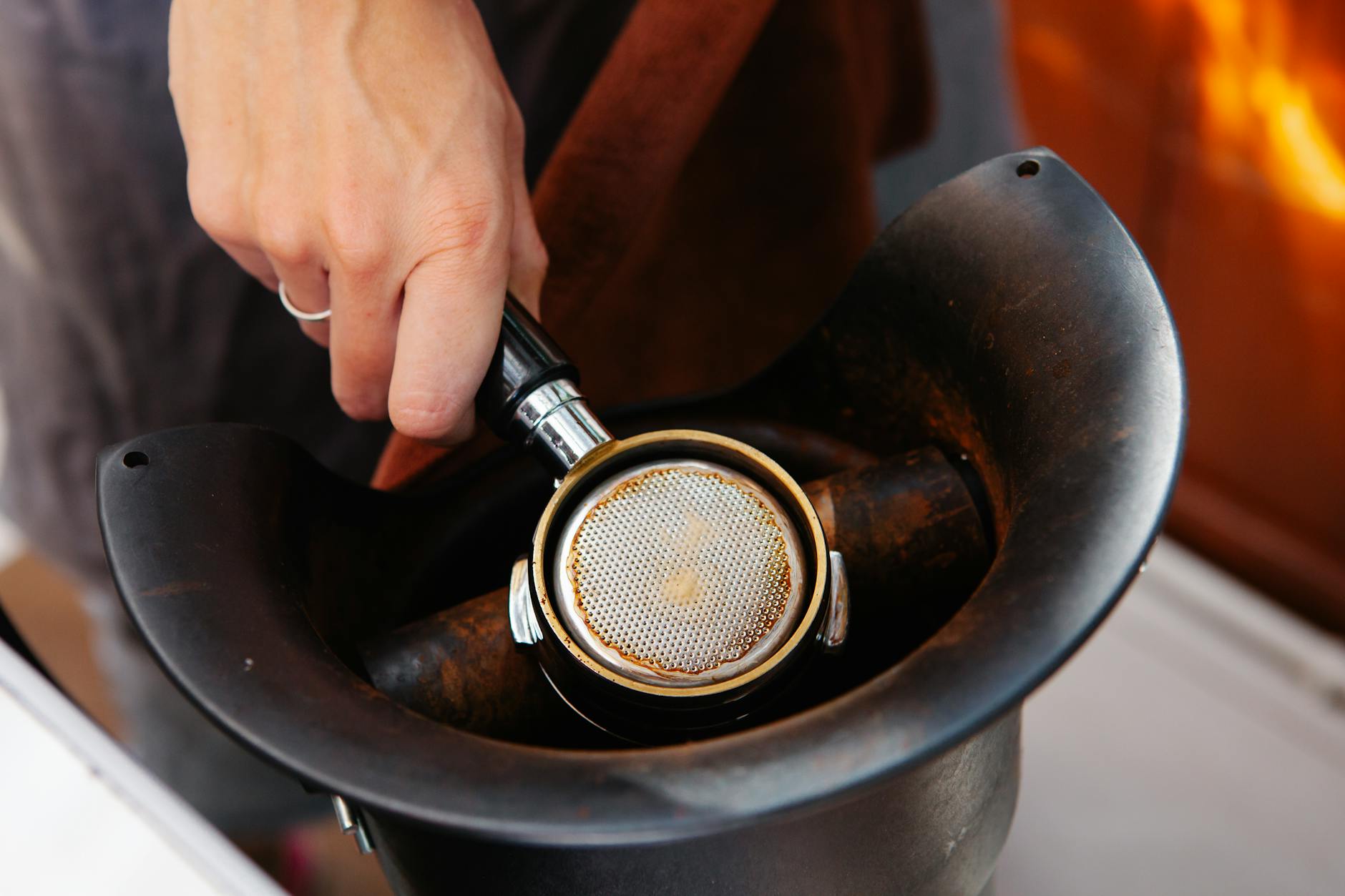
Manual espresso devices offer an unparalleled connection to the craft of coffee making. Machines like the Flair, Cafelat Robot, or ROK give you direct, tactile control over every variable, from pressure to pre-infusion. This hands-on approach is incredibly rewarding, but it also comes with a steep learning curve. When your shot doesn’t pull correctly, there’s no automated system to blame. Instead, you must become a detective. This article is your guide to troubleshooting the most common extraction issues on manual espresso devices. We will explore why your shots might be running too fast or too slow, what those results taste like, and how to systematically adjust your technique to pull a balanced, delicious shot of espresso every time.
The dreaded fast shot: Understanding under-extraction
You’ve prepped your puck, preheated your brew chamber, and started pulling the lever. But instead of a syrupy, consistent stream, a watery, blond gusher flows into your cup. The shot finishes in 15 seconds. This is a classic fast shot, a clear sign of under-extraction. When water flows through the coffee grounds too quickly, it doesn’t have enough contact time to dissolve the desirable sugars and oils. The result is an espresso that tastes unpleasantly sour, acidic, and thin-bodied, often lacking the rich crema and sweetness you’re chasing.
So, what causes this? The primary culprits are almost always related to a lack of resistance in the coffee puck. Here’s what to check:
- Grind size: This is the number one cause. If your grind is too coarse, there are large gaps between the coffee particles, creating a superhighway for water to pass through. The solution is simple: grind finer. This will create a more compact puck, slowing the water down and increasing extraction.
- Dose: Are you using enough coffee? A low dose for your basket size means there isn’t enough material to build adequate resistance. Try increasing your dose by a gram, ensuring you still have enough headspace in the basket.
- Tamping: An uneven or overly light tamp can create channels, or areas of lower density, where water will rush through. Focus on applying firm, consistent pressure to create a level and uniformly compacted coffee bed.
Always start by adjusting your grind size. It has the most significant impact on shot time. Make small, incremental changes until you see the flow rate slow down to your target range.
The choked shot: Solving over-extraction
On the opposite end of the spectrum is the choked shot. You begin applying pressure, but the lever barely moves. Only a few dark, syrupy drips manage to escape, or worse, nothing comes out at all. If a shot does complete, it takes well over 40 seconds. This is a sign of over-extraction. Here, the water is trapped in the coffee for too long, pulling out unwanted, bitter compounds. The resulting espresso will taste harsh, astringent, and burnt, masking any delicate flavor notes in the beans.
A choked shot indicates too much resistance in the puck. To fix this, you need to make it easier for the water to flow. The causes are the inverse of a fast shot:
- Grind size: The most likely offender. If your coffee is ground too fine, the particles are so small they create a dense, muddy barrier that water struggles to penetrate. The solution is to grind coarser.
- Dose: Overfilling your basket can lead to a choked shot. Too much coffee, once tamped, becomes overly compressed, leaving no room for water to saturate the grounds evenly. Try reducing your dose slightly.
- Puck preparation: Clumps in your coffee grounds from the grinder can create dense spots that block water flow. Using a Weiss Distribution Technique (WDT) tool to break up clumps and create a fluffy, even bed of coffee before tamping is a game-changer for consistency.
Again, your first adjustment should always be the grind. Coarsening the grind will have the most immediate effect on speeding up your shot and bringing it into the ideal extraction window.
A systematic approach to dialing in
Randomly changing variables will only lead to frustration. The key to mastering your manual espresso maker is to be methodical. You need a consistent routine, or workflow, where you only change one variable at a time. This allows you to understand cause and effect. If you change your grind size and your dose simultaneously, you won’t know which adjustment fixed your problem.
Here’s a recommended workflow for dialing in a new coffee bean:
- Fix your dose and yield. Start with a standard dose for your basket (e.g., 16 grams) and a target brew ratio, like 1:2. This means for 16 grams of coffee in, you are aiming for 32 grams of liquid espresso out. Use a scale to measure this accurately. Keep these two numbers constant for now.
- Adjust the grind to control time. Your grind size is now your primary tool for hitting a target shot time, typically between 25-35 seconds. If your 32g shot pulls in 18 seconds, grind finer. If it takes 45 seconds, grind coarser.
- Taste everything. Once you are in the 25-35 second range, taste the shot. Does it taste balanced? If it’s still a little sour, try grinding a touch finer to extend the time and increase extraction. If it’s a bit bitter, grind a touch coarser.
- Maintain consistent prep. Your preheating routine, distribution technique (WDT), and tamping pressure should be the same for every shot. Consistency is what allows your grind size adjustments to have a predictable effect.
This table illustrates how to react to common issues using this method:
| Problem | Taste Profile | Shot Time (Example) | Primary Solution |
|---|---|---|---|
| Fast Shot (Under-extracted) | Sour, weak, thin body | < 20 seconds | Grind finer |
| Slow/Choked Shot (Over-extracted) | Bitter, harsh, astringent | > 40 seconds | Grind coarser |
| Balanced Shot | Sweet, complex, pleasant acidity | 25 – 35 seconds | Enjoy! Replicate your process. |
Beyond the basics: Channeling and temperature stability
Once you’ve grasped the relationship between grind, dose, and time, two other factors can affect shot quality: channeling and temperature. Channeling occurs when water finds a path of least resistance and blasts through one part of the puck, leaving other parts under-extracted. This creates a messy shot with contradictory flavors—both sour and bitter in the same cup. It’s caused by poor puck prep, like clumps or an uneven tamp. Using a WDT tool to distribute the grounds and ensuring a level tamp are the best defenses against channeling.
Temperature is also crucial. Manual devices are prone to heat loss. If your brew chamber isn’t properly preheated, the water temperature will drop during extraction, leading to a sour, under-extracted shot. Create a robust preheating routine, such as filling the chamber with boiling water and letting it sit for a minute before you brew. A stable, high temperature is necessary to properly extract all the complex flavors from your coffee. Consistency in this step removes another variable and makes your results far more predictable.
Mastering a manual espresso device is a journey of patience and observation. The most common issues—shots that are too fast or too slow—are almost always rooted in under-extraction and over-extraction, respectively. By understanding how these problems manifest in the cup, you can begin to troubleshoot effectively. The solution usually lies in adjusting your grind size, which is the most powerful variable you control. By adopting a systematic approach where you only change one thing at a time, you can move from frustratingly inconsistent results to predictable, delicious espresso. Remember to fix your dose, use your grind to steer your shot time, and maintain a consistent preparation routine. This craft rewards precision and practice, turning your daily coffee ritual into a moment of pure, hands-on satisfaction.
 No products in the cart.