

The science of slow feeding: Why it changes your espresso flavor
The quest for the perfect espresso shot is a journey filled with variables: bean origin, roast level, water temperature, pressure, and tamping. Yet, one of the most impactful yet often overlooked techniques happens before the water even touches the coffee: the way you feed beans into your grinder. Many baristas are now adopting a method called slow feeding, a deliberate and paced approach that is revolutionizing espresso extraction. This isn’t just a fussy ritual; it’s a technique grounded in the physics of particle size and distribution. In this article, we will delve into the science behind slow feeding, exploring how this simple change in your workflow can fundamentally alter your grind quality, prevent channeling, and ultimately unlock a new dimension of flavor and clarity in your cup.
What is slow feeding?
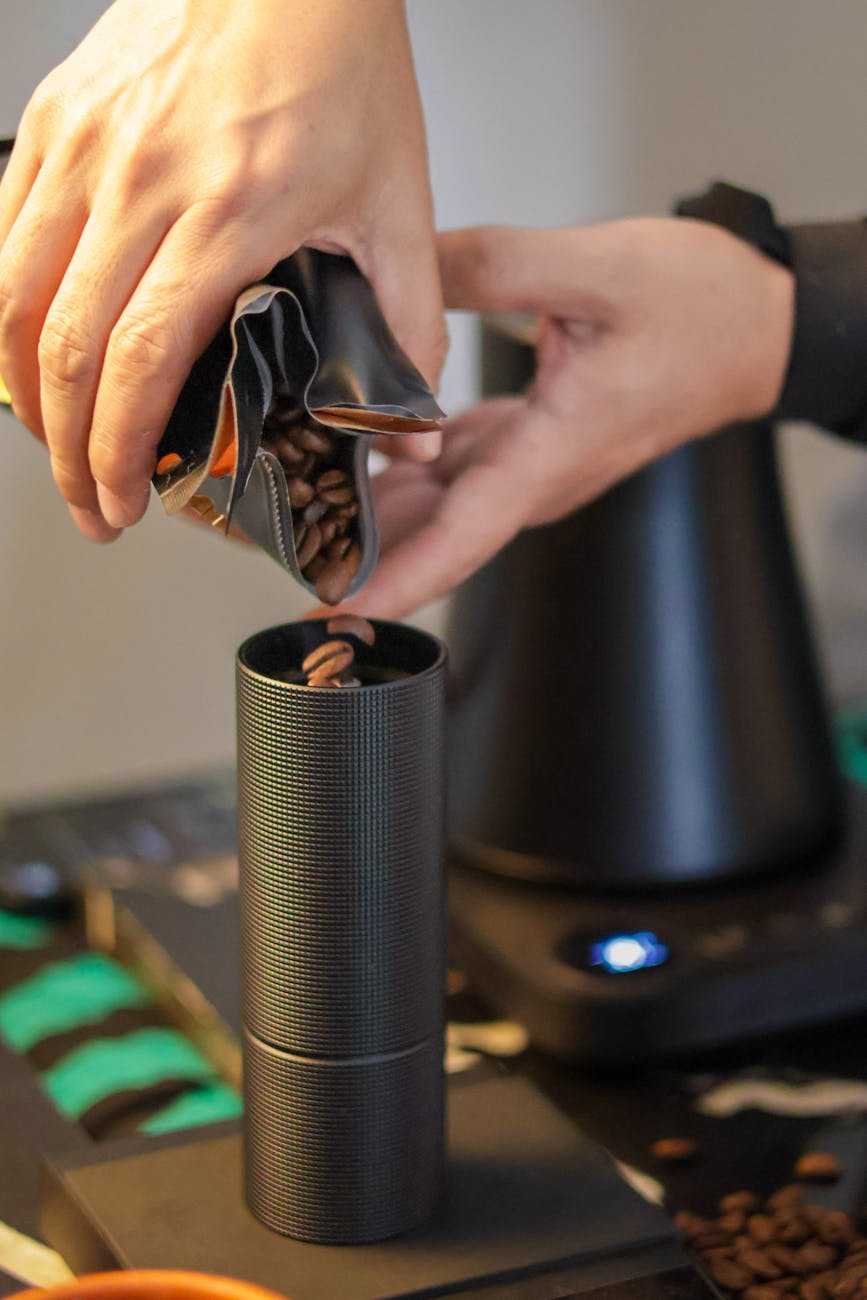
At its core, slow feeding is the practice of introducing coffee beans into the grinder’s burrs gradually, rather than dumping the entire dose into the grinder at once. This technique is most relevant for baristas using single-dose grinders, where a pre-weighed dose of beans is ground for each shot. Instead of pouring all 18 grams in and letting the grinder tear through them, the barista slowly trickles the beans in over a period of several seconds.
This stands in stark contrast to two common methods:
- Hopper Grinding: A traditional setup where a hopper full of beans creates a constant weight, forcing beans into the burrs. This weight can actually help regulate the feed rate but lacks the precision of single dosing.
– Single-dose “Dumping”: The most common single-dosing method where the entire weighed dose is poured into the grinder’s inlet. While convenient, this can lead to a phenomenon known as “popcorning,” where beans bounce chaotically on top of the fast-spinning burrs before being properly engaged and ground. This chaotic action is the primary problem that slow feeding aims to solve.
By controlling the feed rate, you change the grinder’s operating conditions from a chaotic, high-impact environment to a stable and controlled process. This allows each bean to be drawn into the burrs and cut more cleanly and uniformly, laying the foundation for a superior extraction.
The impact on grind consistency and particle distribution
The true magic of slow feeding lies in its effect on particle size distribution (PSD). An ideal coffee grind for espresso isn’t one where every single particle is the exact same size, but one where the distribution is narrow and unimodal—meaning, a large majority of particles are clustered around the target grind size, with very few “fines” (powdery, dust-like particles) and “boulders” (large, under-ground chunks).
When you dump a full dose of beans into a grinder, the burrs are immediately put under a heavy, inconsistent load. Beans collide with each other and the burrs, shattering unpredictably. This process generates a wide PSD with an excess of fines created by beans being re-ground and shattered, and boulders that slip through without being properly cut. Slow feeding mitigates this in two key ways:
- Consistent Burr Load: By feeding beans in slowly, the motor and burrs operate under a steady, low-stress load. This allows the burrs to spin at a more constant velocity and engage each bean with the same amount of force, resulting in a much more uniform cutting action.
- Reduced Popcorning and Fines Generation: With no pile of beans bouncing around, each bean is engaged by the burrs more directly. It is cleanly pulled in and ground, rather than being chipped and shattered multiple times. This significantly reduces the creation of excess fines, which are notorious for clogging the espresso puck and causing bitter, over-extracted flavors.
The result is a fluffier, more uniform-looking coffee ground with a measurably narrower particle size distribution. This consistency is the critical first step toward a perfect extraction.
From grind to puck: How slow feeding prevents channeling
The improved grind quality from slow feeding has a direct and profound impact on the structure of your espresso puck. A puck made from grounds with a wide PSD is inherently unstable. The excessive fines can migrate with the water, clogging pores in some areas, while the boulders create low-density pockets in others. When hot, pressurized water is forced through this puck, it will naturally seek the path of least resistance. This is known as channeling.
Channeling is the enemy of good espresso. It causes water to bypass most of the coffee grounds, leading to a shot that is simultaneously under-extracted (from the bypassed grounds) and over-extracted (from the narrow channels), resulting in a cup that is both sour and bitter. A more uniform grind, as produced by slow feeding, creates a much more homogenous puck. With fewer fines to cause clogging and fewer boulders to create weak spots, the puck’s density is far more even. This encourages the water to flow through the entire coffee bed uniformly, saturating every particle evenly and extracting the soluble compounds in a balanced way.
This makes your entire puck preparation, including distribution techniques like WDT, more effective. You are working with a better raw material, making it easier to build a stable, resilient puck that can withstand the force of extraction without fracturing.
The flavor in the cup: Translating science to taste
Ultimately, all these technical improvements are in service of one thing: better-tasting espresso. The even extraction facilitated by slow feeding translates directly to a more refined and delicious flavor profile. By avoiding the pitfalls of channeling, you eliminate the jarring mixture of sourness and bitterness that plagues so many shots.
Instead, you can expect:
- Enhanced Clarity: With a balanced extraction, the unique origin characteristics of the coffee can shine through. Delicate floral notes, bright fruity acidity, and rich chocolatey undertones are no longer muddled by extraction flaws.
- Increased Sweetness: A proper, even extraction is better at dissolving the sugars present in the coffee grounds, leading to a noticeably sweeter and more rounded cup.
– Silky Body and Texture: Even flow through the puck helps extract the oils and colloids that contribute to a richer, more viscous mouthfeel, without the astringency that comes from over-extracting fines.
The difference can be so significant that it can feel like you are tasting the coffee for the first time. Below is a table summarizing the differences in outcome.
| Feature | Traditional Single Dosing | Slow Feeding Technique |
|---|---|---|
| Particle Distribution | Wide, with more fines and boulders | Narrower and more uniform |
| Puck Integrity | Prone to channeling and weak spots | More homogenous and resistant to channeling |
| Extraction | Uneven, often a mix of over/under | Even and balanced |
| Dominant Flavors | Can be muddled, bitter, and sour | Clarity, sweetness, defined origin notes |
| Consistency | Lower shot-to-shot reliability | Significantly higher shot-to-shot consistency |
Slow feeding is more than an advanced technique; it’s a fundamental shift in how we approach grinding. By taking a few extra seconds to control the flow of beans, you are taking direct control over particle size distribution. This simple action creates a domino effect: a more uniform grind leads to a more stable puck, which allows for a more even extraction, ultimately unlocking a level of flavor, sweetness, and clarity in your espresso that is difficult to achieve otherwise. It transforms grinding from a brute-force act into a precise and delicate step in your coffee ritual. The next time you prepare an espresso, try slowing down. The proof, as you will find, is in the cup.

 No products in the cart.