

Cracking the code: How milk fat creates the perfect Starbucks drink texture
Ever wonder why the latte you make at home never quite has that same luxurious, velvety texture as the one from your favorite Starbucks barista? You might have the best espresso beans and a top-of-the-line machine, but the secret often lies in something much simpler: the milk. Specifically, it’s the science of milk fat content and how it interacts with heat and air. This isn’t about flavor alone; it’s about mouthfeel, the way the drink coats your tongue, and the quality of the foam that crowns your cup. Understanding the role of fat is the first step to closing the gap between a homemade coffee and a café-quality creation. This article will delve into the science behind milk foam, exploring why different fat percentages produce drastically different results.
The building blocks of perfect foam: Fat, protein, and heat
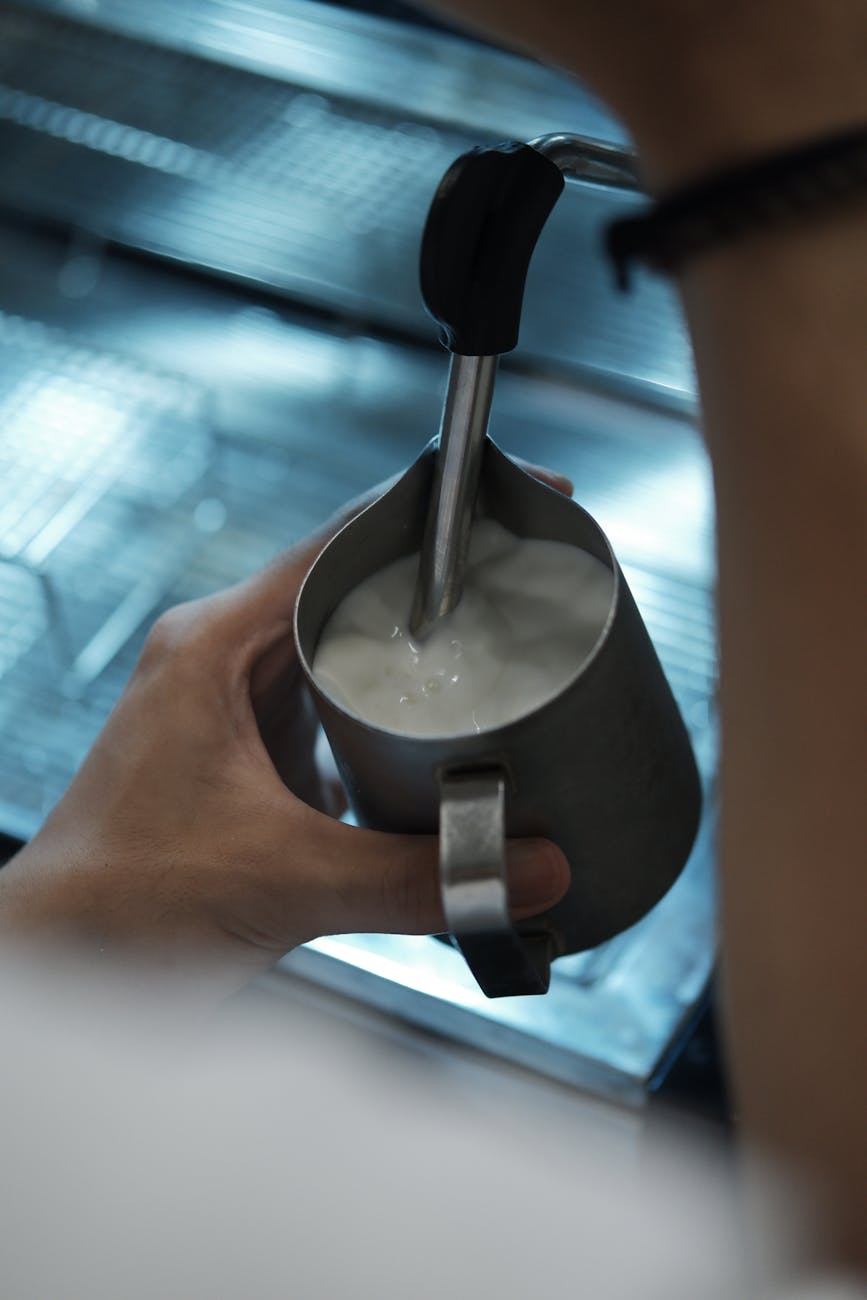
To understand texture, we first need to look at what milk is made of on a microscopic level. The two most important components for creating steamed milk are protein and fat. Milk proteins, primarily casein and whey, are the architects of foam. When you introduce steam into milk, the heat begins to denature these proteins, causing them to unravel and form a network or a scaffold. It’s this protein network that traps the air bubbles you’re injecting, creating the foam itself. Without protein, you would simply have hot, bubbly milk.
So where does fat fit in? Fat globules act as the “cushioning” in this structure. While protein creates the foam, fat provides the richness, creaminess, and weight that we associate with a satisfying latte. The fat, which becomes liquid when heated, disperses throughout the milk and coats the air bubbles. This results in a smoother, more integrated texture known as microfoam—a foam with bubbles so small they are nearly invisible, giving the milk a glossy, paint-like appearance. This is the holy grail for latte art and that signature velvety mouthfeel.
Why whole milk is the barista’s default choice
While Starbucks’ official standard is 2% milk, many seasoned baristas and coffee aficionados will tell you that whole milk is the true champion for texture. Why? It all comes down to balance. Whole milk typically contains around 3.25% to 3.5% fat, which is considered the sweet spot. This percentage provides enough fat to deliver a rich, creamy body and a silky mouthfeel without compromising the stability of the foam. The fat globules in whole milk are substantial enough to add weight and flavor but not so abundant that they pop the delicate air bubbles the proteins are working so hard to maintain.
In contrast, skim milk, with virtually no fat, can create a large volume of foam, but it’s often stiff, dry, and bubbly—more like a meringue than a velvety liquid. The high concentration of protein relative to fat allows it to trap a lot of air, but the resulting texture lacks creaminess and separates from the espresso quickly. On the other end of the spectrum, using heavy cream or half-and-half (for a drink called a breve) results in a very rich, dessert-like texture, but it can be difficult to foam properly as the high fat content destabilizes the protein structure.
The role of homogenization and processing
The percentage of fat isn’t the only factor; how that fat is treated before it even reaches your steam wand is critically important. This is where homogenization comes in. Homogenization is a mechanical process where raw milk is forced through a fine mesh under high pressure. This breaks down the large, naturally occurring fat globules into much smaller, uniform particles that remain suspended evenly throughout the milk. Without this step, the fat (cream) would rise to the top.
For a home barista, this is crucial. The even distribution of tiny fat globules ensures that every part of the milk you steam has a consistent fat-to-protein ratio. This consistency is key to producing a uniform, stable microfoam. If the fat were not homogenized, you’d be steaming milk with inconsistent pockets of cream, leading to an unpredictable and often poor-quality foam. This is why fresh, pasteurized, and homogenized milk almost always yields superior results compared to non-homogenized or raw milk when aiming for that classic café texture.
A comparison of milk types for coffee texture
Choosing the right milk is the most critical decision for replicating your favorite coffee shop drink. The fat and protein content directly dictates the final texture and mouthfeel. While personal preference plays a role, the scientific properties of each milk type lead to very different outcomes when steamed. This table breaks down the typical characteristics of common dairy and non-dairy milks to help guide your choice.
| Milk Type | Approximate Fat Content | Steamed Texture & Foam Quality |
|---|---|---|
| Skim Milk | 0 – 0.5% | Very dry, stiff, large bubbles. Lacks creaminess and separates easily. |
| 2% Milk (Reduced-Fat) | 2% | Good foam, but can be slightly thin. A good balance but lacks the richness of whole milk. The Starbucks standard. |
| Whole Milk | 3.25 – 3.5% | The ideal. Creates velvety, glossy microfoam. Rich, creamy, and sweet. Excellent for latte art. |
| Half-and-Half (Breve) | 10 – 12% | Very rich and dessert-like. Difficult to foam well due to high fat, but results in a thick, creamy texture. |
| Oat Milk (Barista Blend) | ~3% | The best non-dairy option. Added oils help it steam like whole milk, creating creamy, stable microfoam. |
| Almond Milk | ~2.5% | Difficult to steam. Often creates thin foam that dissipates quickly due to lower protein content. |
The conclusion is clear: achieving that coveted Starbucks texture is not a matter of chance but a calculated choice. The interplay between fat and protein, supercharged by heat and steam, is what turns simple milk into a luxurious foundation for an espresso drink. While 2% is the standard, the superior creaminess and silky microfoam produced by whole milk demonstrate why a slightly higher fat content is often the key. It provides the perfect balance of richness from fat and structure from protein. By choosing fresh, homogenized whole milk—or a high-quality barista-blend oat milk—you are setting yourself up for success. The next time you steam milk, remember that you’re not just heating it; you’re conducting a delicious science experiment.

 No products in the cart.