

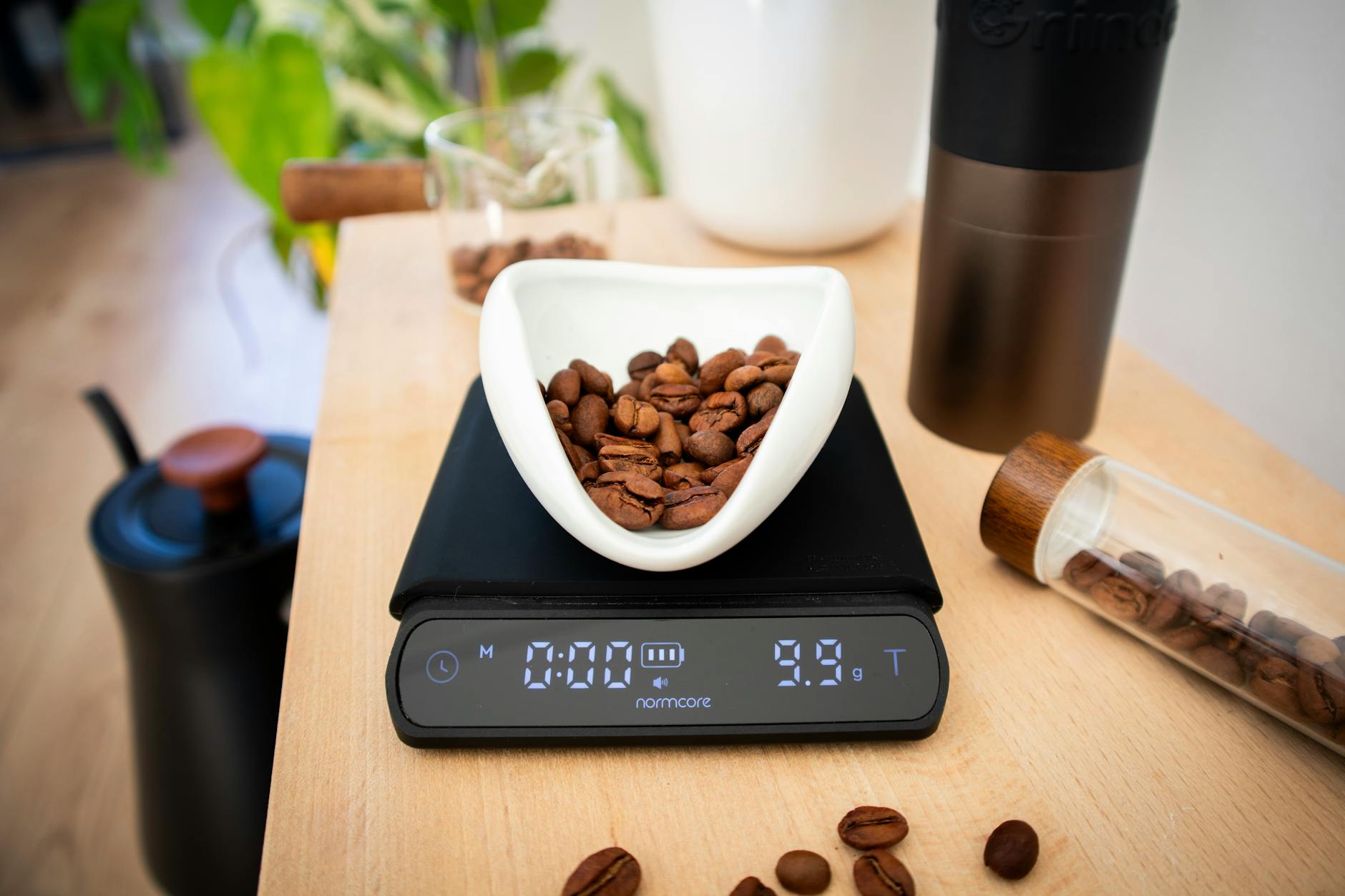
The role of precision scales in mastering brew ratios at home
The quest for the perfect cup of coffee often begins with buying high-quality beans and a fancy new brewer. Yet, for many home enthusiasts, the result is frustratingly inconsistent—one day a brilliant, flavorful cup, the next a bitter or watery disappointment. The culprit is rarely the beans or the equipment, but rather the method. The secret to bridging the gap between amateur and café-quality brewing lies in precision. This article will explore the concept of the brew ratio, the simple but powerful relationship between coffee and water, and explain why a digital precision scale is the single most important tool you can own to master it. Moving beyond imprecise scoops and guesswork is the first step toward unlocking repeatable, delicious coffee, every single time.
Beyond scoops: Understanding brew ratios
At its core, every coffee recipe is built on a brew ratio. This is simply the relationship between the weight of dry coffee grounds and the weight of water used to brew them. For example, a common starting ratio is 1:16, which means for every 1 gram of coffee, you use 16 grams of water. This ratio is the fundamental blueprint that determines the strength and extraction of your final cup. A lower ratio like 1:14 will produce a stronger, more concentrated brew, while a higher ratio like 1:17 will result in a lighter, more delicate cup.
So, why not just use a scoop? The problem with volumetric measurements (like scoops or tablespoons) is that they are notoriously inaccurate for coffee. The weight of a “scoop” can vary significantly based on several factors:
- Roast level: Darker roasts are less dense than lighter roasts, so a scoop of dark roast coffee weighs less than a scoop of light roast.
- Bean origin and size: Different coffee beans have different sizes and shapes, causing them to pack together differently.
- Grind size: A scoop of fine grounds will weigh more than a scoop of coarse grounds because there is less empty space between the particles.
Relying on a scoop is like trying to bake a cake by measuring flour in handfuls. You might get lucky occasionally, but you can never guarantee the result. Weight, on the other hand, is an absolute measure. 20 grams is always 20 grams, regardless of any other variable. This is why a precision scale is non-negotiable for achieving consistency.
The precision scale: Your key to consistency
Once you understand the importance of measuring by weight, the precision scale becomes the hero of your coffee bar. It’s the tool that turns the theory of brew ratios into a practical, repeatable reality. A good coffee scale isn’t just any kitchen scale; it has specific features designed to help you brew better. Look for a scale with 0.1-gram precision, a tare function (to zero out the weight of your brewer), and ideally, a built-in timer. The high precision allows you to make tiny, meaningful adjustments, while the timer helps you control another critical variable: brew time.
By using a scale, you eliminate the biggest variable in your brewing process. You can ensure that you are using the exact same amount of coffee and the exact same amount of water every morning. This means that if you brew a fantastic cup of coffee today using 20 grams of coffee and 320 grams of water (a 1:16 ratio), you can replicate that exact same cup tomorrow. Consistency is the foundation of mastery. You can’t improve your technique or experiment with new beans if your baseline recipe is constantly changing.
Dialing in your perfect cup: A practical guide
Putting a scale into practice is simple and immediately rewarding. Let’s walk through brewing a pour-over. First, place your brewer and filter on the scale and press the tare button to zero the weight. Add your coffee grounds until the scale reads your desired dose—let’s say 20 grams. Press tare again. Now you are ready to pour your water. Start your timer and begin your pour, watching the scale’s display. Your target is to pour 16 times the weight of your coffee, which in this case is 320 grams (20g x 16). The scale gives you real-time feedback, ensuring you hit your target water weight exactly.
This same principle applies to virtually any brew method, from French press to AeroPress. While every method has its nuances, the starting ratios provide a reliable foundation for a balanced cup. From there, you can adjust to your personal taste.
| Brew method | Common brew ratio (Coffee:Water) | Flavor profile notes |
|---|---|---|
| Pour-Over (V60, Chemex) | 1:15 to 1:17 | Clean, bright, highlights acidity and delicate notes. |
| French Press | 1:12 to 1:15 | Full-bodied, rich, with more texture and oils. |
| AeroPress | 1:10 to 1:16 (for standard) or 1:5 (for concentrate) | Versatile, can be clean like a pour-over or strong like espresso. |
| Cold Brew | 1:5 to 1:8 | Smooth, low acidity, sweet and chocolatey. |
Experimenting with confidence: Unlocking new flavors
Achieving consistency is only the first benefit of using a scale. The real magic happens when you start to experiment. Once you have a baseline recipe that you can reliably repeat, you can begin to make small, controlled changes to see how they affect the final taste. The scale gives you the confidence to do this because you know that any change in flavor is due to the single variable you adjusted, not random chance.
Did your cup taste a little weak? Next time, try a tighter ratio like 1:15 instead of 1:16, keeping the grind size and brew time the same. This will increase the strength. Was the coffee a bit too intense or bitter? Try a wider ratio like 1:17 to dilute the brew slightly and potentially highlight more delicate floral or fruity notes. This methodical approach transforms you from someone who just follows recipes to a brewer who understands cause and effect. You can finally start tasting the specific notes described on your bag of beans by intentionally manipulating your brew ratio to bring them forward.
Conclusion
In the world of home brewing, moving from inconsistent results to consistently delicious coffee requires shifting from approximation to precision. The brew ratio—the simple relationship between the weight of coffee and water—is the most critical recipe variable, and volumetric tools like scoops are too unreliable to control it. A precision digital scale is the key that unlocks this control. It empowers you to eliminate guesswork, replicate your best-ever cups with ease, and provides the foundation for confident experimentation. A scale is not a luxury accessory; it is a fundamental tool. By investing in one, you are investing in the potential of every bag of coffee you buy, finally giving you the power to brew your perfect cup, on purpose, every day.

 No products in the cart.