

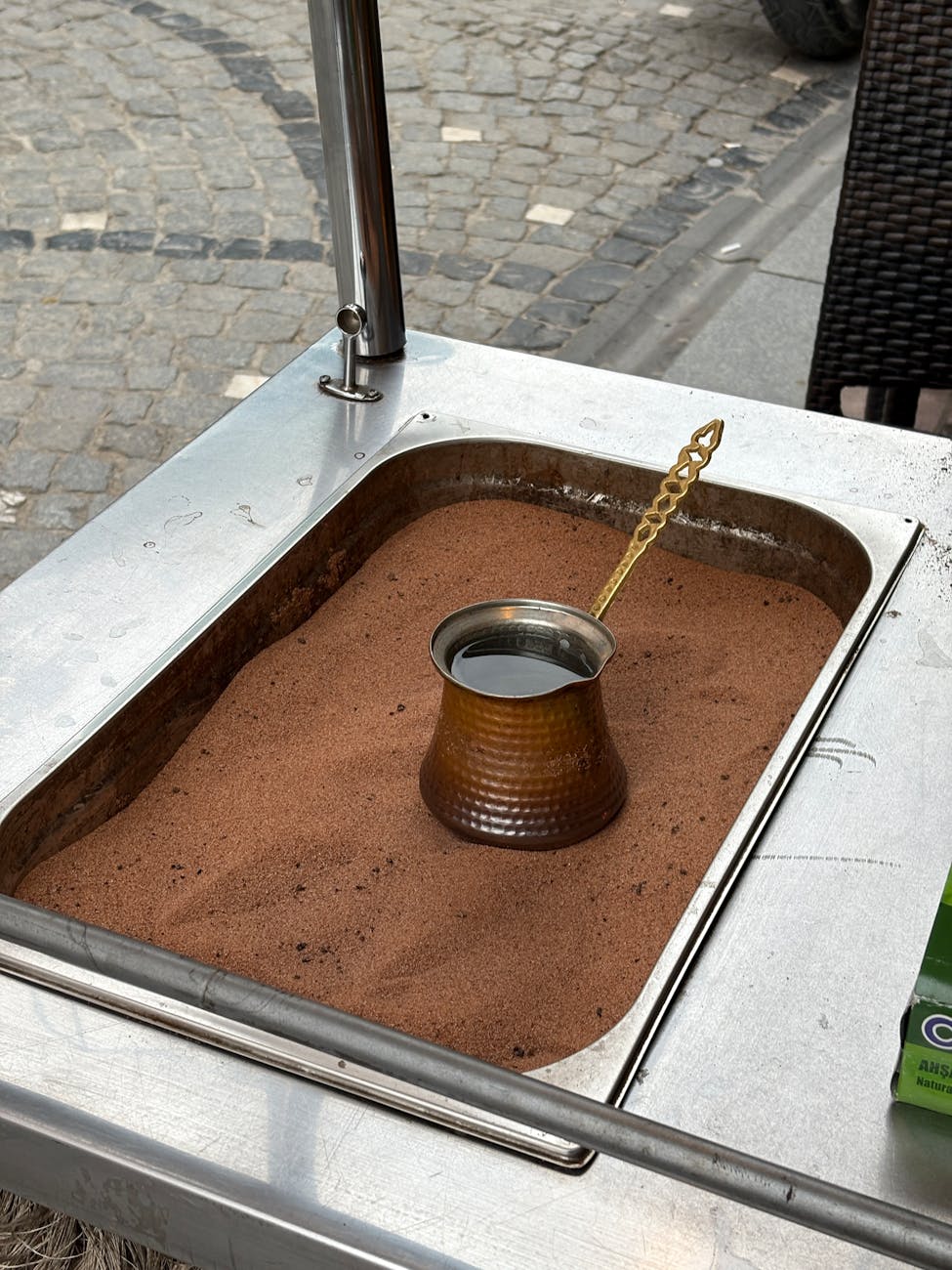
Unlocking flavor: The role of agitation and stirring in Turkish coffee extraction
Turkish coffee is more than just a beverage; it’s a cultural ritual celebrated for its intense flavor, velvety body, and iconic thick foam, or kaymak. While the ultra-fine grind and the traditional brewing pot, the cezve or ibrik, are well-known components, the subtle art of agitation is often overlooked. The act of stirring—and more importantly, knowing when not to stir—is a critical factor that dictates the success of the brew. It’s a delicate dance between intervention and observation. This article will explore the precise role of agitation in Turkish coffee extraction, from the initial mix that ensures even saturation to the natural turbulence that unlocks a balanced and rich flavor, revealing how this simple motion is the key to a perfect cup.
The initial stir: Setting the stage for extraction
The first and only time you should introduce a spoon to your cezve is right at the beginning. After adding your finely ground coffee, sugar (if using), and cold water, a brief but thorough stir is essential. The primary goal here is not just to mix the ingredients, but to achieve complete saturation of the coffee grounds. Coffee grounds, when they first meet water, have a tendency to clump together, creating dry pockets within the slurry. If left unstirred, these clumps prevent water from penetrating evenly, leading to a disastrously uneven extraction.
Think of it this way: grounds trapped inside a clump will be under-extracted, contributing sour and weak flavors. Meanwhile, the grounds on the outside of the clump will be over-exposed to the water, leading to over-extraction and a harsh, bitter taste. The initial stir breaks up these potential clumps, ensuring every single particle is fully wetted. This creates a uniform foundation, setting the stage for a balanced extraction where all the desirable soluble compounds can be drawn out harmoniously as the coffee heats up.
Agitation without a spoon: The power of convection
Once you’ve performed the initial stir and placed the cezve on a low heat source, the spoon’s job is done. From this point forward, the agitation becomes a natural process driven by physics. As the water at the bottom of the cezve heats up, it becomes less dense and begins to rise. Cooler, denser water from the top then sinks to take its place, creating a gentle, rolling current. This process, known as convection, is the invisible hand that continues to stir your coffee.
This natural turbulence is perfectly suited for Turkish coffee’s fine grind. It creates just enough movement to keep the tiny coffee particles suspended throughout the water column, maximizing their contact time and surface area with the hot water. This constant, gentle motion is crucial for a full and efficient extraction of oils, sugars, and acids, which together create the complex and rich flavor profile Turkish coffee is famous for. Without this convection, the grounds would simply settle at the bottom, resulting in a weak and under-extracted brew, regardless of how well you performed the initial stir.
The critical moment: Preserving the perfect foam
The most important rule in making Turkish coffee is to resist the urge to stir after the initial mix. This is because stirring during the heating process will destroy the most prized element of the final cup: the kaymak. The foam is a delicate emulsion of coffee oils, proteins, and microbubbles of carbon dioxide released from the grounds. As the coffee heats, these elements rise to the surface and form a “raft” of grounds that helps build and stabilize this creamy layer.
Stirring the pot at this stage would have two devastating effects:
- It would break the surface tension, causing the delicate foam to collapse and dissolve back into the liquid.
- It would disrupt the natural convection currents, potentially causing the coffee to boil over aggressively instead of gently rising.
The foam is not just for aesthetics; it locks in the volatile aromatic compounds, ensuring your first sip is an incredibly fragrant experience. It also contributes to the unique, velvety texture of the coffee. By leaving the spoon out of the cezve, you allow this natural process to unfold, resulting in a cup with a thick, persistent foam that is the true hallmark of a well-made Turkish coffee.
The impact of agitation on the final cup
The level and timing of agitation directly correlate to the final quality of the coffee, affecting its flavor, body, and foam. Understanding this relationship is key to mastering the technique. A balanced approach ensures all components come together perfectly, while improper technique can ruin the brew at any stage. The difference between a masterful cup and a mediocre one often comes down to this subtle, yet crucial, detail.
The table below summarizes how different agitation techniques impact the key characteristics of the brew.
| Type of agitation | Impact on flavor | Impact on body | Impact on foam (Kaymak) |
|---|---|---|---|
| Proper agitation (One initial stir, then natural convection) |
Balanced, rich, and complex. Avoids sourness from under-extraction and harsh bitterness. | Full, velvety, and syrupy. Fine particles are well-suspended and integrated. | Thick, stable, and persistent. Covers the entire surface of the cup. |
| Under-agitation (No initial stir or a poor one) |
Weak, sour, and hollow. Caused by dry clumps and uneven extraction. | Thin and watery. Lacks the signature Turkish coffee texture. | Minimal or completely absent. |
| Over-agitation (Stirring during heating) |
Muddled and sometimes bitter. The extraction process is violently disrupted. | Can be gritty and unpleasant as sediment is unnecessarily disturbed. | Completely destroyed. The coffee will be flat, dark, and less aromatic. |
In conclusion, the journey to a perfect cup of Turkish coffee is a lesson in controlled agitation. It begins with a single, deliberate stir to ensure every coffee particle is ready for extraction. From there, the brewer must step back and allow the gentle, natural power of convection to take over, keeping the grounds suspended to release their deep, complex flavors. The final, crucial step is one of restraint: not stirring allows the prized kaymak to form, trapping aromas and creating that signature velvety texture. Mastering this balance—knowing when to act and when to simply watch—is what elevates Turkish coffee from a simple brewing method to a true art form, producing a rich, aromatic, and deeply satisfying experience in every cup.


 No products in the cart.