

The degassing dilemma: Why super fresh coffee fails in a cezve
For any coffee enthusiast, the mantra is often “fresher is always better.” We seek out roasters who print the roast date on the bag, and we grind our beans moments before brewing. This pursuit of freshness is usually rewarded with a vibrant, aromatic, and flavorful cup. However, there is one brewing method where this rule is spectacularly broken: the traditional Turkish cezve, or ibrik. Using beans that are too fresh can lead to a disastrous brew, a far cry from the rich, syrupy, and beautifully foamed coffee you desire. This article will delve into the science of degassing, explaining why resting your coffee is not just a suggestion but a crucial step for mastering the art of the cezve.
What is coffee degassing?
To understand why super fresh beans misbehave, we first need to look at what happens during the roasting process. When green coffee beans are heated, a series of complex chemical reactions occur. Sugars caramelize, acids transform, and the beans expand and crack. A major byproduct of this transformation is carbon dioxide (CO2). A significant amount of this gas becomes trapped within the bean’s cellular structure.
Degassing is the natural process of this trapped CO2 slowly escaping from the roasted beans over time. This process begins the moment the beans are dropped from the roaster and can continue for several weeks. The rate of degassing isn’t always the same; it’s influenced by factors like the roast level. Darker roasts, being more porous and brittle, tend to degas much faster than lighter roasts. This escaping CO2 is what creates the beautiful “bloom” you see when you pour hot water over fresh grounds for a pour-over or French press, but in the confined, intense environment of a cezve, it becomes a problem rather than a feature.
The cezve and the bloom from hell
Brewing with a cezve is a unique immersion method. You combine water with a powder-fine grind of coffee and heat it slowly, allowing the grounds to become fully saturated and a thick, creamy foam, known as kaymak, to develop on the surface. Control is everything. The goal is to manage a gentle rise of this foam to the rim of the pot without letting the coffee boil, which would destroy the delicate flavors and the foam itself.
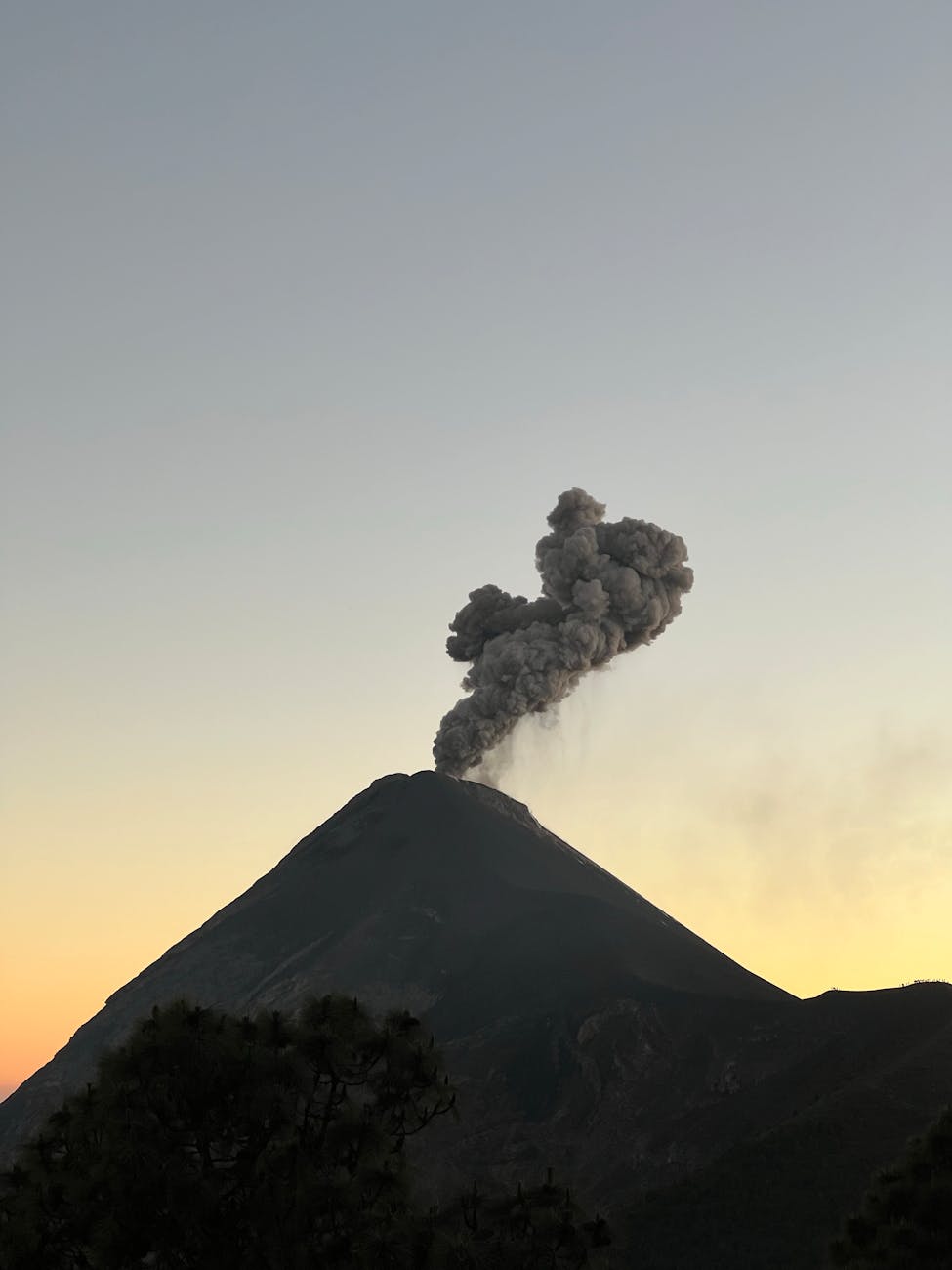
Now, introduce super fresh, CO2-rich beans into this delicate process. When the hot water hits the grounds, it triggers a violent and rapid release of all that trapped gas. This isn’t the gentle, manageable bloom of a V60; it’s a volcanic eruption. This “bloom from hell” has several disastrous consequences:
- Overflow and chaos: The coffee erupts uncontrollably, boiling over the sides of the cezve long before it has had a chance to properly brew.
- Destruction of kaymak: Instead of a dense, stable foam, the aggressive CO2 release creates large, airy, and unstable bubbles that dissipate almost immediately. The coveted kaymak never gets a chance to form.
- Poor extraction: The eruption pushes the coffee grounds up and out of the water, creating a crust that floats on top. This severely limits the contact time between the water and the coffee, leading directly to the next major problem: under-extraction.
Under-extraction and its sour consequences
Following on from the chaotic bloom, the biggest flavor issue with using overly fresh beans in a cezve is severe under-extraction. Coffee extraction is the process of dissolving flavor compounds from the grounds into the water. These compounds dissolve at different rates. Generally, bright, acidic, and sour notes extract first, followed by sweeter, more balanced flavors, and finally, the heavier, more bitter compounds.
Because the CO2 in very fresh beans acts as a barrier, it actively repels water and prevents it from properly saturating the coffee particles. Think of each tiny coffee ground being surrounded by a protective shield of gas. When you combine this resistance with the short brew time caused by the volcanic bloom, the water simply doesn’t have enough time to dissolve the full spectrum of flavors. It only manages to pull out those first-in-line acidic compounds. The result is a cup of Turkish coffee that is disappointingly thin, one-dimensional, and overwhelmingly sour, lacking the characteristic body, sweetness, and complexity that make this brew method so special.
Finding the sweet spot: How long to rest your beans
So, how do you avoid this brewing disaster? The solution is simple: patience. You must allow your beans to rest and degas for an appropriate amount of time before using them in a cezve. While there is no single magic number, as it depends on the specific coffee and roast level, there are some excellent starting points. Giving the beans time to release the most volatile portion of their CO2 will result in a much more controlled brew, allowing for proper extraction and the formation of a beautiful kaymak.
Here is a general guide to help you find the ideal resting period for your coffee:
| Roast level | Recommended rest period (for cezve) | Key characteristics |
|---|---|---|
| Light roast | 10 – 20 days post-roast | Denser beans that degas slowly. They need more time to mellow out and allow for proper saturation. |
| Medium roast | 7 – 14 days post-roast | A good all-around balance. The sweet spot for most coffees used for this method. |
| Dark roast | 4 – 10 days post-roast | More porous and brittle, these beans degas quickly. Using them too late can result in a flat taste. |
Use these recommendations as a starting point. The best way to find the perfect rest time is to experiment. If your coffee still erupts uncontrollably, give it a few more days. If the foam forms nicely and the taste is balanced and rich, you’ve found the sweet spot for that particular bean. Pay attention to how the coffee behaves in the cezve; it will tell you everything you need to know.
Conclusion
While the idea of “the fresher, the better” holds true for many brewing methods, the cezve operates by its own set of rules. The science of degassing reveals that an excess of trapped CO2 in super fresh beans is the enemy of a well-controlled, properly extracted Turkish coffee. This gas creates a volcanic bloom that prevents water from doing its job, leading to a sour, under-extracted cup and destroying any chance of forming a rich kaymak. By understanding this process, we learn that patience is a key ingredient. Resting your beans is not about letting them go stale; it is a necessary step to calm their volatility and unlock their full flavor potential. Give your beans the time they need to degas, and you will be rewarded with a truly exceptional cup of Turkish coffee.

 No products in the cart.