


The surprising impact of drip tray height on espresso accuracy
In the relentless pursuit of the perfect espresso shot, we meticulously control countless variables. We obsess over the freshness of our beans, dial in the grind size to the micron, weigh our dose with decimal-point precision, and monitor temperature and pressure with unwavering focus. Yet, a subtle, often-overlooked physical factor can silently sabotage our efforts: the height of the drip tray. This seemingly innocuous detail determines the distance your espresso must travel from the portafilter spout to your cup. As we will explore, this gap is not just empty space; it’s a potential source of significant measurement error, capable of skewing your brew ratio and altering the taste of your carefully crafted shot in unexpected ways.
The physics of the espresso splash
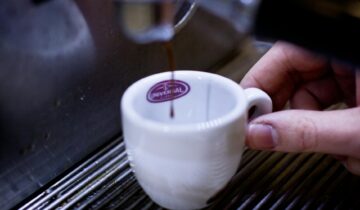
When an espresso extraction begins, it doesn’t emerge as a gentle, uniform stream. Instead, the first few moments are characterized by dark, concentrated droplets that fall with surprising force. As these initial drops hit the bottom of your cup, they don’t just land gracefully; they splash. This splash sends microscopic particles of liquid flying in all directions. Some may land on the walls of the cup, but many escape entirely, misting the area around your scale, the base of your machine, and the drip tray itself. Each of these escaped droplets represents a tiny amount of lost mass—liquid that has left the portafilter but will never be weighed by the scale.
The severity of this effect is directly proportional to the distance the espresso falls. The greater the height difference between your portafilter spouts and your cup, the more velocity each drop gains. This increased velocity leads to a more violent impact and a more significant splash, resulting in greater mass loss. It’s a simple matter of physics, but one with profound implications for accuracy.
How inaccurate readings affect your brew ratio
The consequence of this lost mass is a direct hit to the heart of modern espresso making: the brew ratio. Your espresso scale can only measure what lands and stays in the cup. Let’s say you are aiming for a classic 1:2 ratio, dosing 18 grams of coffee to achieve a 36-gram liquid yield. Due to splashing, when your scale finally reads 36.0 grams, the actual amount of espresso in your cup might only be 35.5 grams or even less. The missing half-gram is now a fine mist coating your equipment.
While a half-gram might seem trivial, it represents a meaningful deviation. You thought you were pulling a 1:2 ratio, but in reality, you pulled a 1:1.97. This shorter, slightly more concentrated shot will have a different flavor profile, likely leaning more towards sourness and under-extraction. Conversely, if a barista notices their shots are tasting sour and tries to compensate by letting the shot run longer to reach the target weight, they risk over-extraction, introducing bitterness to mask the initial flaw. Without understanding the root cause—the drip tray height—they are simply chasing a moving target and compromising taste.
Quantifying the potential loss
To visualize the impact, consider two common home barista setups. One uses the machine’s drip tray in its standard, low position, creating a large gap. The other uses a riser or an adjustable tray to bring the scale and cup closer to the portafilter. While the exact mass lost will vary based on the coffee, flow rate, and grind, we can illustrate the potential discrepancy.
The data below is illustrative but highlights how a seemingly small change in setup can lead to measurement drift. A larger drop not only increases the margin of error but also introduces more variability from shot to shot.
| Setup Parameter | High-Clearance Setup | Low-Clearance Setup |
|---|---|---|
| Spout-to-Cup Distance | ~10 cm | ~4 cm |
| Target Yield | 36.0g | 36.0g |
| Potential Mass Loss due to Splash | 0.4g – 0.8g | 0.1g – 0.2g |
| Actual Yield when Scale Reads 36.0g | ~35.2g – 35.6g | ~35.8g – 35.9g |
| Resulting Brew Ratio (from 18g dose) | 1:1.95 – 1:1.97 | 1:1.98 – 1:1.99 |
Solutions and best practices for accuracy
Fortunately, correcting for this variable is straightforward. The primary goal is to minimize the distance the espresso has to fall. By doing so, you reduce the velocity of the initial drops, mitigate splashing, and ensure your scale reading is as close to the true yield as possible.
Here are some actionable steps you can take:
- Raise your scale: The simplest solution. Place a small, stable, and heat-resistant object under your scale to elevate it. A tamping block, a small wooden box, or even a folded microfiber towel can work wonders. Many companies now sell dedicated scale risers for this exact purpose.
- Use an adjustable drip tray: Some modern espresso machines come with drip trays that can be set at different heights. If yours has this feature, always use the highest possible position that still comfortably fits your cup and scale.
- Choose your cup wisely: When possible, use a shorter, wider cup over a tall, narrow one. This not only reduces the drop distance but also provides a larger landing area for the espresso.
- Be consistent: If you cannot completely eliminate the gap, strive for absolute consistency in your setup. By using the same cup and scale position every time, the amount of mass lost will be relatively consistent. You can then dial in your recipe by taste, knowing that if a shot is sour, you may need to let it run to a target of 36.5g on the scale to achieve a true 36g in the cup.
Conclusion
In the world of specialty coffee, precision is paramount. We invest in high-quality grinders and scales to gain control over our brewing process, and it’s illogical to let a simple physical factor like gravity undermine that investment. The distance from your portafilter to your cup, largely determined by your drip tray height, is a critical variable that directly impacts the accuracy of your yield measurement. Splashing from a long fall leads to lost mass, causing your scale to display a weight that doesn’t reflect the true amount of liquid in your cup. This discrepancy skews your brew ratio and, ultimately, affects the final taste. By taking simple steps to raise your scale and reduce this gap, you eliminate a significant source of error, ensuring your data is reliable and your espresso is as delicious as you intended it to be.


 No products in the cart.