

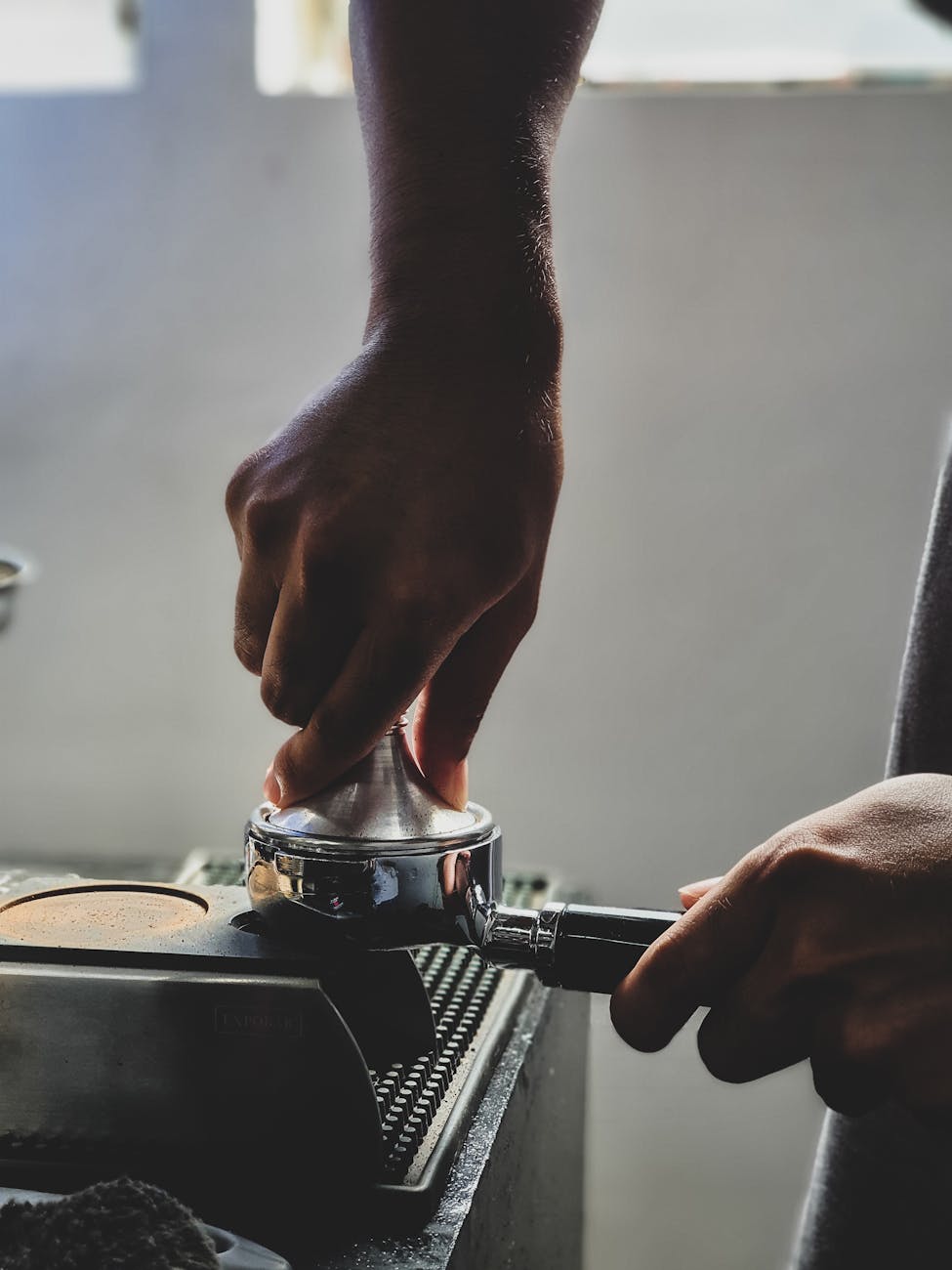
The journey to a perfect shot of espresso is paved with precision, and one of the most critical steps is tamping. This simple act of compressing coffee grounds creates the resistance needed for hot water to extract flavour evenly. For years, the traditional tamper was the only tool for the job, relying solely on a barista’s skill. However, the calibrated tamper has emerged as a popular alternative, promising consistency with every press. This article will dive deep into the differences between these two essential tools. We will explore how each one works, compare their performance on key metrics like consistency and ease of use, and help you decide which tamper is the right fit for your coffee-making routine.
What is a traditional espresso tamper?
At its heart, the traditional espresso tamper is a beautifully simple tool. It consists of a handle and a solid, weighted base, typically made of stainless steel. Its entire function relies on the user. The barista manually applies downward force to compact the coffee grounds in the portafilter, aiming for a level and evenly compressed puck. The art of using a traditional tamper is all about developing muscle memory and a tactile feel for the coffee. An experienced barista can feel the resistance of the grounds and adjust their pressure accordingly.
However, this reliance on human skill is also its biggest variable. The exact pressure applied can differ from barista to barista, or even from shot to shot for the same person. This inconsistency can lead to channeling, where water finds a path of least resistance through the puck, resulting in an uneven extraction and a poorly balanced shot. Despite this, many professionals and enthusiasts prefer the traditional tamper for the complete control and connection it offers to the espresso-making process.
The rise of the calibrated tamper
The calibrated tamper was engineered to solve the primary challenge of its traditional counterpart: inconsistent pressure. It looks very similar but contains a clever internal mechanism, usually a spring, designed to provide feedback. This spring is calibrated to compress and then “click” or release once a specific, predetermined amount of force is applied. Most are set to the industry-standard pressure of approximately 30 pounds (or 15 kg).
By taking the guesswork out of how hard to press, the calibrated tamper ensures that the pressure variable is removed from the equation. This allows the barista to shift their focus entirely to the other crucial aspect of tamping: ensuring the puck is perfectly level. This innovation is a game-changer for high-volume cafes where multiple baristas need to produce consistent results, and for home users who want to eliminate a variable while they learn. It turns an art form into a more scientific, repeatable step.
Key differences at a glance
While both tampers aim to create a compact coffee puck, their approach and impact on the brewing process are distinct. The calibrated model introduces a layer of technology to guarantee one aspect of the technique, while the traditional model leaves every variable in the hands of the user. This fundamental difference affects the learning curve, the user’s focus, and the overall workflow. For a clearer picture, let’s compare them side-by-side.
| Feature | Traditional tamper | Calibrated tamper |
|---|---|---|
| Pressure consistency | Relies entirely on the user’s skill and muscle memory. Can vary significantly. | Excellent. Provides a consistent tamping force with every use. |
| Learning curve | Steeper. Requires practice to develop a feel for the right pressure. | Minimal. Very easy for beginners to use correctly from the first shot. |
| Barista’s focus | Divided between achieving correct pressure and ensuring a level puck. | Can focus solely on keeping the tamp perfectly level. |
| Feedback | Tactile feedback from the resistance of the coffee grounds. | Mechanical or auditory feedback (a “click” or release) when set pressure is reached. |
| Cost | Generally more affordable, with a very wide price range. | Typically more expensive due to the internal spring mechanism. |
Which tamper is right for you?
Choosing between a calibrated and traditional tamper ultimately comes down to your personal goals and experience level. There is no single “best” option, only the best option for your specific needs. If you are an espresso beginner or work in a setting where consistency across different users is paramount, the calibrated tamper is an excellent choice. It eliminates a major variable, making it easier to diagnose other issues in your espresso shot, such as grind size or distribution. It builds confidence and ensures a repeatable workflow, which is key to improvement.
Conversely, if you are a seasoned home barista or a professional who enjoys the craft and ritual of espresso, the traditional tamper may be more satisfying. It offers complete control and a deeper connection to the process. Many experts argue that the “30-pound rule” is more of a guideline and that different coffees and grind settings benefit from slight adjustments in pressure. The traditional tamper allows for this nuance, rewarding a skilled hand with the flexibility to adapt on the fly.
In the debate between calibrated and traditional tampers, the real winner is the barista who understands their own needs. The core difference lies in their philosophy: one prioritizes repeatable precision through technology, while the other celebrates the craft and control of human skill. A calibrated tamper is an invaluable tool for learning and for environments that demand unwavering consistency, as it removes pressure from the list of potential problems. A traditional tamper, in the right hands, offers ultimate flexibility and a more tactile connection to the art of espresso. Ultimately, the best tamper is the one that helps you achieve your goal: a delicious, well-extracted, and enjoyable shot of espresso, every single time.
 No products in the cart.