

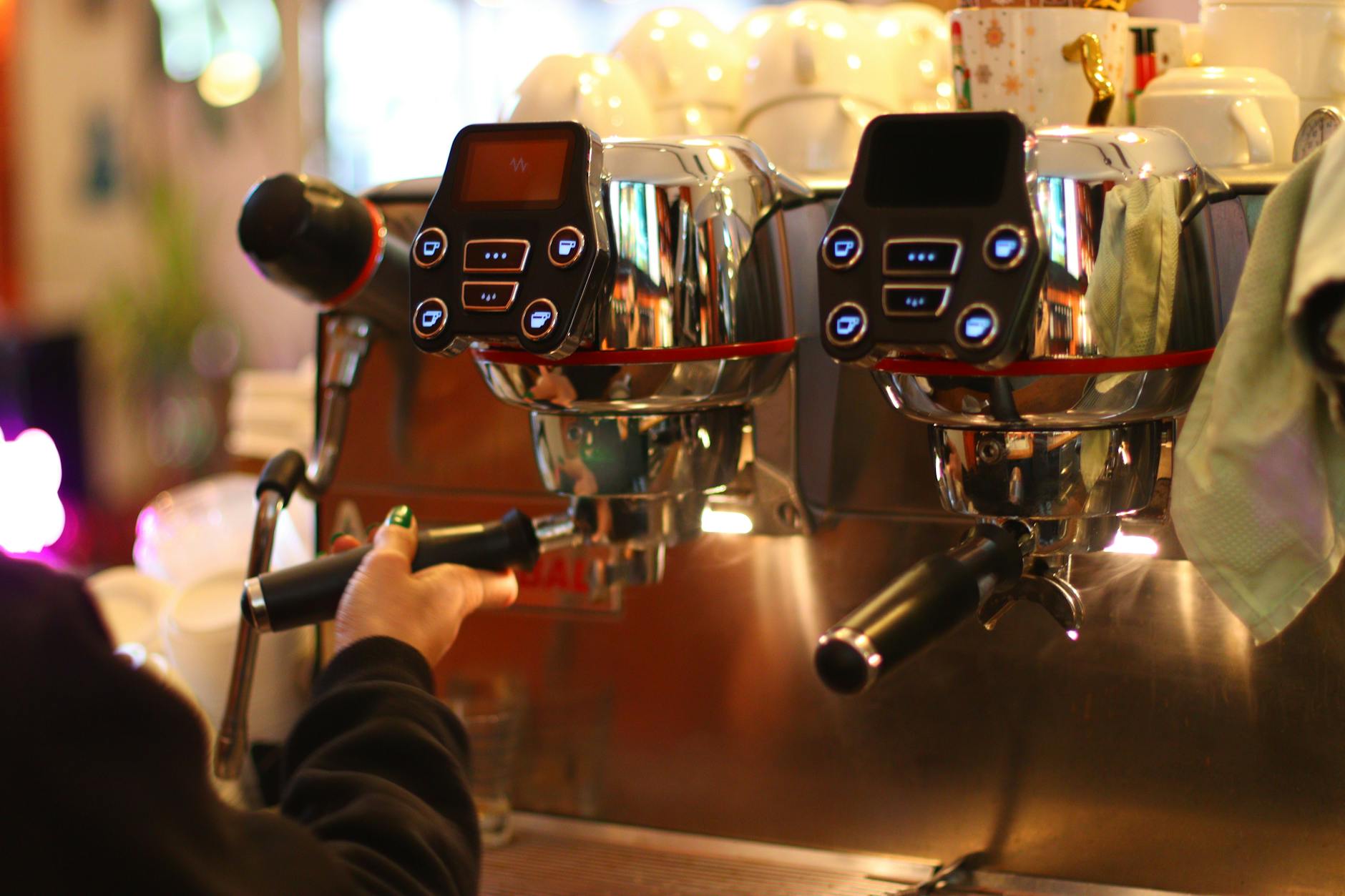
The pursuit of the perfect espresso shot can feel like a never-ending journey. We obsess over beans, water temperature, pressure profiles, and puck preparation. Yet, one crucial step that is often overlooked is how we feed the beans into our grinder. The two dominant methods, slow feeding and flood feeding, can have a surprising impact on the final taste in your cup. Flood feeding, the common practice of dumping the entire dose of beans in at once, is fast and efficient. Slow feeding, a more deliberate approach of adding beans gradually, promises greater grind consistency. This article will explore the mechanics behind each technique, analyze their effects on grind distribution and extraction, and help you decide which method will produce a better espresso for you.
What is flood feeding?
Flood feeding is likely the method you already use, even if you don’t know its name. It’s the most straightforward and common way to grind coffee for espresso. Simply put, you weigh your dose of beans and pour the entire amount into the grinder’s hopper or inlet at once. The grinder is then turned on, and the weight of the beans themselves helps force them through the burrs until the chamber is empty.
This technique is the standard for a reason. It is built for speed and efficiency. In a busy cafe environment, there is no time for anything else. Most grinders, especially those with large hoppers, are designed and calibrated to work this way. The constant pressure from the column of beans above the burrs ensures a consistent and fast feed rate.
However, this convenience can come with a trade-off. When the burrs are “flooded” with beans, the grinding action can be more violent. Beans can chip and shatter against each other before being neatly sliced by the burrs. This process can generate a higher quantity of very fine particles, often called “fines,” alongside the target grind size. While some fines are necessary for a good extraction, too many can lead to issues like channeling or over-extraction, introducing unwanted bitterness.
The meticulous approach of slow feeding
Slow feeding is the antithesis of the dump-and-go method. It’s a hands-on, meticulous technique where the barista slowly and gradually feeds beans into the running grinder, often just a few at a time. The goal is to allow the grinder’s burrs to engage with each bean more individually, without the chaotic pressure and collision created by a large volume of beans pushing down from above.
By controlling the feed rate, you fundamentally change what happens between the burrs. Instead of beans shattering against each other, they are pulled in and ground more gently. The result is a significant change in the grind size distribution. Proponents of slow feeding report a much more uniform grind, with a noticeable reduction in the number of both fines (the dust-like particles) and boulders (larger, under-ground chunks). This “unimodal” distribution is the theoretical ideal for an even extraction.
Of course, this precision comes at the cost of time and effort. Slow feeding turns a 10-second grind into a 30 or 40-second ritual. It’s not practical for commercial settings and requires your full attention. For the home barista focused on squeezing every last drop of potential from their beans, however, this extra effort can be a key to unlocking new levels of flavor clarity and sweetness.
How feeding style impacts your espresso shot
The differences in grind distribution created by these two methods directly translate to what happens when water hits the coffee puck. A more uniform grind, as is often produced by slow feeding, promotes a more even and consistent extraction. With fewer fines to slow down the flow of water and fewer boulders to let it gush through, the risk of channeling is reduced. Water can pass through the entire coffee bed at a more uniform rate, extracting the delicious soluble compounds evenly.
This often results in a shot that is characterized by:
- Higher clarity: Distinct flavor notes of fruit, florals, or chocolate are more pronounced and easier to identify.
- Increased sweetness: A balanced extraction tends to highlight the natural sugars in the coffee.
- A lighter body: The reduction in fines can lead to a less dense, more tea-like texture in the final cup.
Conversely, the grind from flood feeding, with its wider particle distribution, tends to produce a more traditional espresso profile. The extra fines can increase resistance in the puck, which can help build pressure and often results in a richer, heavier-bodied shot with a thick, satisfying crema. However, these same fines can easily over-extract, introducing bitter and astringent flavors that can mask the coffee’s more delicate notes.
| Feature | Flood Feeding | Slow Feeding |
|---|---|---|
| Grind Uniformity | Less uniform (more fines and boulders) | More uniform (fewer fines and boulders) |
| Workflow Speed | Fast and efficient | Slow and meticulous |
| Flavor Profile | Heavy body, rich texture, potentially more bitterness | High clarity, increased sweetness, lighter body |
| Extraction Risk | Higher risk of channeling and uneven extraction | Promotes a more even, balanced extraction |
| Best For | Speed, classic espresso texture, busy environments | Flavor exploration, light roasts, hobbyists |
Choosing your technique: workflow vs. flavor
So, which method is definitively better? The honest answer is: it depends on your goals and your gear. There is no single winner, only the right choice for a specific situation. If your priority is speed, convenience, and a classic, heavy-bodied espresso, flood feeding is the undisputed champion. It’s the practical, no-fuss method that reliably produces a great shot, especially with medium to dark roasts where body and richness are prized over delicate notes.
If, however, you are a hobbyist who enjoys the process and wants to taste the subtle nuances of a high-quality, light-roasted single-origin coffee, slow feeding is a technique you must try. The potential to increase flavor clarity, sweetness, and balance is significant. It’s a method for the flavor chaser, the experimenter who doesn’t mind trading a little extra time for a potentially superior-tasting cup. It is particularly effective with single-dosing grinders where “popcorning” (beans jumping in the throat) can be an issue, as slow feeding mitigates this effect entirely.
Ultimately, the best way to decide is to experiment for yourself. Try pulling two shots back-to-back, one with each method, and taste them side-by-side. The difference may surprise you.
In the debate between slow feeding and flood feeding, there is no universal champion. The “better” method is entirely dependent on your personal priorities as a barista. Flood feeding is the industry standard for its unmatched speed and efficiency, reliably producing the rich, full-bodied espresso that many know and love. Its downside is a less uniform grind that can sometimes introduce bitterness. Slow feeding is a meticulous ritual for the home enthusiast, trading speed for precision. It can yield a more uniform grind, unlocking shots with exceptional flavor clarity, sweetness, and balance, especially with light roasts. The choice comes down to a simple trade-off: are you optimizing for workflow or for nuanced flavor? The exciting part is that you get to decide.
 No products in the cart.