

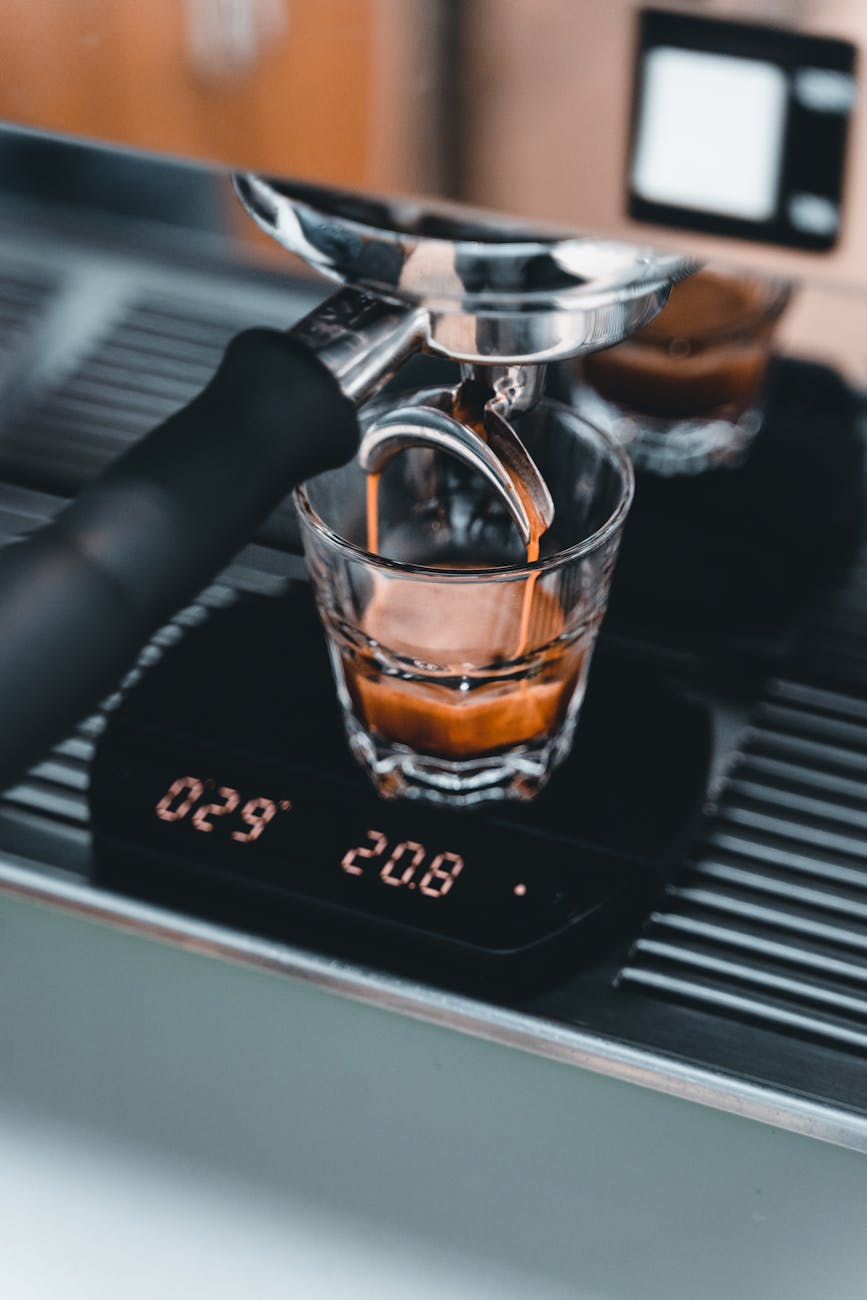
Pulling a rich, balanced shot of decaf espresso can often feel like a frustrating puzzle. You use the same technique that works perfectly for your regular beans, only to be met with a gushing, under-extracted shot that tastes disappointingly sour. This common problem isn’t your fault; it’s a direct result of the decaffeination process. The beans themselves are physically different, making them more brittle and prone to shattering in the grinder. This creates excessive fine particles that wreak havoc on your extraction. In this article, we’ll explore why decaf is so challenging and introduce a simple yet transformative technique called slow feeding. This method can dramatically improve your grind quality, solve common extraction issues, and unlock the delicious potential hidden within your decaf beans.
The unique challenge of decaf espresso
To understand why decaf espresso is so tricky, we need to look at the beans themselves. Processes like the Swiss Water or CO2 method, which remove caffeine, also alter the cellular structure of the coffee bean. They become more porous and brittle than their caffeinated counterparts. When you put these fragile beans through a grinder, especially all at once, they don’t just crack; they shatter. This creates an inconsistent grind size distribution with a high proportion of ultra-fine particles, often referred to as “fines,” alongside larger particles, or “boulders.”
This mix of fines and boulders is the primary culprit behind poor decaf extractions. Here’s what happens:
- Clogging and channeling: The excessive fines migrate with the water and clog the small pores within the coffee puck. The pressurized water, unable to pass through evenly, is forced to find the path of least resistance. It carves out small channels, a phenomenon known as channeling.
- Uneven extraction: Water rushes through these channels, over-extracting the coffee it touches (causing bitterness) while completely bypassing other parts of the puck, leaving them under-extracted (causing sourness). The resulting shot is a chaotic mix of undesirable flavors.
Ultimately, a shot that runs too fast and tastes sour is the classic sign of channeling caused by a poor quality grind, a problem that is significantly amplified with decaf beans.
What is slow feeding and how does it help?
Slow feeding is a grinding technique designed to improve grind consistency by controlling the rate at which beans enter the burrs. Instead of dumping your entire dose into the hopper and letting the grinder pull them in aggressively, you slowly and deliberately feed the beans into the running grinder. This simple change has a profound impact on how the burrs interact with the brittle decaf beans.
By feeding the beans in a thin, steady stream, you prevent the grinding chamber from becoming overwhelmed. Each bean has more space and time to be caught and crushed properly by the burrs, rather than being violently shattered against other beans. This controlled process significantly reduces the creation of excess fines and leads to a more uniform and consistent grind size. The grounds that result are often fluffier, with less static and clumping. This directly counteracts the primary issue with grinding decaf, giving you a much better foundation for building a quality espresso puck and achieving a balanced extraction.
A practical guide to slow feeding your decaf beans
Implementing slow feeding into your espresso workflow is straightforward. While it works best with single-dosing grinders, it can be adapted for most setups. Follow these steps for a better decaf experience:
- Empty the grinder: Start with an empty hopper and grinding chamber to ensure only your decaf dose is being ground.
- Weigh your dose: Accurately weigh your desired amount of decaf beans, for example, 18 grams.
- Start the grinder: Turn the grinder on before adding any beans. The burrs should be spinning at full speed.
- Feed the beans slowly: Gently and steadily pour the beans into the spinning burrs. You are aiming for a rate where the grinder’s sound remains relatively constant, without laboring or choking. It should take several seconds to feed the entire dose, not just one quick dump.
- Adjust your grind setting: Because slow feeding produces fewer fines, you will almost certainly need to grind finer than you normally would for decaf. The improved consistency allows for this finer setting without choking the machine, enabling a longer, more even extraction.
- Prepare your puck: After grinding, use a Weiss Distribution Technique (WDT) tool to break up any remaining clumps and ensure the grounds are evenly distributed in the portafilter before tamping.
This deliberate process gives you maximum control over grind quality, setting you up for a successful extraction before you even lock in the portafilter.
Dialing in and troubleshooting with slow feeding
After you start slow feeding, your next step is to dial in your shot. You should immediately notice a difference in how the espresso extracts. Instead of a messy, gushing flow, you should see a more centered and syrupy stream coming from your portafilter. The taste will be the ultimate test; you are looking for a reduction in sourness and an increase in sweetness and body.
Of course, you may still need to make adjustments. Use this table as a guide to troubleshoot any remaining issues:
| Problem | Likely cause | Solution |
|---|---|---|
| Shot runs too fast (under 25 seconds) | Grind is still too coarse. | Adjust your grinder to a finer setting. Slow feeding gives you the room to go finer without choking the machine. |
| Shot is choking or running too slow (over 35 seconds) | You have ground too fine. | Make a small adjustment to a coarser setting. You have found the lower limit for your specific bean. |
| Shot tastes both sour and bitter | Lingering channeling from uneven puck preparation. | Your grind is likely good. Focus on improving your distribution with a WDT tool and ensure a firm, level tamp. |
By systematically addressing these variables, you can fine-tune your recipe and consistently produce excellent decaf espresso.
In conclusion, the frustration of brewing decaf espresso is rooted in the physical properties of the bean. The decaffeination process renders them brittle, leading to inconsistent grinds with too many fines, which in turn causes channeling and poor extractions. The slow feeding technique directly addresses this core problem. By feeding beans into a running grinder at a controlled pace, you drastically improve grind consistency, reduce fines, and create a more uniform coffee bed. This simple adjustment in your workflow empowers you to grind finer, achieve a more even extraction, and eliminate the sour, watery shots of the past. Don’t give up on decaf; embrace a smarter grinding technique and unlock the sweet, rich, and full-bodied espresso you’ve been looking for.

 No products in the cart.