

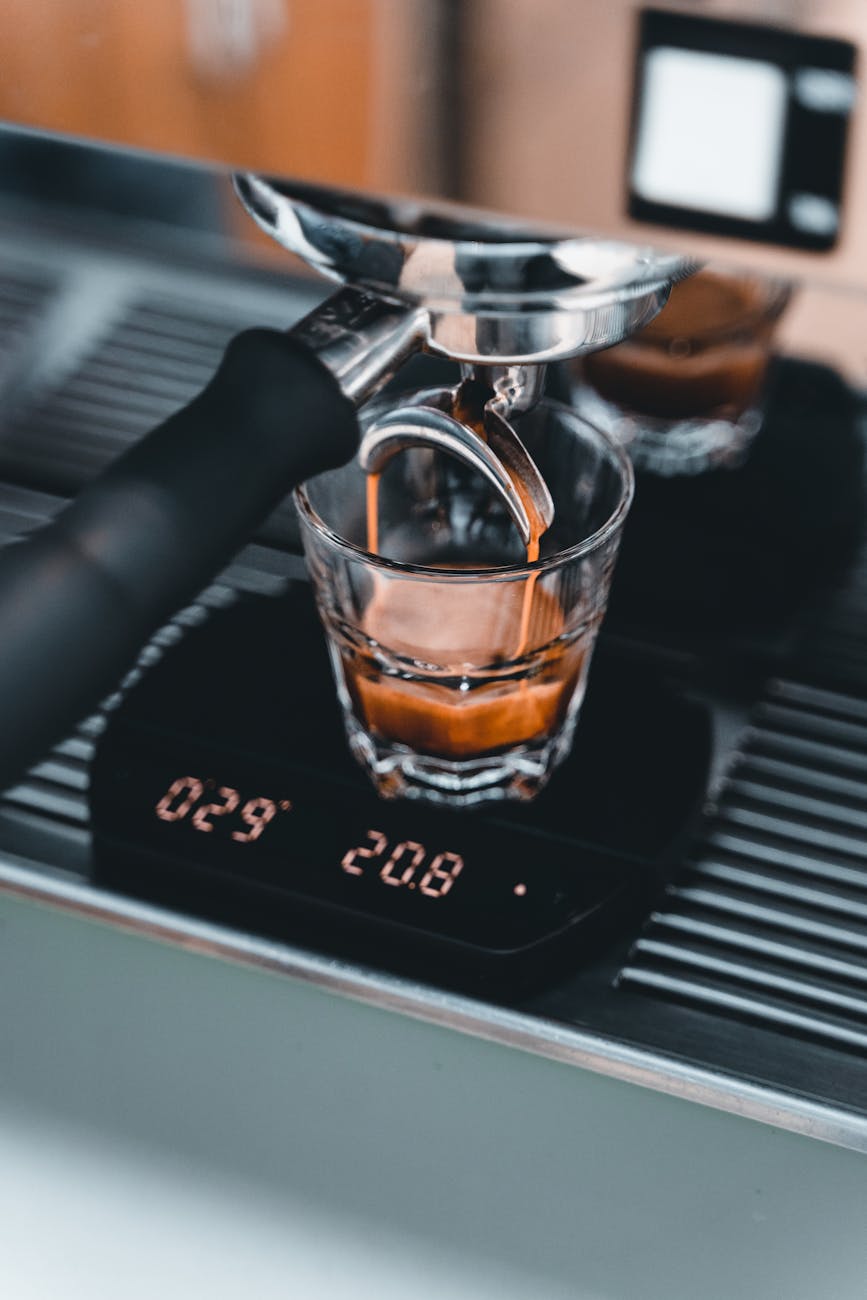
The Coffee Bean & Tea Leaf has cultivated a loyal following for its distinct, smooth, and balanced espresso. For home baristas aiming to replicate that signature café experience, mastering the art of espresso extraction is key. A crucial, yet often overlooked, element in this process is pre-infusion. This technique, which involves gently soaking the coffee puck at a low pressure before applying the full nine bars of extraction pressure, can dramatically transform your shot. This article will delve into specific pre-infusion strategies tailored for The Coffee Bean & Tea Leaf’s espresso blend. We will explore how to prepare your equipment, apply different pre-infusion techniques, and analyze the results to pull a shot that highlights the rich, caramel-like sweetness inherent in their beans.
Understanding pre-infusion and the CBTL profile
Before we can manipulate a variable like pre-infusion, we must understand its purpose and the target we’re aiming for. Pre-infusion is the initial, low-pressure stage of an espresso shot. Instead of immediately hitting the dry coffee grounds with high-pressure water, which can cause cracks and channels, pre-infusion gently saturates the entire puck. This allows CO2 to escape from the freshly ground coffee, swells the grinds, and settles the bed, creating a more uniform density. The primary benefit is a significant reduction in channeling, a phenomenon where water finds a path of least resistance through the puck, leading to uneven extraction—some parts get over-extracted (bitter) while others are under-extracted (sour).
The classic espresso from The Coffee Bean & Tea Leaf is known for its balanced and smooth character. It typically features a rich body with notes of dark caramel, toasted nuts, and a clean, sweet finish with very little harsh acidity. Our pre-infusion goal, therefore, is not to introduce bright, acidic notes, but to enhance this inherent sweetness and body while ensuring a consistent, repeatable extraction. By promoting an even saturation, we can extract the desirable soluble solids that contribute to this signature flavor profile without pulling out the bitter compounds associated with over-extraction.
Puck preparation for optimal saturation
A successful pre-infusion is entirely dependent on what happens before you lock in the portafilter. Without a perfectly prepared puck, even the most advanced pre-infusion strategy will fail. The goal is to create a coffee bed with homogenous density, leaving no easy paths for water to exploit. For CBTL’s medium-dark roast, consistency is paramount.
Start with your grind. You need a quality burr grinder that produces a consistent particle size. For a pre-infusion-focused shot, you can often grind a touch finer than you might for a standard shot, as the gentle saturation helps prevent the machine from choking. After grinding, focus on distribution. Tools like a Weiss Distribution Technique (WDT) tool are invaluable for breaking up clumps and evenly distributing the grounds. Avoid simply tapping the portafilter, as this can cause stratification, with finer particles settling at the bottom.
Finally, a level tamp is non-negotiable. The pressure of your tamp is less important than its consistency and ensuring the surface is perfectly flat. A crooked tamp will create a high-density area and a low-density area, and water will rush through the path of least resistance, negating all the benefits of pre-infusion. A well-prepared, evenly distributed, and level puck is the foundation for a beautiful, even extraction.
Applying pre-infusion techniques
With a well-prepared puck, you can now apply specific pre-infusion techniques to enhance your CBTL espresso. The exact parameters will depend on your machine’s capabilities, but the principles remain the same.
- Standard low-pressure pre-infusion: This is the most common method found on prosumer espresso machines. It involves applying a low pressure, typically between 2-4 bars, for a set duration before the pump engages at full pressure. For the CBTL blend, a good starting point is a 7-9 second pre-infusion. This is long enough to fully saturate the puck and begin extracting the syrupy, sweet flavors without introducing unwanted acidity.
- The blooming espresso: This technique involves a longer pre-infusion time at an even lower pressure, often just 1.5-2 bars, for up to 15 seconds. This mimics the “bloom” phase in pour-over coffee. This extended soak is excellent for taming any harshness and maximizing the perception of sweetness and body. It works exceptionally well with CBTL beans, helping to round out the flavor profile and produce a thick, velvety crema.
- Manual flow profiling: For users with machines that allow manual control, you have the ultimate flexibility. You can start with a very gentle flow to saturate the puck until the first drops appear, then slowly ramp up the pressure to full extraction. This method provides the most even saturation possible and gives you precise control over the final taste, allowing you to perfectly target the caramel notes of the blend.
The key is to watch the bottom of your portafilter. During a successful pre-infusion, you should see the entire basket begin to darken evenly as it saturates, with the first drops of espresso forming in the center and slowly coalescing before the main extraction begins.
Evaluating the shot and making adjustments
Pulling the shot is only half the battle; the real learning comes from tasting and evaluating the result. A successful pre-infusion with CBTL beans should result in an espresso that is sweet, balanced, and has a pleasant, lingering aftertaste. It should coat your palate with a smooth, full body. If something is off, your pre-infusion parameters are the first place to look. A well-executed pre-infusion makes troubleshooting more straightforward because it eliminates channeling as a primary suspect.
Use a simple framework to diagnose and adjust your shots. Taste is the ultimate guide, but visual cues during the extraction can also provide valuable information. Keep a log of your parameters—grind size, dose, pre-infusion time, and total shot time—to track your progress.
| Problem | Taste/Visual Cue | Potential Adjustment |
| Sour / Under-extracted | Tastes acidic, thin body. Shot runs too fast. | Increase pre-infusion time by 2-3 seconds to boost extraction. You can also grind slightly finer. |
| Bitter / Over-extracted | Tastes harsh, astringent, hollow. Shot may start well but blondes too quickly. | Decrease pre-infusion time. A shorter saturation can reduce the extraction of bitter compounds. Check puck prep for hidden channels. |
| Inconsistent Shots | One shot is good, the next is sour. Flow is uneven from the basket. | This points to a preparation issue. Focus on your distribution (WDT) and tamping to ensure the pre-infusion can work on an even puck. |
By systematically adjusting one variable at a time, you can dial in the perfect recipe that makes The Coffee Bean & Tea Leaf’s espresso truly shine.
In conclusion, mastering pre-infusion is a transformative step for any home barista seeking to perfect their The Coffee Bean & Tea Leaf espresso. It’s a technique that elevates extraction from a brute-force process to a nuanced craft. We’ve seen that the journey begins not with the machine, but with meticulous puck preparation to ensure a uniform coffee bed. From there, applying specific strategies—whether a standard 8-second low-pressure hold or a longer, gentler bloom—directly influences the final taste, helping to amplify the signature sweet, caramel-forward profile of the CBTL blend. By learning to evaluate each shot through taste and visual cues and making systematic adjustments, you can move beyond pulling just an “okay” shot to consistently crafting a truly exceptional one that rivals the quality of the café.
 No products in the cart.