

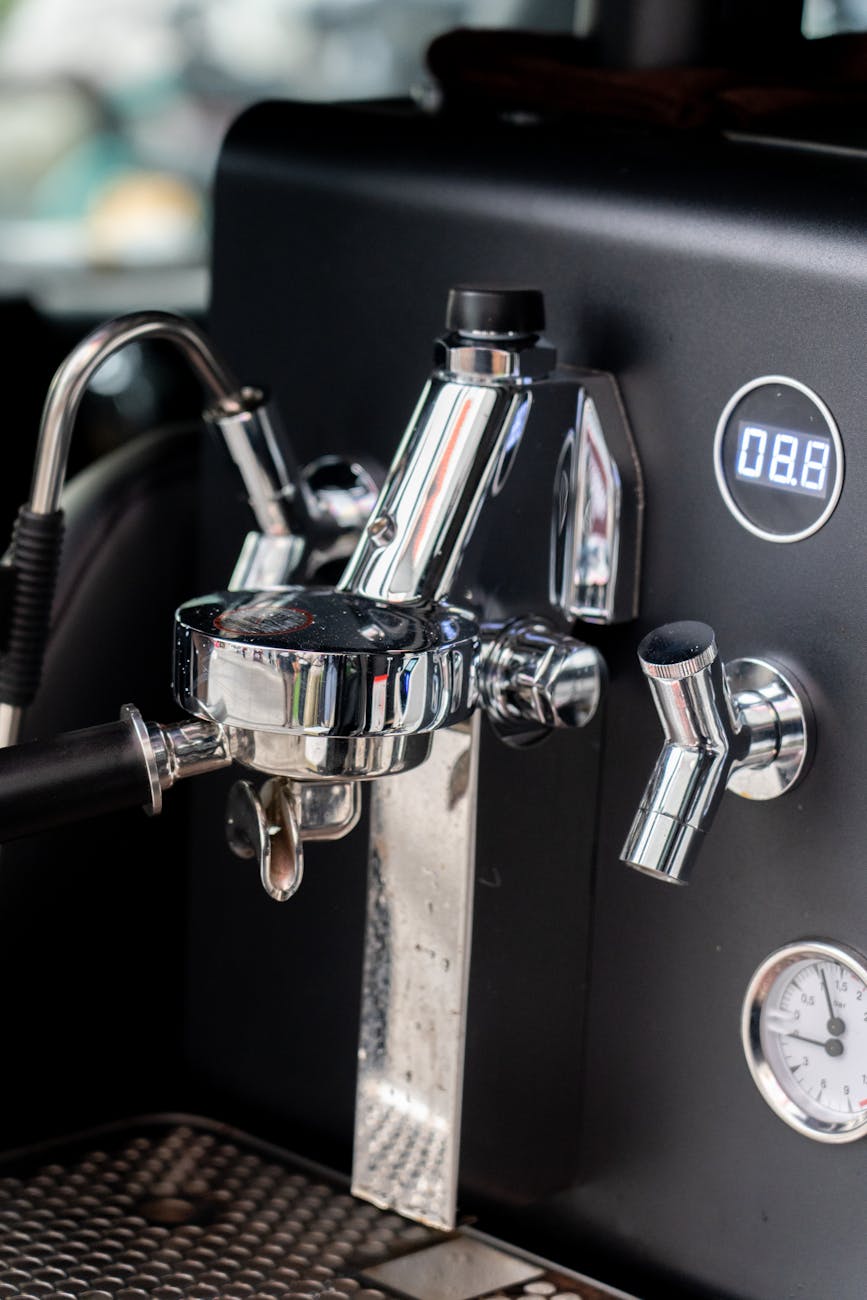
The E61 group head is an icon in the world of espresso, a marvel of mid-century engineering that remains a benchmark for thermal stability and extraction quality even today. Originally patented by Faema in 1961, its design fundamentally changed how we think about pulling a shot. A key element of its enduring success is its inherent ability to perform pre-infusion, a gentle wetting of the coffee puck before applying full brew pressure. This step is crucial for reducing channeling and achieving a balanced extraction. However, not all pre-infusion is created equal. Modern advancements have introduced a distinction between the classic passive pre-infusion and a more controllable active pre-infusion, often through flow control devices. This article will explore these two methods in detail.
What is pre-infusion and why does it matter?
Before we can compare passive and active methods, it’s essential to understand the “why” behind pre-infusion. When you lock in your portafilter and start the brew process, you are about to force water at high pressure (typically 9 bars) through a tightly packed bed of fine coffee grounds. If this pressure hits the dry puck all at once, it can create tiny cracks or channels. Water, being lazy, will always follow the path of least resistance, rushing through these channels and under-extracting the rest of the puck. The result is a shot that is both sour and bitter, lacking the sweetness and complexity we crave.
Pre-infusion is the solution. It is the process of gently introducing low-pressure water to the coffee puck for the first few seconds of the extraction. This allows the grounds to swell and settle, creating a more uniform and stable structure. This saturated puck is far more resistant to channeling when the full pressure of the pump kicks in. A proper pre-infusion leads to:
- Reduced channeling: A more even flow of water through the entire puck.
- Improved consistency: Fewer “bad shots” and more repeatable results.
- Enhanced flavor: A more balanced extraction brings out sweetness and complexity while minimizing harsh flavors.
The E61 group head was revolutionary because it had a form of this process built directly into its mechanical design, a feature we now identify as passive pre-infusion.
The classic approach: Passive pre-infusion
The original E61 design incorporates a special pre-infusion chamber within the group head’s valve system. When the barista lifts the brew lever, a valve opens, allowing water to flow towards the coffee. In a classic E61 machine, this process unfolds in a specific, mechanical way. Initially, the brew pump is not yet activated, and water enters the pre-infusion chamber. If the machine is plumbed into a water line, this initial wetting occurs at line pressure, typically around 2-4 bars. If it’s a reservoir-fed machine, the pressure is very low, coming only from the initial, gentle ramp-up of the vibration or rotary pump.
This phase lasts for a few seconds until the chamber is full. Only then does a secondary valve engage the pump to deliver the full 9 bars of pressure. This delay creates a passive pre-infusion. It’s “passive” because the barista has no direct control over its pressure or duration; it’s entirely determined by the machine’s internal mechanics and the water source. While simple, this method is incredibly effective and is a primary reason for the E61’s forgiving nature and the rich, syrupy shots it’s famous for producing.
The modern evolution: Active pre-infusion and flow control
As the specialty coffee scene has evolved, so has the desire for greater control over every variable in the brewing process. This led to the development of modifications for the E61 group head, most notably flow control devices. These devices typically replace the top nut on the group head with a paddle or knob connected to a needle valve. This valve sits in the water path, allowing the barista to manually and precisely regulate the rate of water flowing to the coffee puck.
This is active pre-infusion. The barista is no longer a passive observer of a mechanical process. Instead, they can actively manipulate the flow rate in real-time. A barista could start with an extremely low flow for a long, 15-second pre-infusion to gently saturate a delicate light roast. They could then smoothly ramp up the pressure to 9 bars, and even taper it off toward the end of the shot to mimic a lever machine profile. This level of control unlocks a new world of experimentation, allowing users to tailor the extraction profile to specific beans, roast levels, and desired flavor outcomes. It transforms the E61 from a machine with a single, excellent extraction style into a versatile tool for the curious home barista.
Comparing passive and active pre-infusion
So, which method is better? The answer depends entirely on the user’s goals, experience level, and desire for experimentation. The classic passive system is a testament to brilliant design: it is simple, consistent, and produces fantastic results with minimal fuss. For someone who wants to pull delicious, traditional espresso without overcomplicating the process, a standard E61 is a perfect choice.
Active pre-infusion via flow control, on the other hand, is for the enthusiast who wants to push the boundaries. It introduces more variables and a steeper learning curve, but it offers the potential for unparalleled shot quality and the ability to perfectly dial in challenging light roasts that might taste sour with a standard extraction. It’s a tool for fine-tuning and exploration.
| Feature | Passive pre-infusion (Classic E61) | Active pre-infusion (Flow Control E61) |
|---|---|---|
| Control | Minimal to none. Set by the machine’s mechanics and water line pressure. | Full and direct control over flow rate and pressure throughout the entire shot. |
| Consistency | Very high. The mechanical process is highly repeatable. | Depends on the user. Can be very consistent once a profile is dialed in, but introduces more room for user error. |
| User experience | Simple and straightforward. “Set it and forget it.” | Complex and engaging. Requires the user to learn and actively manage the extraction. |
| Best for | Medium to dark roasts, traditional espresso blends, users who value simplicity and reliability. | Light roasts, single-origin coffees, experimentation, and users who want ultimate control. |
| Cost | Standard feature on all E61 machines. | Comes standard on higher-end machines or as an aftermarket upgrade kit, adding to the cost. |
Ultimately, the journey from passive to active pre-infusion mirrors the evolution of the espresso hobby itself. The classic E61 provides a beautiful, reliable foundation built on ingenious mechanical principles. It’s a workhorse that has earned its legendary status. The addition of active flow control is a modern enhancement that builds upon that foundation, offering a new layer of precision for those who seek it. It’s not about one being definitively better than the other, but about which tool is right for the job. Whether you prefer the elegant simplicity of the original design or the limitless possibilities of modern control, the E61 group head continues to be a fantastic platform for crafting the perfect shot of espresso.

 No products in the cart.