

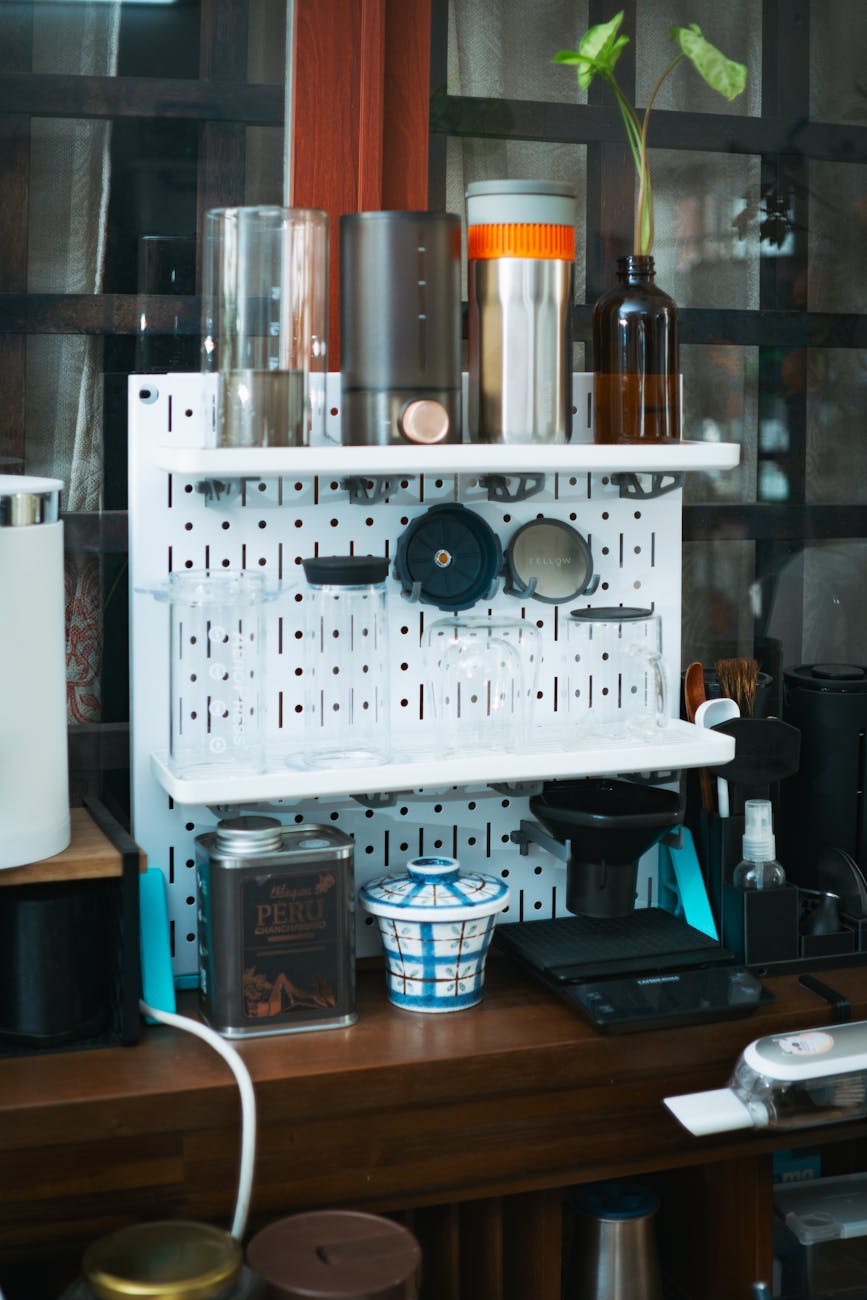
The ritual of crafting a manual espresso is a cherished daily practice for many home baristas. The careful weighing of beans, the satisfying feel of a perfect tamp, and the sight of a rich, syrupy shot pulling into the cup is a deeply rewarding experience. However, this beautiful process can quickly devolve into chaos on a cluttered countertop. Grinders, tampers, scales, and knock boxes can create a disorganized and inefficient workspace, turning a moment of zen into a frustrating mess. This article will guide you through the art of optimizing your countertop space, transforming it into a streamlined and functional coffee station that enhances your manual espresso workflow and makes every cup a joy to prepare.
The foundation: Zoning your coffee station
Before buying any new organizers, the most crucial step is to mentally divide your coffee area into functional zones. A logical layout is the backbone of an efficient workflow. Think of your counter not as one flat surface, but as three distinct areas, each with a specific purpose. This “zoning” approach minimizes movement and keeps cross-contamination between wet and dry ingredients at bay.
- The prep zone (dry): This is where your journey begins. It should house your bag of beans, coffee grinder, and scale. This is also the ideal home for your puck preparation tools like a Weiss Distribution Technique (WDT) tool, a distribution leveler, and your tamper. Keeping this area strictly for dry goods prevents coffee grounds from turning into a muddy paste.
- The extraction zone (wet): This is the main stage, centered around your manual espresso machine. This zone will inevitably get wet from stray drips or steam wand purging. The only items that should live here permanently are the machine itself and perhaps a small, absorbent mat underneath it.
- The finishing and cleanup zone: This area is for everything that happens after the shot is pulled. It should contain your cups, a knock box for spent pucks, a dedicated cloth for wiping the portafilter, and another for cleaning the steam wand. If you enjoy milk drinks, your milk pitcher and milk frother would also belong here.
By establishing these zones, you create a natural, linear path from bean to cup, which is the key to a smooth and repeatable process.
Essential tools and smart storage solutions
With your zones defined, you can now select tools and storage that complement your layout. The goal is not just to store your gear, but to make it effortlessly accessible at the precise moment you need it. A common mistake is accumulating every trendy gadget; instead, focus on high-quality essentials that serve a clear purpose in your workflow.
Vertical space is your best friend on a crowded counter. Consider installing a small floating shelf above your prep zone to store bean containers or your favorite cups. A magnetic knife strip mounted on the wall is an elegant solution for holding metal tools like your WDT and tamper, freeing up valuable surface area. Look for products designed for consolidation. Many tamping stations, for example, are designed with cutouts to hold your tamper, leveler, and portafilter, keeping everything for your puck prep neatly contained in one unit. Similarly, specialized stands can elevate your grinder, allowing a knock box drawer to slide neatly underneath, combining two large items into a single, smaller footprint.
Managing the mess: Puck prep and post-shot cleanup
The two messiest parts of a manual espresso workflow are, without a doubt, grinding the coffee and disposing of the used puck. Taming these two steps is transformative for your counter’s cleanliness. A dosing funnel is arguably the most important, low-cost accessory you can buy. It sits on top of your portafilter and acts as a collar, preventing any coffee grounds from spilling over the sides during grinding or WDT. This single tool eliminates the most common source of daily mess.
Next, consider your post-shot routine. Walking a dripping portafilter across your kitchen to the trash can is a recipe for a trail of coffee spots. A small, countertop knock box placed in your finishing zone is essential. It allows you to immediately and cleanly dispose of the puck. Pair this with a dedicated, folded microfiber cloth right next to it. This creates a simple, two-step habit: pull shot, knock puck, wipe portafilter. This immediate cleanup prevents coffee from drying onto your equipment and keeps your entire extraction zone pristine for the next use.
The workflow in action: A side-by-side comparison
Let’s put it all together. A well-designed space directly influences your actions, guiding you through a seamless and logical sequence. An optimized workflow isn’t just faster; it’s more intentional and far more enjoyable. It removes points of friction, allowing you to focus on the craft of making great espresso rather than searching for a tool or cleaning up a spill. The difference between a cluttered setup and an optimized one is stark, as illustrated by the common tasks below.
| Task | Cluttered workflow | Optimized workflow |
|---|---|---|
| Grinding | Coffee grounds spill over the portafilter and onto the counter. | A dosing funnel contains all grounds perfectly within the portafilter basket. |
| Tamping | Searching for the tamper; tamping on the fragile edge of the counter. | Tamper is in its designated spot on a tamping mat or station, providing a stable surface. |
| Post-shot disposal | Dripping coffee across the floor on the way to the main trash can. | Puck is immediately knocked out into a dedicated knock box next to the machine. |
| Cleanup | Using a random paper towel; spills dry up before they are addressed. | Dedicated damp and dry cloths are at hand for immediate wiping of the machine and tools. |
Ultimately, a successful home barista station is a testament to thoughtful organization, not expensive gear. By implementing the principles of zoning, choosing smart, multipurpose storage, and investing in simple tools to manage mess, you can create an efficient and elegant space. This transforms the daily act of making coffee from a potentially messy chore into the clean, meditative, and deeply satisfying ritual it is meant to be. A well-organized countertop doesn’t just look better; it actively helps you make better coffee by fostering consistency, cleanliness, and a clear mind. Your perfect shot of espresso awaits, and it begins with a perfectly planned workspace.

 No products in the cart.