

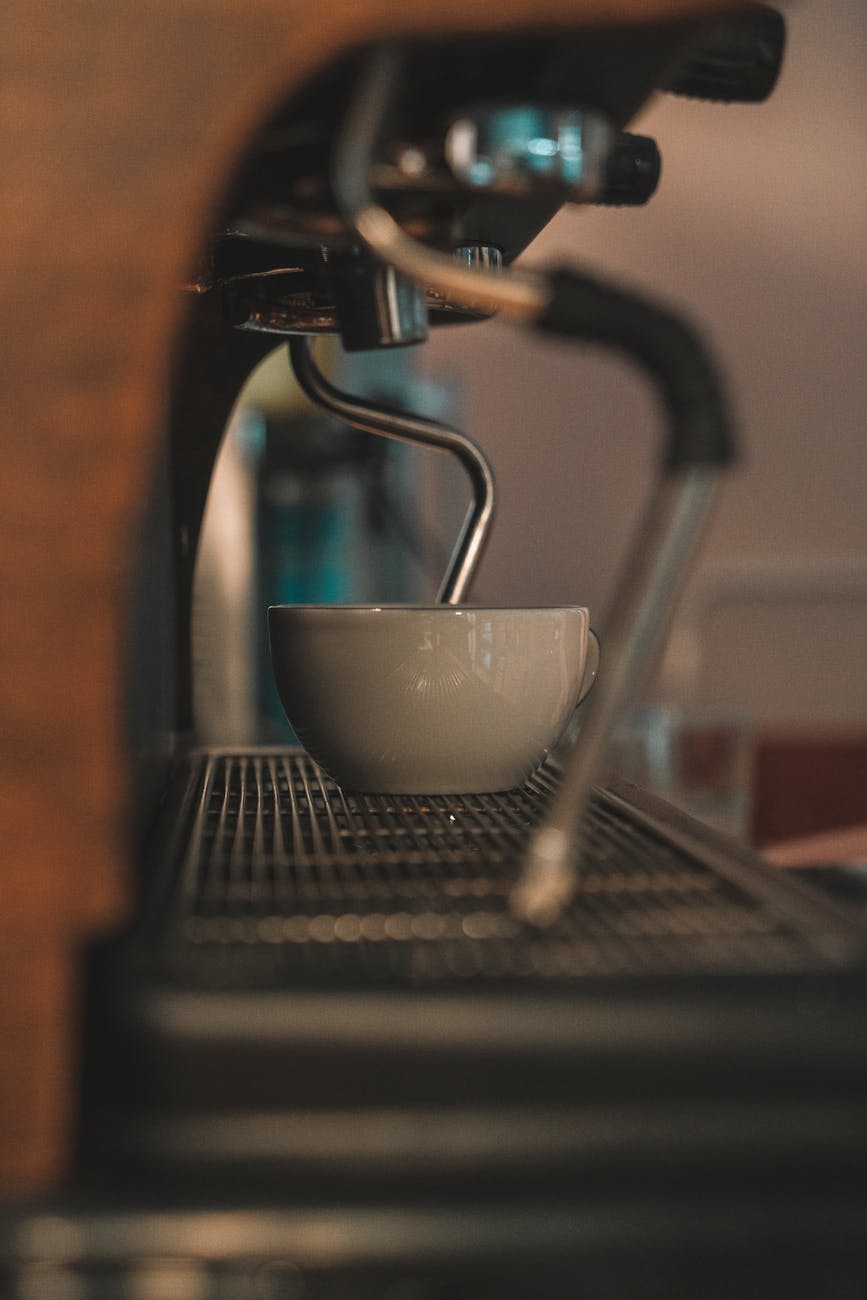
Mastering the espresso workflow: A guide from grinding to PID brewing
The quest for the perfect espresso shot is a journey of precision, patience, and passion. Far from simply pushing a button, crafting a truly exceptional espresso is a ritual, a meticulous workflow where every step is critical. From the initial whir of the grinder to the final, aromatic drop, each action influences the final taste in your cup. This guide will walk you through mastering this process, demystifying the essential stages of the modern espresso workflow. We will explore the paramount importance of a quality grind, the nuanced art of puck preparation, and the game-changing impact of PID-controlled brewing for achieving temperature stability and unlocking complex flavors in your coffee.
The foundation: Precision grinding for espresso
Any seasoned barista will tell you that your grinder is the most important piece of equipment in your setup, even more so than the espresso machine itself. The reason is simple: espresso is an extraction method that is incredibly sensitive to the surface area of the coffee grounds. To achieve a balanced shot in 25-30 seconds, you need a very fine and, most importantly, uniform grind. This is where a quality burr grinder becomes non-negotiable. Unlike blade grinders that chop beans inconsistently, burr grinders crush them between two abrasive surfaces, creating a much more uniform particle size.
The process of “dialing in” your grinder is the first, crucial step in your workflow. This involves making micro-adjustments to the grind size to control the speed of your extraction.
- Too coarse: Water flows through the coffee puck too quickly, resulting in a sour, weak, and under-extracted shot.
- Too fine: Water struggles to pass through, leading to a long, slow extraction that produces a bitter, harsh, and over-extracted shot.
The goal is to find the sweet spot where you achieve your desired brew ratio in the target time, yielding a shot that is balanced, sweet, and rich.
Puck preparation: The art of the perfect tamp
Once you have your fluffy, uniform grounds, the next step is to prepare the coffee “puck” inside the portafilter. The objective here is to create a dense, level bed of coffee that will resist the high pressure of the water from the espresso machine. If the puck is uneven or has cracks, water will exploit these weak points and create “channels,” leading to uneven extraction where some parts of the coffee are over-extracted and others are under-extracted.
To avoid this, a consistent puck preparation routine is key. This typically involves a few steps:
- Distribution: This is the process of evening out the grounds in the portafilter basket. Many baristas use a Weiss Distribution Technique (WDT) tool, which uses fine needles to break up clumps and spread the grounds evenly.
- Leveling: After distribution, some use a leveling tool to create a perfectly flat surface before tamping.
- Tamping: The final step is to apply firm, even pressure with a tamper to compact the grounds. The key here isn’t a specific amount of force but consistency. A calibrated tamper, which clicks at a preset pressure, can be a great tool for ensuring you apply the same pressure every single time.
A well-prepared puck is the best defense against channeling and a critical link between a good grind and a great extraction.
The brain of the machine: PID-controlled brewing
With your puck perfectly prepared, you move to the machine itself. One of the most significant advancements in modern espresso machines is the PID (Proportional-Integral-Derivative) controller. In simple terms, a PID is a highly accurate digital thermostat. Traditional thermostats work on a simple on/off basis, leading to wide temperature swings. A PID, however, uses an algorithm to learn the machine’s behavior, making tiny, constant adjustments to the heating element to keep the brew water at an incredibly stable temperature, often within a single degree of your target.
Why is this so important? Water temperature has a massive impact on which flavor compounds are extracted from the coffee. Even a small variance can dramatically change the taste of your espresso. With a PID, you gain precise control over this variable, allowing you to tailor the brew temperature to the specific coffee you are using. This not only provides shot-to-shot consistency but also opens up a new world of flavor exploration.
Here is a general guide for brew temperatures based on roast level:
| Roast Level | Recommended Temperature Range (Celsius) | Flavor Notes Targeted |
|---|---|---|
| Light Roast | 92°C – 96°C | Bright acidity, floral, fruity notes |
| Medium Roast | 90°C – 93°C | Balanced sweetness, caramel, chocolate |
| Dark Roast | 88°C – 91°C | Rich body, low acidity, roasty, smoky notes |
Bringing it all together: The shot-pulling ritual
The final stage is where all your preparation comes together. After locking the portafilter into the machine, place a scale with a cup on it and start your shot and a timer simultaneously. The two most important metrics to watch are yield (the weight of the liquid espresso in the cup) and time. A common starting point is a 1:2 brew ratio, meaning for every 18 grams of dry coffee grounds, you aim for 36 grams of liquid espresso. The time to reach this yield is your primary diagnostic tool. If a 36-gram shot takes only 15 seconds, your grind is too coarse. If it takes 45 seconds, it’s too fine.
By controlling the inputs (dose, grind, temperature) and measuring the outputs (yield, time), you can make informed adjustments. Taste is the ultimate judge. A shot that meets all the “correct” numbers but doesn’t taste good is not a success. Use the numbers as a guide to help you tweak one variable at a time until you produce an espresso that is truly delicious and, most importantly, repeatable.
Mastering the espresso workflow is a process of transforming a series of steps into a seamless and consistent ritual. It begins with the fundamental act of precision grinding, which dictates the potential of your extraction. This is followed by the careful art of puck preparation, ensuring the water interacts evenly with every coffee particle. The process is then handed over to the machine, where a PID controller provides the unwavering temperature stability needed for a clean and predictable extraction. Finally, by measuring your output and tasting the result, you close the feedback loop, allowing for intelligent adjustments. Ultimately, this workflow is about gaining control over variables to achieve one simple goal: consistently delicious espresso, made by you.

 No products in the cart.