

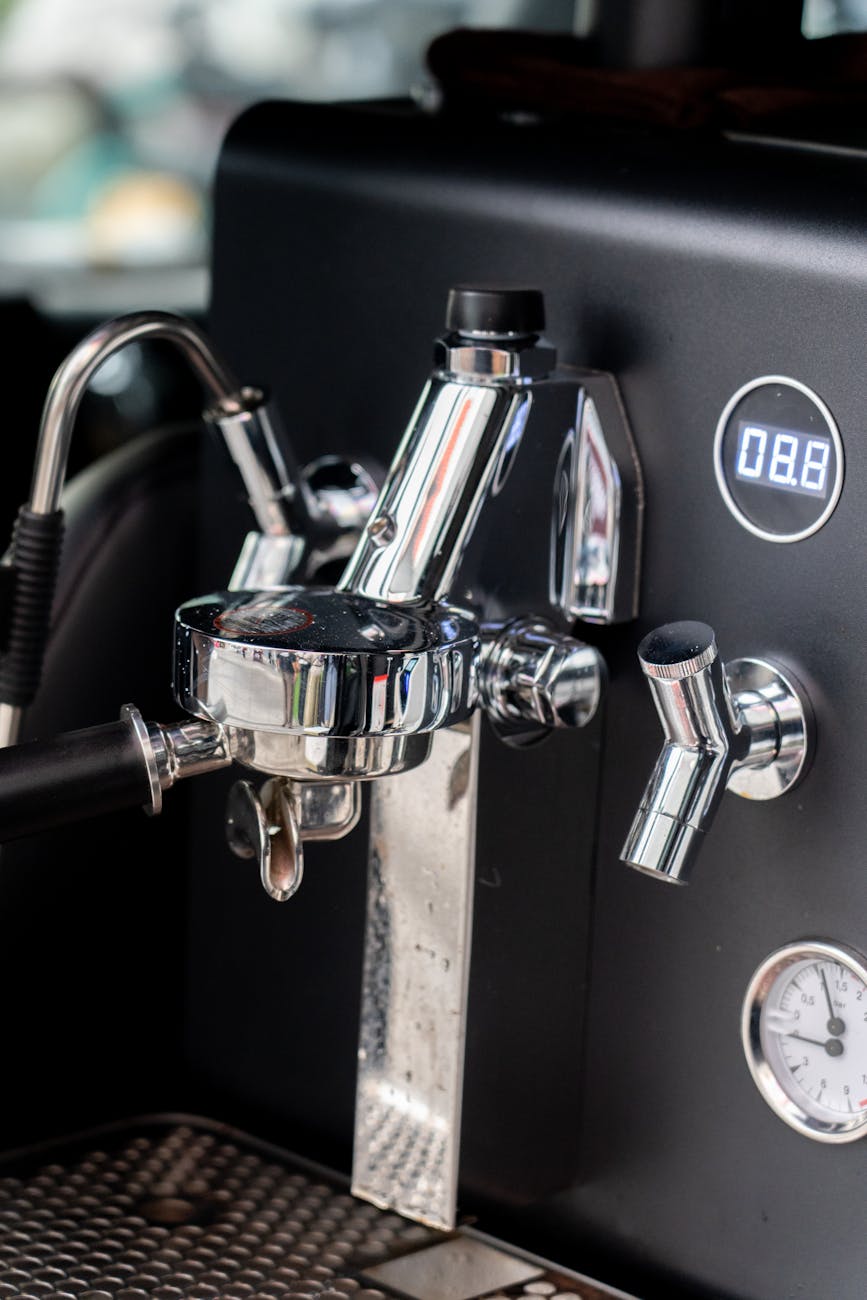
The pursuit of the perfect espresso is a journey of a thousand variables. You dial in your grinder, perfect your puck prep, and pull a shot that is balanced, sweet, and complex. But when you immediately prepare a second shot for your partner or a guest, it comes out harsh, bitter, and disappointing. This common frustration is often not a failure of your technique but a thermal management issue. The massive, beautiful chrome group head on your machine, designed for stability, can become your biggest enemy during back-to-back shots. It acts as a heat sink, accumulating thermal energy with each extraction. This article will explore why this happens and provide actionable strategies to manage group head temperature for consistently delicious espresso, shot after shot.
Understanding the group head as a heat sink
At the heart of every espresso machine is the group head, a heavy block of metal (typically chrome-plated brass or stainless steel) that the portafilter locks into. Its primary function is to provide thermal stability. The large mass is designed to be heated by the boiler to a specific, ideal brewing temperature and to hold that temperature steady. This ensures that when water travels from the boiler to the coffee puck, it doesn’t lose too much heat, allowing for a proper extraction.
The problem arises from the very nature of this design. While excellent at maintaining heat, the group head is also very good at absorbing it. When you pull a shot, water significantly hotter than the target brew temperature (especially in heat exchanger machines) flows through the group. The group head absorbs some of this excess heat. In a normal workflow with several minutes between shots, this extra heat naturally dissipates, and the group returns to its idle temperature. However, when you’re pulling shots back-to-back, there is no time for this dissipation. The first shot heats the group, the second shot heats it even more, and so on. This cumulative effect is what we call the heat sink issue, where the group head’s temperature steadily climbs, pushing your brew water far above the ideal range.
Identifying the signs of an overheating group head
Before you can manage the problem, you need to learn how to spot it. An overheating group head leaves several clues, both in the cup and from the machine itself. Paying attention to these signs is the first step toward achieving consistency.
The most obvious indicator is in the taste of your espresso. If your first shot is perfect but your second and third shots become progressively more bitter, astringent, and hollow, overheating is the likely culprit. This is a classic sign of over-extraction, where the excessively hot water is pulling unwanted, harsh-tasting compounds from the coffee grounds.
You can also use your other senses:
- Sight: An over-extracted shot often looks different. It may start flowing very quickly after pre-infusion and appear thin and watery. The color might be overly dark, lacking the rich, reddish-brown crema of a well-pulled shot.
- Sound and Steam: A clear physical sign of an overheated group is what happens when you engage the pump without a portafilter locked in. If you see water sputtering violently and flashing into steam, it means the water in the group is at or above boiling point. This is a definitive sign that your group is too hot for a gentle extraction.
For those who prefer data, an adhesive thermometer strip on the group head can provide a visual temperature reading, allowing you to see the temperature creep up with each consecutive shot. This takes the guesswork out of the equation and helps you build a more precise workflow.
Proactive and reactive management techniques
Once you’ve identified the issue, you can implement techniques to control it. These strategies range from simple workflow adjustments to more involved machine-specific procedures. The key is to find what works for your machine and your routine.
A primary reactive tool for many baristas is the cooling flush. This involves running a small amount of water through the group head *before* locking in your portafilter for the next shot. This flush serves two purposes: it purges the superheated water sitting in the group and actively cools the metal mass. For heat exchanger (HX) machines, this is critical. You typically flush until the sputtering, steamy water turns into a smooth, steady stream. For double boiler machines, a much shorter flush of 2-3 seconds is often enough to stabilize the temperature.
Another technique is portafilter manipulation. After knocking out the used puck, you can run the head of the portafilter under cool water for a few seconds before drying it and dosing it with fresh grounds. The cooled portafilter, when locked in, will absorb a significant amount of heat from the group head, helping to bring its temperature back into the ideal range just before extraction.
The simplest method, though not always practical in a busy setting, is pacing your shots. Simply waiting 60-90 seconds between extractions can give the group head enough time to dissipate excess heat and return to its stable idle temperature. While this slows down your workflow, it is an effective, low-effort way to ensure thermal consistency.
Developing a consistent and repeatable workflow
The ultimate goal is not just to manage heat, but to do so in a way that is repeatable every single time. Consistency in your actions leads to consistency in the cup. The techniques above are not isolated tricks; they should be integrated into a seamless workflow that becomes second nature.
For example, a solid workflow for an E61 machine might look like this:
- Pull shot #1.
- Immediately after, knock out the puck and wipe the basket clean.
- Perform a brief cleaning/cooling flush.
- Grind, distribute, and tamp your dose for shot #2.
- Lock the portafilter in and immediately begin the extraction.
By performing the flush and puck preparation in a consistent order and time, you create a thermal rhythm for your machine. You are controlling how much heat is added and removed between each shot, effectively neutralizing the heat sink effect. The table below compares some common methods:
| Technique | Best For (Machine Type) | Pros | Cons |
| Cooling Flush | Heat Exchanger, E61 Groups | Very effective and precise once mastered. | Wastes water; requires practice to be consistent. |
| Portafilter Cooling | All types | Quick, easy, and requires no water waste from the group. | Less precise; can potentially affect puck temperature if not done carefully. |
| Shot Pacing | All types, especially home use | Simplest method, no special technique required. | Significantly slows down the process of making multiple drinks. |
Ultimately, you may need to combine techniques. A short cooling flush followed by dosing into a room-temperature portafilter might be the perfect combination for your setup. Experiment, take notes, and taste the results.
In conclusion, the challenge of maintaining shot-to-shot consistency is often a battle against the thermal dynamics of your espresso machine’s group head. We’ve seen how this massive piece of metal, designed for stability, can act as a heat sink, steadily increasing in temperature during rapid use and causing over-extraction. This leads to the frustrating experience of a perfect first shot followed by a bitter second one. By learning to identify the signs of overheating—through taste, sight, and sound—you can take control. Implementing a consistent workflow that includes techniques like cooling flushes, portafilter management, or strategic pacing is key. Mastering group head heat is not about fighting your machine but about understanding and working with it to create a repeatable process for exceptional espresso every time.

 No products in the cart.