

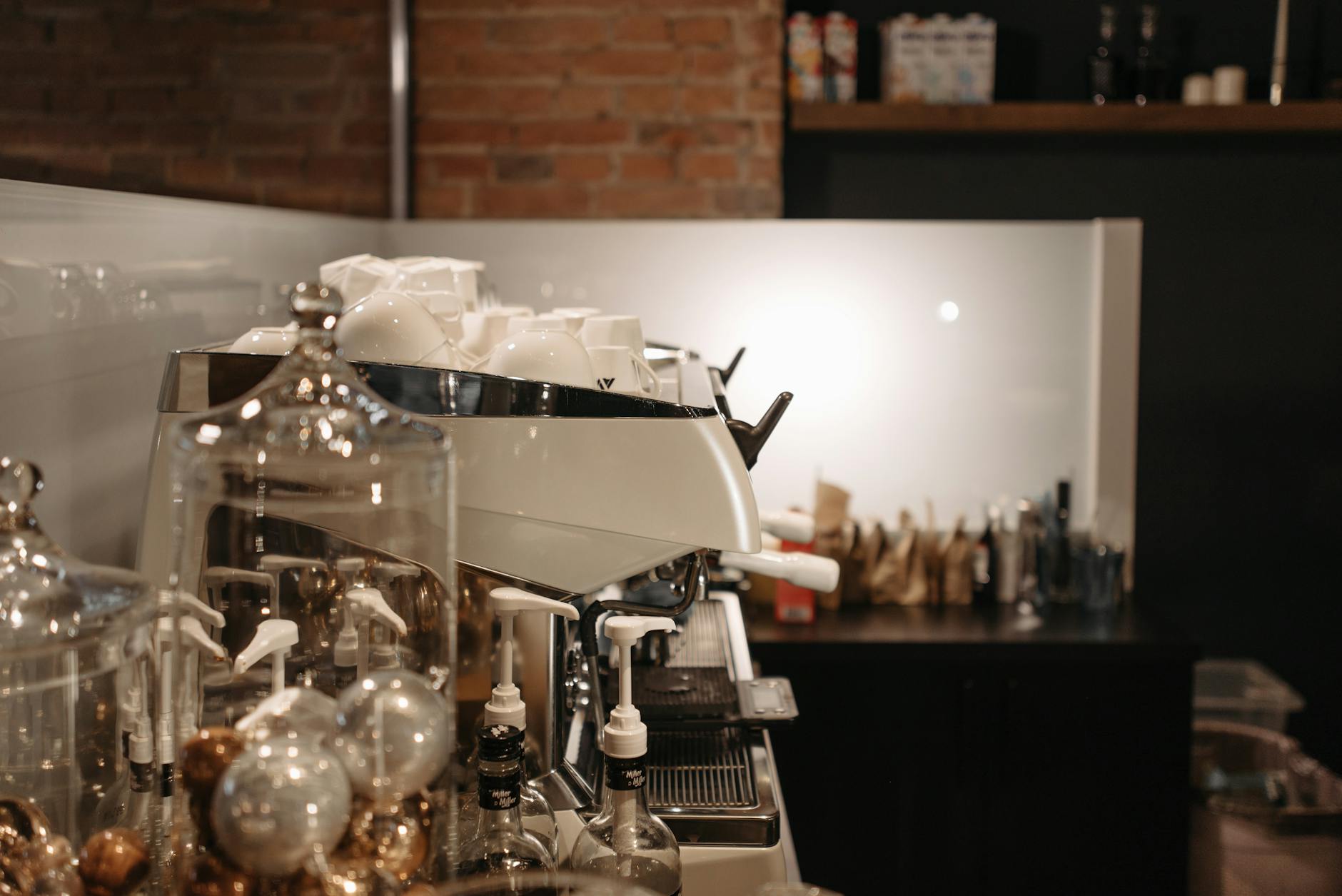
Making a single, perfect shot of espresso is a rewarding challenge. But what happens when you have guests and need to pull two, three, or even four shots back-to-back? Suddenly, a new variable emerges: boiler recovery time. That second shot often tastes drastically different from the first, usually sour and underdeveloped. This inconsistency stems from a drop in brew temperature that the machine struggles to recover from quickly. For the home barista aiming for cafe-level consistency, managing this thermal stability is paramount. This is where a PID (Proportional-Integral-Derivative) controller transforms from a luxury feature into an essential tool. This article will delve into how you can leverage a PID to master boiler recovery and pull consistently delicious espresso shots, one after another.
Understanding boiler recovery and its impact on espresso
At its core, boiler recovery time is the duration it takes for your espresso machine’s boiler to reheat the water to the target brewing temperature after a disturbance. The primary disturbance, of course, is pulling a shot. When you pull a 30-second shot, you are introducing a significant volume of cold water from the reservoir into the boiler, causing the overall temperature to drop. A secondary disturbance, particularly on single boiler machines, is steaming milk, which requires a much higher temperature and forces a subsequent cool-down period before you can brew again.
Why is this so critical? Espresso extraction is a delicate chemical reaction that is highly dependent on temperature. Even a change of a few degrees can have a dramatic impact on taste.
- If the temperature is too low: The shot will be under-extracted. The desirable sugars and oils in the coffee grounds won’t dissolve properly, resulting in a thin-bodied, sour, and acidic taste. This is the most common result when pulling a second shot too quickly on a machine with poor recovery.
- If the temperature is too high: The shot will be over-extracted. The water will scald the coffee grounds, pulling out bitter and astringent compounds. This can sometimes happen if a machine’s heating element overshoots the target temperature during its recovery cycle.
Without precise control, the barista is left guessing, leading to a frustrating lack of consistency between shots.
The role of the PID in thermal management
To understand why a PID is a game-changer, we first need to look at the traditional alternative: a mechanical thermostat. Most entry-level machines use a simple thermostat that works like the one in a home oven. It turns the heating element on full power when the temperature drops below a certain point and turns it completely off when it rises above another point. This creates a wide temperature range, often called a “deadband,” where the water temperature can swing by 5-10°C. This crude on/off system is slow to react and prone to overshooting the target temperature.
A PID controller, on the other hand, is a sophisticated digital brain for your boiler. It works by constantly monitoring the temperature and making tiny, intelligent adjustments to the power supplied to the heating element. It doesn’t just switch on and off; it pulses the power to hold the temperature with incredible precision, often within a fraction of a degree. It achieves this using three distinct principles:
- Proportional (P): This is the primary workhorse. It looks at the current difference between the actual temperature and your set temperature and applies power in proportion to that error. The further away it is, the more power it applies.
- Integral (I): This component looks at the past performance. It calculates accumulated error over time, helping to eliminate any steady “droop” or “offset” where the temperature consistently settles just below your target.
- Derivative (D): This is the predictive element. It looks at the rate of change in temperature. If the temperature is climbing very quickly, it will start to back off the power *before* it reaches the set point to prevent overshooting.
By combining these three elements, a PID drastically shortens recovery time and eliminates the wide temperature swings of a traditional thermostat, providing a stable foundation for back-to-back shots.
Practical strategies for managing recovery with a PID
Having a PID-equipped machine is one thing; using it effectively is another. It gives you the information and control you need to build a consistent workflow. The goal is to develop a rhythm that allows the machine to fully recover between shots without creating a long wait time.
First, stop “temperature surfing.” This is an old technique for machines with thermostats where baristas would initiate a shot at a specific point in the heating/cooling cycle to guess the temperature. With a PID, this is unnecessary. The display tells you the exact temperature. Your new job is to watch the display.
Here’s a practical workflow for back-to-back shots:
- Pull your first shot. Notice on the PID display how the temperature drops during the extraction.
- As soon as the first shot is finished, knock out the used puck and wipe the portafilter.
- Watch the PID. You’ll see the temperature start to climb as the heating element engages. It will rise back to your set point (e.g., 93°C).
- This is the crucial part: Do not immediately pull the next shot the second it hits 93°C. The water in the boiler might be at temperature, but the group head and surrounding components may still be cool. Wait an additional 15-30 seconds for the temperature to stabilize at the set point. This ensures the entire brew path is thermally stable.
- Use this short stabilization window to grind, dose, and tamp your next puck of coffee. By the time you are ready to lock in the portafilter, the machine will be fully recovered and ready for a perfectly temperature-stable second shot.
This rhythm turns a guessing game into a repeatable, data-driven process, ensuring your second shot is just as good as your first.
Fine-tuning your PID for optimal recovery
For most users, the factory PID settings will provide excellent performance. However, for enthusiasts who want to eke out every last bit of performance, tuning the P, I, and D values can optimize recovery for your specific environment and usage. Warning: Always write down your original settings before making any changes, and only adjust one value at a time in small increments.
Understanding how each value affects performance is key. Think of it like adjusting the suspension on a car. You are balancing responsiveness with stability.
- Adjusting ‘P’ (Proportional): Increasing the P value makes the heater more aggressive. It will react faster to temperature drops, potentially shortening recovery time. However, too high a P value will cause the temperature to wildly overshoot your target.
- Adjusting ‘I’ (Integral): The I value helps the machine settle perfectly on the target temperature over the long term. If you notice your machine consistently idles half a degree below your set temperature, a small increase in the I value may fix it.
- Adjusting ‘D’ (Derivative): The D value acts as a brake, preventing overshoot. If you see the temperature fly past your target by a few degrees during recovery, increasing the D value can dampen this effect, though setting it too high can make the system sluggish.
Here is a simple table to guide basic troubleshooting and tuning:
| Symptom | Potential Cause | Suggested Adjustment |
|---|---|---|
| Recovery is very slow | P value may be too low | Increase P value in small increments |
| Temperature overshoots the target significantly after a shot | P value is too high or D value is too low | Decrease P value OR increase D value |
| Temperature oscillates constantly around the set point | P value is too high | Decrease P value |
| Temperature stabilizes slightly below the set point | I value may be too low | Increase I value in small increments |
Tuning is a process of patience and observation, but it can help you tailor your machine’s performance perfectly to your workflow, especially if you routinely make several drinks at once.
Conclusion
In summary, achieving shot-to-shot consistency is one of the biggest challenges for a home barista, and boiler recovery time is the primary culprit behind failures. While traditional thermostats leave you guessing, a PID controller offers a definitive solution. It provides unparalleled thermal stability by intelligently managing power to the heating element, drastically reducing the temperature swings that lead to poor extraction. By understanding what the PID is telling you and building a workflow that allows for a brief stabilization period between shots, you can eliminate temperature as a variable. This empowers you to pull back-to-back shots with confidence, knowing that the foundation for a great extraction is solid every single time. It elevates your espresso machine from a simple appliance to a precise instrument for crafting exceptional coffee.
 No products in the cart.