

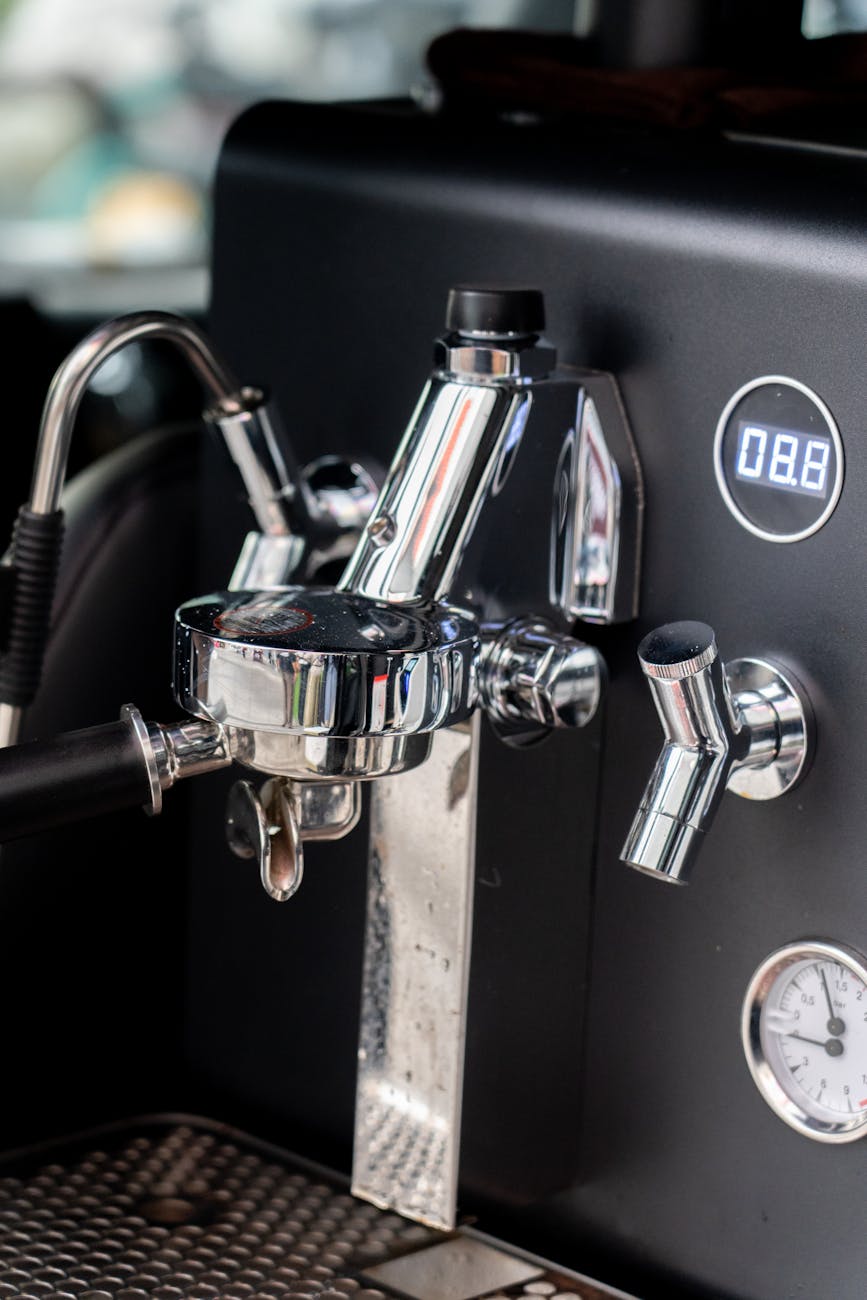
The quest for the perfect espresso shot is a journey familiar to every home barista. It’s a delicate dance of grind size, dose, temperature, and pressure. For owners of the iconic E61 group head, this journey often involves mastering its classic design. But what if you could move beyond the machine’s built-in capabilities and gain granular control over the very heart of the extraction? This is where E61 flow modulation, or flow control, enters the picture. It’s a technique that transforms the traditional E61 experience, offering a new level of command over how water interacts with your coffee puck. This article will delve into the world of flow modulation, exploring what it is, the techniques you can use, and how it can fundamentally improve your shot quality.
Understanding the E61 and its traditional limitations
The E61 group head, designed in 1961, is a marvel of thermal engineering and a staple of prosumer espresso machines. Its enduring popularity is due to its massive brass construction, which provides excellent temperature stability, and its ingenious mechanical pre-infusion system. In a standard E61 machine, when you lift the brew lever to the halfway point, a small chamber and spring mechanism allow low-pressure water (either from your plumbing line or a bypass from the pump) to gently wet the coffee puck before the full nine bars of pressure are applied.
This built-in pre-infusion is a fantastic feature. It helps settle the coffee bed and reduces the chance of channeling, where water punches a hole through the puck, leading to an uneven and bitter extraction. However, this process is largely passive and uncontrollable. The duration and pressure are fixed, offering little room for adjustment based on the specific coffee you’re using. For dense, light-roasted beans that require a longer saturation time, the standard E61 pre-infusion might not be enough to ensure an even, high-yield extraction. This is the limitation that flow modulation directly addresses.
What is E61 flow modulation?
E61 flow modulation, often called flow control, is the active, manual manipulation of the water flow rate during the entire espresso extraction process. This is typically achieved by installing a special kit, which replaces the top part of the E61 mushroom (the component that directs water into the group). This new part incorporates a needle valve that can be precisely adjusted by an external paddle or knob.
By turning this paddle, the barista can minutely open or close the valve, directly controlling how many milliliters of water per second are flowing onto the coffee puck. This is a crucial distinction from pressure profiling. While the two are related, they are not the same:
- Flow profiling directly controls the flow rate. The pressure you see on the gauge is the result of that flow meeting the resistance of the coffee puck.
- Pressure profiling directly controls the pump pressure. The flow rate is a result of that pressure being applied to the puck.
With a flow control device, you are no longer a passive operator but an active participant in the extraction. You can decide to start with a very slow trickle of water for a long pre-infusion, ramp up to full flow, and then gently taper off at the end of the shot to avoid extracting bitter compounds. This transforms the semi-automatic E61 into a fully manual brewing device, putting you in complete control.
Practical flow profiling techniques
Mastering flow control opens up a playbook of brewing recipes that can be tailored to any coffee. Instead of being locked into one brewing method, you can adapt your approach to highlight the best characteristics of your beans. Here are three fundamental techniques to start with:
1. Extended low-flow pre-infusion
This is perhaps the most impactful technique for modern, light-roasted coffees. These beans are roasted for a shorter time, making them denser and harder to extract. A slow, gentle saturation is key. You can start the shot with a very low flow rate (e.g., 2-4 ml/second) and hold it there for 20, or even 30, seconds until the entire puck is saturated and the first drops of espresso appear. Only then do you ramp up the flow to achieve full pressure. This technique allows you to grind much finer than you normally would, increasing the surface area for extraction without choking the machine, resulting in sweeter, more balanced, and less acidic shots.
2. The “blooming” or slayer-style shot
Borrowed from the world of high-end commercial machines and pour-over brewing, this profile involves a bloom phase. You start with a low-flow pre-infusion for 5-10 seconds, just enough to wet the grounds. Then, you close the valve completely, cutting the flow to zero for another 5-10 seconds. This “bloom” allows trapped CO2 to escape and water to penetrate the puck more evenly. After the bloom, you ramp up the flow to extract the shot as usual. This is especially effective for very freshly roasted coffee, helping to manage excess gas and produce a more syrupy and less aggressive shot.
3. Tapering or declining profile
As an espresso shot progresses, the puck’s structure begins to degrade. The soluble compounds are washed away, making it easier for water to pass through. If you maintain full pressure until the very end, you risk pulling out harsh, bitter flavors. A declining profile mitigates this. After you’ve extracted about two-thirds of your target yield, you can begin to gradually reduce the flow rate. This causes the pressure to slowly decline, leading to a gentler extraction in the final phase of the shot. The result is often a rounder, fuller-bodied espresso with a smoother finish and less bitterness, working wonders for medium to dark roasts.
| Technique | Process | Best for |
|---|---|---|
| Extended Pre-Infusion | Low flow (2-4ml/s) for 20-30s, then ramp to full flow. | Light roasts, single origins, increasing sweetness. |
| Blooming Shot | Low flow pre-infusion, then zero flow (bloom), then ramp up. | Very fresh roasts, managing CO2, improving texture. |
| Declining Profile | Normal ramp up, then gradually decrease flow for the final 1/3 of the shot. | Medium-dark roasts, reducing bitterness, enhancing body. |
The tangible benefits of mastering flow control
Learning to modulate flow isn’t just a technical exercise; it produces real, tangible improvements in the cup. The primary benefit is a vast improvement in flavor clarity and balance. By ensuring even saturation and preventing channeling, you can extract more sweetness and nuanced flavors while minimizing astringency and bitterness. For light roasts, this means tasting the bright fruit or floral notes the roaster intended. For dark roasts, it means a rich, chocolatey shot without the burnt, ashy aftertaste.
Furthermore, flow control dramatically increases consistency and forgiveness. A less-than-perfect puck preparation that might have resulted in a “gusher” on a standard machine can often be saved with a gentle, long pre-infusion. This control gives you a wider margin for error, leading to fewer sink shots. Finally, it unlocks incredible versatility. Your single espresso machine can suddenly mimic the extraction style of different machines, allowing you to pull syrupy, slayer-style shots one minute and soft, lever-style declining profiles the next. You are no longer limited by your machine’s design but only by your creativity and palate.
In conclusion, E61 flow modulation is more than just a popular modification; it is a gateway to a deeper understanding and control of espresso extraction. It takes the classic, reliable E61 platform and elevates it, giving the home barista a tool previously reserved for high-end commercial machines. By moving beyond the passive, built-in pre-infusion, you gain the ability to manually shape the extraction curve through techniques like extended pre-infusion, blooming, and pressure tapering. This granular control directly translates to better tasting espresso—shots with more sweetness, less bitterness, and greater flavor clarity. For any E61 owner looking to push the boundaries of their craft, mastering flow control is a rewarding journey toward the perfect cup.

 No products in the cart.