

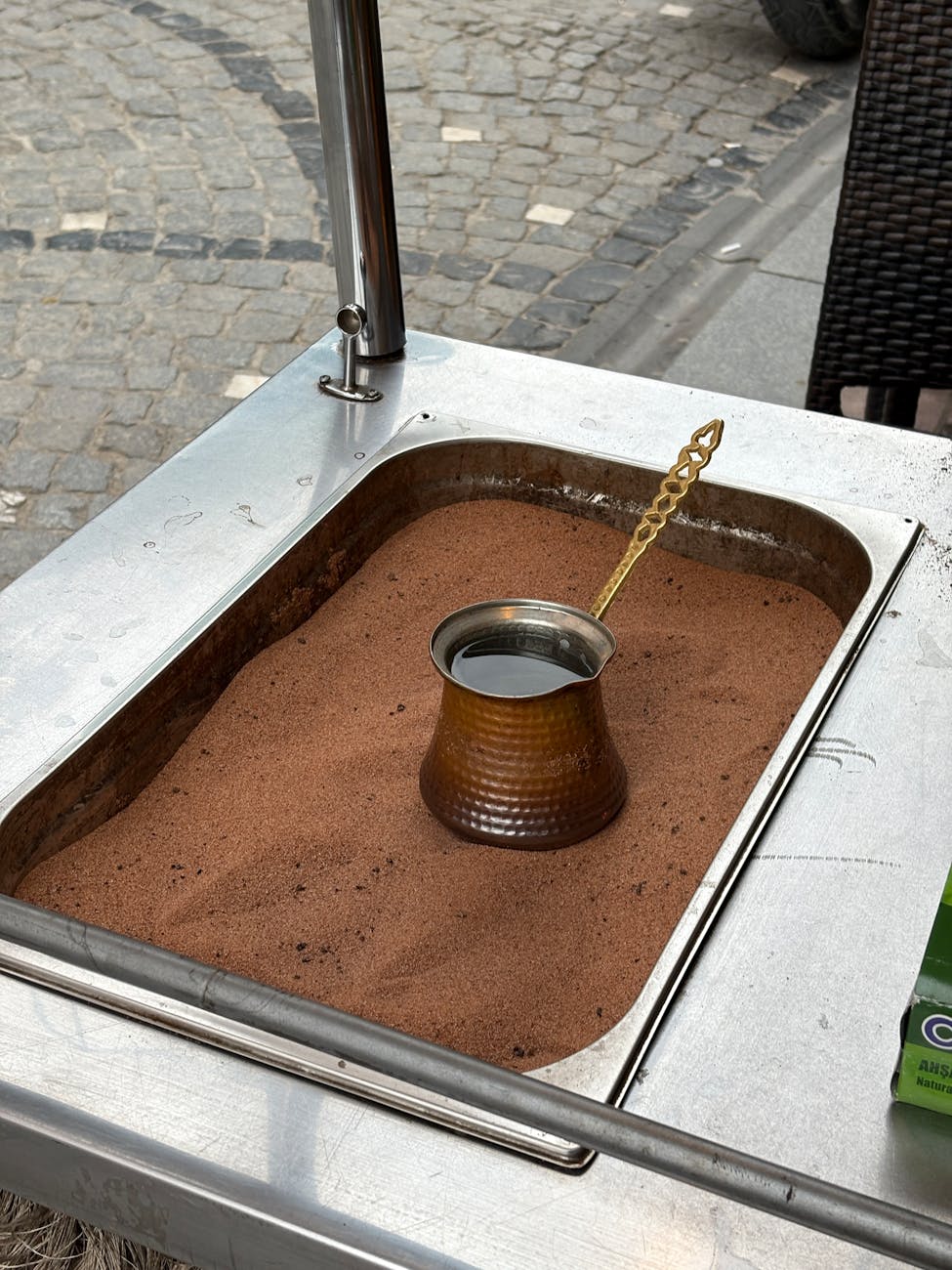
The art of brewing Turkish coffee, with its rich history and unique preparation in a cezve or ibrik, is a rewarding ritual for any coffee enthusiast. Achieving that perfect, balanced cup, however, can be a delicate dance of variables. One of the most common frustrations for home brewers is under-extraction, a brewing flaw that results in a disappointing and lackluster cup. This occurs when the water fails to dissolve enough of the coffee’s soluble compounds, leaving behind the sweet, complex flavors we crave. This article will serve as your guide to mastering this traditional method. We will explore how to identify the tell-tale signs of an under-extracted brew, diagnose the common causes, and provide practical solutions to ensure your next cup is rich, aromatic, and perfectly balanced.
Understanding the fundamentals of Turkish coffee extraction
At its core, brewing coffee is an act of extraction. We use hot water as a solvent to pull flavors, oils, and acids from roasted coffee grounds. In Turkish coffee, this process is unique. It is a full immersion method where ultra-fine, powder-like coffee grounds remain suspended in the water throughout the short, intense brewing process. Unlike drip or espresso methods, there is no filter to separate the liquid from the solids. Success hinges on a precise balance between an incredibly fine grind, water temperature, and contact time.
Under-extraction is what happens when this balance is off. If the water doesn’t have enough time, isn’t hot enough, or can’t penetrate the coffee particles effectively, it only manages to wash away the most easily dissolved compounds. These compounds are predominantly sour acids. The desirable sugars and deeper flavor notes, which take longer to extract, are left behind in the grounds. The result is a cup that is a shadow of its potential: one-dimensional, sour, and unsatisfying.
The sensory clues of an under-extracted brew
Your senses are the best tools for diagnosing a flawed brew. An under-extracted Turkish coffee will send clear signals through its taste, aroma, and even its appearance. Learning to recognize these clues is the first step toward fixing the problem.
- Taste: The most obvious indicator is a distinct and unpleasant sourness. This isn’t the bright, pleasant acidity you might find in a light roast specialty coffee; it’s a sharp, lemony, or sometimes vinegary taste that dominates the palate. You may also notice a distinct saltiness, which is another early-stage extraction flavor. A key missing element will be sweetness. The brew will feel thin, watery, and lifeless in your mouth, lacking the characteristic full body of a well-made Turkish coffee.
- Aroma: Give the coffee a good sniff before you taste it. An under-extracted brew will often have a weak, underdeveloped aroma. You might detect faint, grassy, or cereal-like notes instead of the rich, chocolaty, or nutty fragrance you expect. The aromatic complexity is simply not there because the compounds responsible for it were never fully extracted.
- Appearance: Look at the foam, known as kaimaki. A proper Turkish coffee should have a thick, fine, and stable layer of foam on top. If your foam is pale, thin, bubbly, and disappears quickly, it can be a sign of under-extraction. The coffee liquid itself might also appear lighter in color than usual.
Diagnosing the common culprits
Once you’ve identified the symptoms of under-extraction, the next step is to find the cause. More often than not, the issue lies in one of four key areas of your preparation. These variables are all interconnected, and a small mistake in one can throw off the entire brew.
The most frequent offender is an improper grind size. Turkish coffee requires a grind as fine as flour or cocoa powder. If your grind is even slightly too coarse—resembling espresso or sand—the water cannot penetrate the coffee particles deeply enough during the short brew time. The increased particle size drastically reduces the available surface area, making it impossible to achieve full extraction.
Another critical factor is the brewing time and temperature. Rushing the process is a guaranteed way to under-extract. If you use high heat, the coffee can boil over before it has had enough time to brew properly. Conversely, if the heat is too low and you pull the cezve off the flame too early, the water never reaches the optimal temperature to dissolve the necessary compounds. The goal is a gentle, controlled rise in temperature that allows the coffee to foam up just before it reaches a rolling boil.
Finally, your coffee-to-water ratio is fundamental. Using too little coffee for the amount of water will result in a weak, diluted drink that tastes watery and sour, no matter how well you control the other variables. There simply isn’t enough coffee material to properly saturate the water with flavor.
A troubleshooter’s guide to a perfect extraction
Fixing under-extraction is a process of methodical adjustment. Focus on changing one variable at a time to see how it impacts the final cup. This systematic approach will help you dial in your technique and consistently produce delicious coffee.
First and foremost, evaluate your grind. If you are grinding your own beans, set your grinder to its finest possible setting. The resulting grounds should feel like powder when rubbed between your fingers. If your grinder can’t achieve this, it’s worth investing in a dedicated Turkish coffee grinder or purchasing high-quality, pre-ground Turkish coffee from a trusted roaster.
Next, control your heat and timing. Always use low to medium heat. The process should take between two to three minutes. Place your cezve on the heat source and wait. As the coffee heats, a dark ring will form around the edge. Soon after, the foam will begin to rise toward the rim. The moment it’s about to spill over is when you should remove it from the heat. This visual cue ensures maximum contact time without boiling, which would ruin the flavor and destroy the foam.
Lastly, perfect your ratio. A great starting point is a 1:10 ratio of coffee to water by weight. If you don’t have a scale, a traditional measurement is one heaping teaspoon of coffee for every demitasse cup (about 60-70 ml) of water. If your coffee tastes weak and sour, try adding a little more coffee next time while keeping the water volume the same.
| Problem | Potential Cause | Solution |
|---|---|---|
| Coffee tastes overwhelmingly sour and thin. | Grind is too coarse. | Adjust your grinder to the finest setting possible. The coffee should have a powdery consistency. |
| Brew is watery and lacks flavor intensity. | Incorrect coffee-to-water ratio. | Increase the amount of coffee. Start with a 1:10 coffee-to-water ratio and adjust to your taste. |
| The foam is pale, and the flavor is weak. | Brewing time is too short / heat is too high. | Use low-medium heat to brew slowly (2-3 minutes). Remove the cezve just as the foam rises to the top, before it boils over. |
| Taste is salty and grassy. | Multiple issues: likely a combination of coarse grind and short brew time. | First, ensure the grind is powder-fine. Then, focus on brewing slowly over gentle heat to extend the extraction time. |
The journey to mastering Turkish coffee is one of patience and sensory awareness. Under-extraction is a common hurdle, but it is easily overcome once you learn to recognize its signs. Remember that a sharp sourness, a thin body, and a weak aroma are all pointing toward an incomplete brew. By systematically addressing the primary causes—grind size, brew time, temperature, and coffee-to-water ratio—you can transform your cup from disappointing to delicious. Each brew is an opportunity to learn and refine your technique. Trust your palate, make small, deliberate adjustments, and you will soon be rewarded with the rich, full-bodied, and beautifully balanced cup of Turkish coffee you’ve been aiming for.


 No products in the cart.