

Fixing low flow in your Gaggia espresso machine: A complete guide
There’s nothing more frustrating for a home barista than preparing for a perfect shot of espresso only to be met with a slow, weak trickle from the group head. This low flow issue is a common problem for owners of beloved machines like the Gaggia Classic Pro, but thankfully, it’s often entirely fixable. A lack of water flow can transform a rich, syrupy espresso into a thin, bitter disappointment, or even stop the brewing process altogether. This guide is designed to walk you through the troubleshooting process, from the simplest user-level checks to more in-depth maintenance tasks. We’ll help you diagnose the root cause of your Gaggia’s low flow and provide clear, actionable steps to restore its performance and get you back to pulling beautiful shots.
Initial diagnosis: Simple checks and common culprits
Before you start taking your machine apart, it’s crucial to rule out the most common and easily fixed causes of low flow. More often than not, the problem isn’t with the machine’s internal components but with the coffee preparation itself. This is what’s known as “choking” the machine, where the water from the pump cannot find a path through the coffee puck.
Start with the most basic element: the water tank. Is it filled with enough water? And more importantly, is it seated correctly? If the tank isn’t pushed all the way in, the machine can’t draw water properly. Next, evaluate your coffee and technique. Consider these factors:
- Grind size: An espresso grind that is too fine is the number one cause of choking a machine. The coffee particles are packed so tightly that water cannot penetrate them at the correct pressure. Try coarsening your grind slightly and see if the flow improves.
- Dose amount: Are you putting too much ground coffee into the portafilter basket? Overdosing leaves insufficient headroom between the coffee puck and the shower screen, which can impede water distribution and flow. Stick to the recommended dose for your specific basket size (e.g., 14-18 grams for a standard double basket).
- Tamping pressure: While consistent tamping is important, applying excessive force can over-compact the coffee puck, creating a barrier that is too dense for water to pass through. Aim for a firm, level tamp, but don’t feel you need to exert all your strength.
By systematically checking these variables, you can often solve the problem in minutes without ever needing a screwdriver. Run a test shot with just the empty portafilter to confirm water is flowing freely from the group head. If it is, the issue almost certainly lies with your coffee preparation.
| Symptom | Potential Cause | Simple Solution |
|---|---|---|
| No water, or a few drips, then stops | Grind is too fine | Adjust your grinder to a coarser setting. |
| Water leaks over the top of the portafilter | Too much coffee in the basket | Reduce your dose by 1-2 grams. |
| Pump sounds strained, very slow flow | Tamping too hard | Apply less pressure when tamping. Ensure the puck is level. |
| Pump makes a loud noise, no water at all | Water tank not seated or empty | Fill the tank and ensure it is pushed firmly into place. |
The importance of a regular cleaning routine
If you’ve ruled out coffee prep as the cause, the next area to investigate is machine cleanliness. Over time, coffee oils, grounds, and mineral deposits build up inside the machine, particularly in the group head assembly. This buildup can harden and create significant blockages that severely restrict water flow. Establishing a consistent cleaning routine is not just good practice; it’s essential for the longevity and performance of your Gaggia.
For machines equipped with a three-way solenoid valve, like the Gaggia Classic Pro, backflushing is the most effective cleaning method. This process involves using a blind basket (one without holes) in your portafilter. When the pump is activated, pressure builds up within the group head. When you turn the pump off, the solenoid valve opens and forcefully vents this pressure and water, along with dislodged coffee oils and grounds, into the drip tray. Using a dedicated espresso machine detergent like Cafiza during this process will dramatically improve its effectiveness.
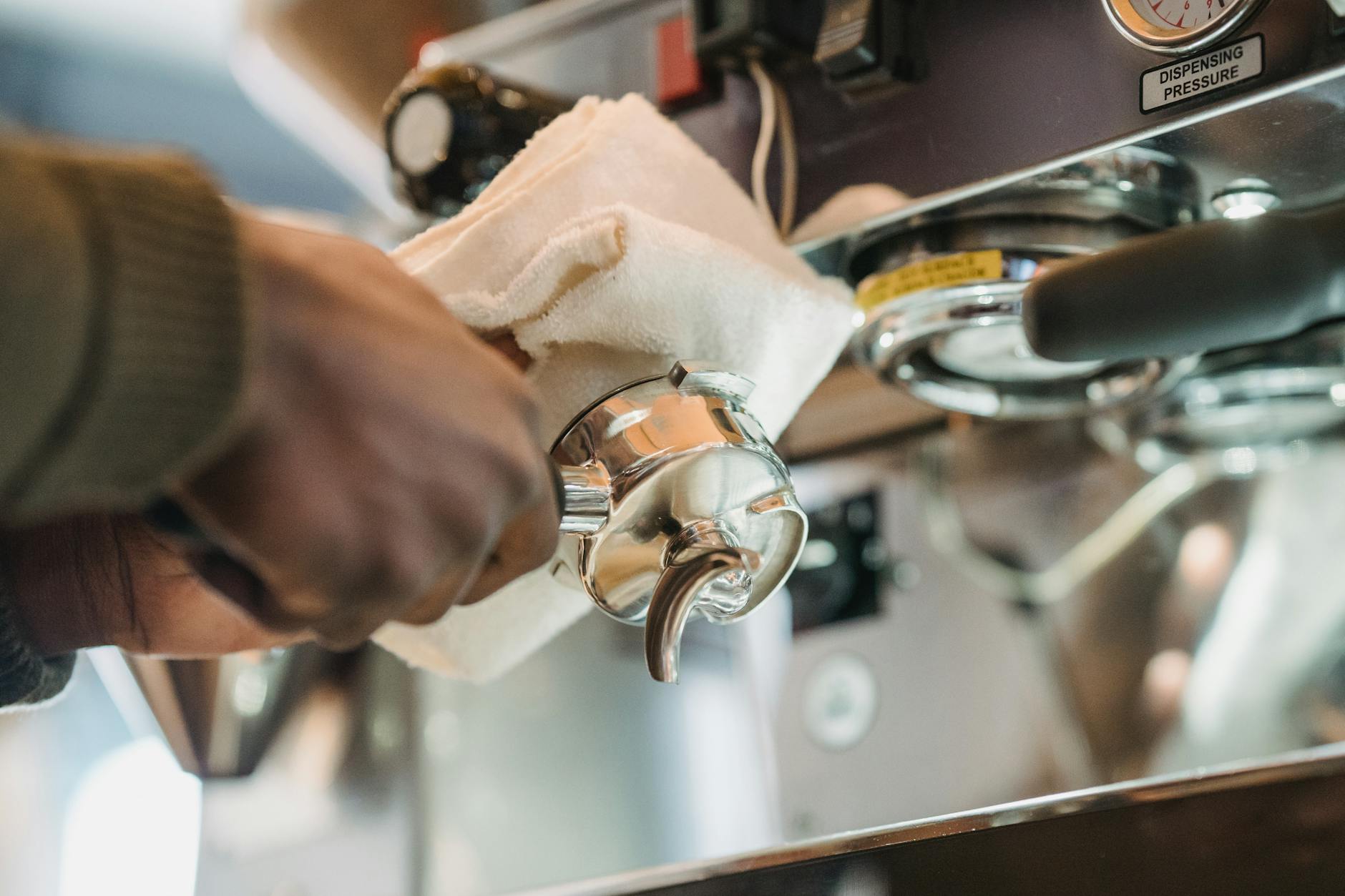
Just as important is cleaning the components of the group head itself. The shower screen and the metal dispersion plate behind it are the final points of contact before water hits your coffee. They can easily become clogged. Regularly remove the main screw, take off the screen and plate, and give them a thorough scrub with a brush and some machine cleaner. Soaking them can help break down stubborn, hardened oils.
Tackling scale buildup: The descaling process
Flowing logically from general cleaning is the more intensive process of descaling. While backflushing removes coffee oils, it does nothing to combat limescale. If you live in an area with hard water, mineral deposits (calcium and magnesium) will inevitably build up inside your machine’s boiler, pipes, and valves. This scale acts like cholesterol in an artery, narrowing the passages and restricting water flow until it becomes a serious problem. A severe scale blockage can stop the flow entirely and potentially damage components like the pump or boiler.
Descaling involves running a specialized acidic solution through the machine to dissolve these mineral deposits. It’s critical to use a descaler formulated specifically for espresso machines. Avoid using vinegar, as its strong acetic acid can be too aggressive and may damage the rubber seals and gaskets inside your Gaggia over time.
The general descaling process is as follows:
- Dissolve the descaling solution in a full tank of water according to the product’s instructions.
- Turn the machine on and run about half the tank’s solution through the group head, pausing every few minutes.
- Run the remaining solution through the steam wand to ensure the entire water path is treated.
- Let the machine sit for about 20-30 minutes to allow the solution to work.
- Thoroughly rinse the water tank, fill it with fresh water, and flush at least two full tanks through the group head and steam wand to remove any residual descaling solution.
The frequency of descaling depends entirely on your water hardness. For very hard water, you may need to descale every month. For soft water, every 3-6 months may suffice.
Advanced troubleshooting: When cleaning isn’t enough
If you have addressed your coffee prep, established a rigorous cleaning routine, and thoroughly descaled your machine but still face low flow issues, it may be time to consider a component failure. While less common, parts can wear out or become blocked in a way that regular maintenance can’t fix. The most likely culprit in this scenario is the three-way solenoid valve. This valve is a workhorse that opens and closes every time you pull a shot. Scale or a stray coffee ground can get lodged inside, preventing it from opening fully and thereby restricting flow to the group head. Cleaning the solenoid involves disassembling it, a task that requires some mechanical confidence but is well-documented in online forums and videos for Gaggia machines.
Another possibility, though rarer, is a failing pump. The vibration pump in a Gaggia machine creates the pressure needed for espresso. Over many years, its output can weaken. A sign of a failing pump is a noticeable change in its sound—it might become quieter, buzz differently, or struggle to build pressure even with a blind basket in place. If you suspect the pump is the issue, it is typically a part that needs to be replaced rather than repaired.
Conclusion
Encountering low flow from your Gaggia espresso machine can be disheartening, but it is rarely a terminal diagnosis. By following a logical troubleshooting sequence, you can effectively identify and resolve the issue. Always begin with the simplest explanations related to your coffee preparation: check your grind, dose, and tamp. If the problem persists, turn your attention to a thorough cleaning regimen of backflushing and scrubbing the group head components. For deeper blockages, a proper descaling cycle is essential for clearing the machine’s internal pathways of mineral buildup. Only after these maintenance steps fail to restore flow should you begin to suspect a more serious component issue like a clogged solenoid valve or a failing pump. Remember, preventative maintenance is your best defense against flow problems.



 No products in the cart.