

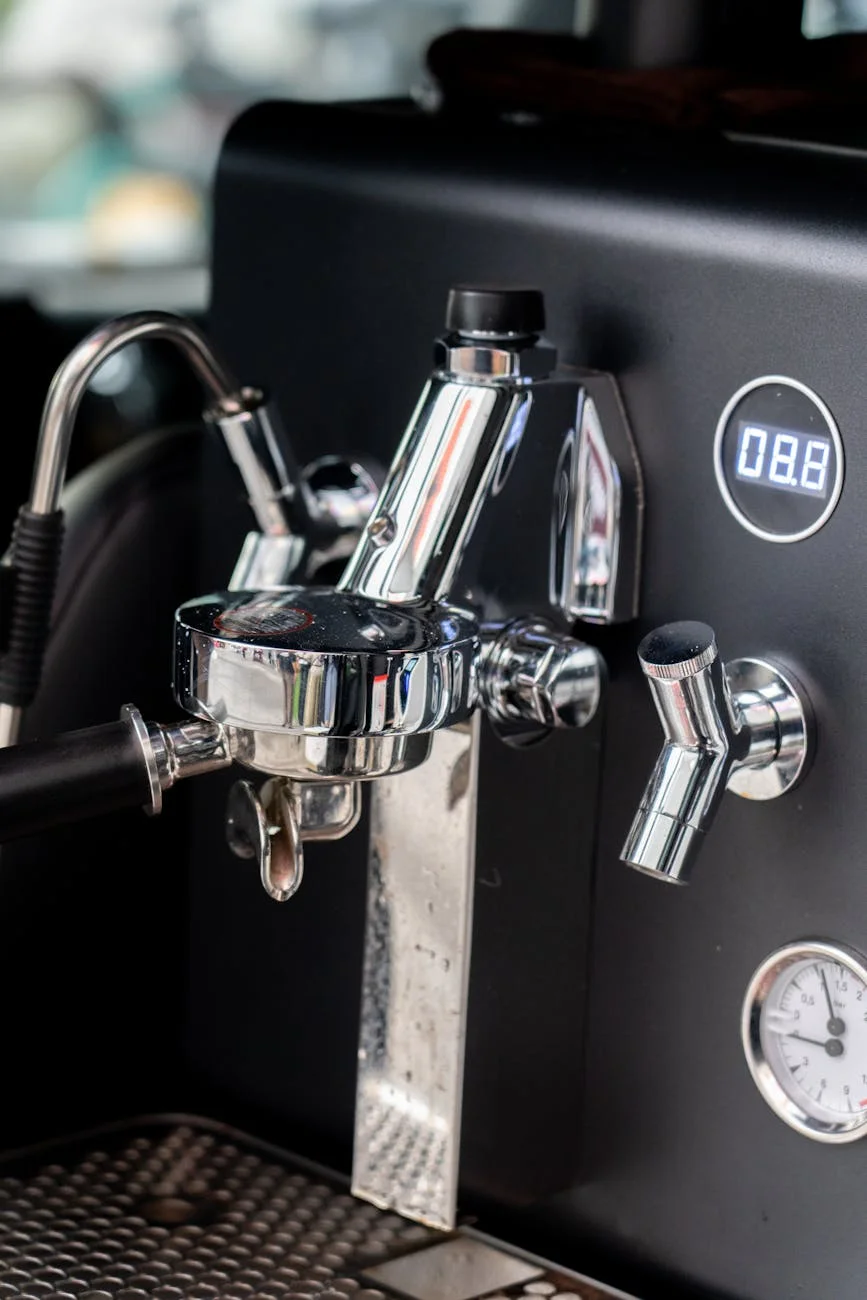
Protect your E61: A guide to water chemistry for espresso machines
The iconic E61 group head is the heart of many beloved espresso machines, a marvel of thermal stability and engineering. However, its intricate network of brass and copper components is highly susceptible to the hidden dangers lurking in your water. Scale buildup and metal corrosion are the two silent killers that can lead to costly repairs and inconsistent coffee. Protecting your investment isn’t about using fancy cleaning products; it starts with the most fundamental ingredient: water. This article will guide you through the essentials of water chemistry, teaching you how to understand, test, and treat your water to ensure your E61 machine runs beautifully for years to come. It’s the ultimate guide to mastering the single most important factor in your machine’s longevity.
The two silent killers: Scale and corrosion
Before we can fix the problem, we need to understand the enemy. For any E61 owner, the battle is fought on two fronts: scale and corrosion. They are opposing forces, and protecting your machine requires finding the perfect balance between them.
Scale is the more well-known villain. It’s the chalky, white buildup of mineral deposits, primarily calcium carbonate and magnesium carbonate. When water rich in these minerals (known as “hard water”) is heated inside your machine’s boiler and passageways, the minerals precipitate and solidify onto hot metal surfaces. This creates an insulating layer that drastically reduces heating efficiency, clogs narrow passages like the gicleur, and can cause pressure and temperature instability. In an E61 group head, scale can seize up the moving mechanical parts, leading to a complete failure.
On the other end of the spectrum is corrosion. This occurs when water is too “soft” or aggressive. Water with very low mineral content and low alkalinity (its ability to buffer against acid) can become acidic, especially when heated. This acidic water acts like a solvent, slowly eating away at the brass, copper, and steel components of your machine. Another major contributor to corrosion is the presence of chlorides. Even in small amounts, chlorides can cause severe pitting and destruction of metal parts. The result is a metallic taste in your coffee, pinhole leaks in the boiler, and irreversible damage to internal components.
The key takeaway is that you cannot simply eliminate all minerals. Water that is too hard creates scale, while water that is too soft and pure can cause corrosion. The goal is to create water that is just right.
Understanding the key water parameters
To find that perfect balance, you need to become familiar with a few key measurements. These parameters tell you the story of your water and what it will do inside your machine. While Total Dissolved Solids (TDS) is a common starting point, it only gives a general overview. For true protection, you must look at the specific components that make up that TDS reading.
- Total Hardness (GH): This primarily measures the amount of calcium and magnesium in your water. It is the single biggest predictor of scale formation. Water that is too hard will rapidly scale your machine. Water with zero hardness can contribute to corrosion and often results in flat, uninteresting coffee. The ideal range for espresso provides enough mineral content for good extraction without causing excessive scale.
- Alkalinity (KH): Also known as carbonate hardness, this is your machine’s primary defense against corrosion. Alkalinity refers to the water’s ability to neutralize acid, thereby keeping the pH stable. If alkalinity is too low, the water can become acidic when heated, attacking the metal parts of your machine. If it’s too high, it can contribute to scale formation, especially when total hardness is also high.
- Chlorides: Not to be confused with the chlorine added by municipalities for disinfection (which should also be filtered out), chlorides are highly corrosive ions. They are particularly aggressive towards stainless steel and can cause serious, irreversible pitting damage to boilers and heating elements. Your chloride level should always be as low as possible.
Finding the sweet spot for these parameters is crucial. The following table, based on recommendations from the Specialty Coffee Association (SCA) and industry best practices, provides a target for ideal espresso machine water.
| Parameter | Ideal Range | Why It Matters |
|---|---|---|
| Total Hardness (GH) | 50 – 90 ppm (3 – 5 gpg) | Prevents major scale while contributing to good flavor. |
| Alkalinity (KH) | 40 – 70 ppm | Buffers against pH drops, protecting from corrosion. |
| Total Dissolved Solids (TDS) | 90 – 150 ppm | A general indicator of overall mineral content. |
| Chlorides | Below 15 ppm | Minimizes the risk of severe corrosive pitting. |
How to test and treat your water
Once you understand what to look for, the next step is to analyze your source water and choose a treatment method. Guessing is not an option, as it can lead to a false sense of security.
For testing, the most reliable and cost-effective method for a home user is a liquid titration test kit, such as the one made by API for aquariums. These kits provide accurate readings for General Hardness (GH) and Carbonate Hardness (KH), the two most critical values. While you can get a water report from your local municipality, the water chemistry can change by the time it reaches your tap. A TDS meter is useful for a quick check but cannot tell you if your TDS is made of “good” minerals or “bad” ones like chlorides.
Once you know your water’s profile, you can choose a treatment solution:
- In-Tank Softening Filters: These are convenient pouches or cartridges that sit inside your machine’s water reservoir. They use an ion-exchange process, swapping scaling minerals like calcium for non-scaling ions like sodium. Pros: Simple to use and affordable. Cons: They have a limited lifespan, do nothing to address high chlorides, and can reduce hardness and alkalinity to zero, potentially making the water corrosive.
- Plumb-In Filtration Systems: For machines connected directly to a water line, a dedicated system is essential. This can range from a simple carbon and softener cartridge system to a more advanced Reverse Osmosis (RO) system with a blending valve. A blending valve is key, as it allows you to mix some filtered tap water back into the pure RO water to achieve the ideal mineral content. Pros: Highly effective and convenient. Cons: Higher initial cost and require installation.
- Creating Your Own Water: This is the ultimate solution for complete control. By starting with a pure base like distilled or RO water, you can add specific mineral concentrates to build your perfect water from scratch. You can buy pre-made packets or create your own recipes using small amounts of minerals like magnesium sulfate (Epsom salt) for hardness and sodium bicarbonate (baking soda) for alkalinity. Pros: Guarantees perfect, consistent water chemistry with no harmful elements. Cons: Requires more effort and planning.
Conclusion
Your E61 espresso machine is a precision instrument, and the water you use is just as important as the coffee beans. It is both an ingredient that shapes the final taste and a maintenance fluid that determines the health of your machine. By moving beyond the simple idea of “soft” or “hard” water, you can take proactive control. The twin threats of limescale from excessive hardness and corrosion from low alkalinity and high chlorides are entirely manageable. The first step is always to test your water. Once you have a clear picture of your starting point, you can choose a treatment method that fits your needs, whether it’s a simple in-tank filter or a precise DIY water recipe. This small investment in time and knowledge will pay immense dividends, ensuring your E61 performs flawlessly and produces exceptional espresso for many years.

 No products in the cart.