

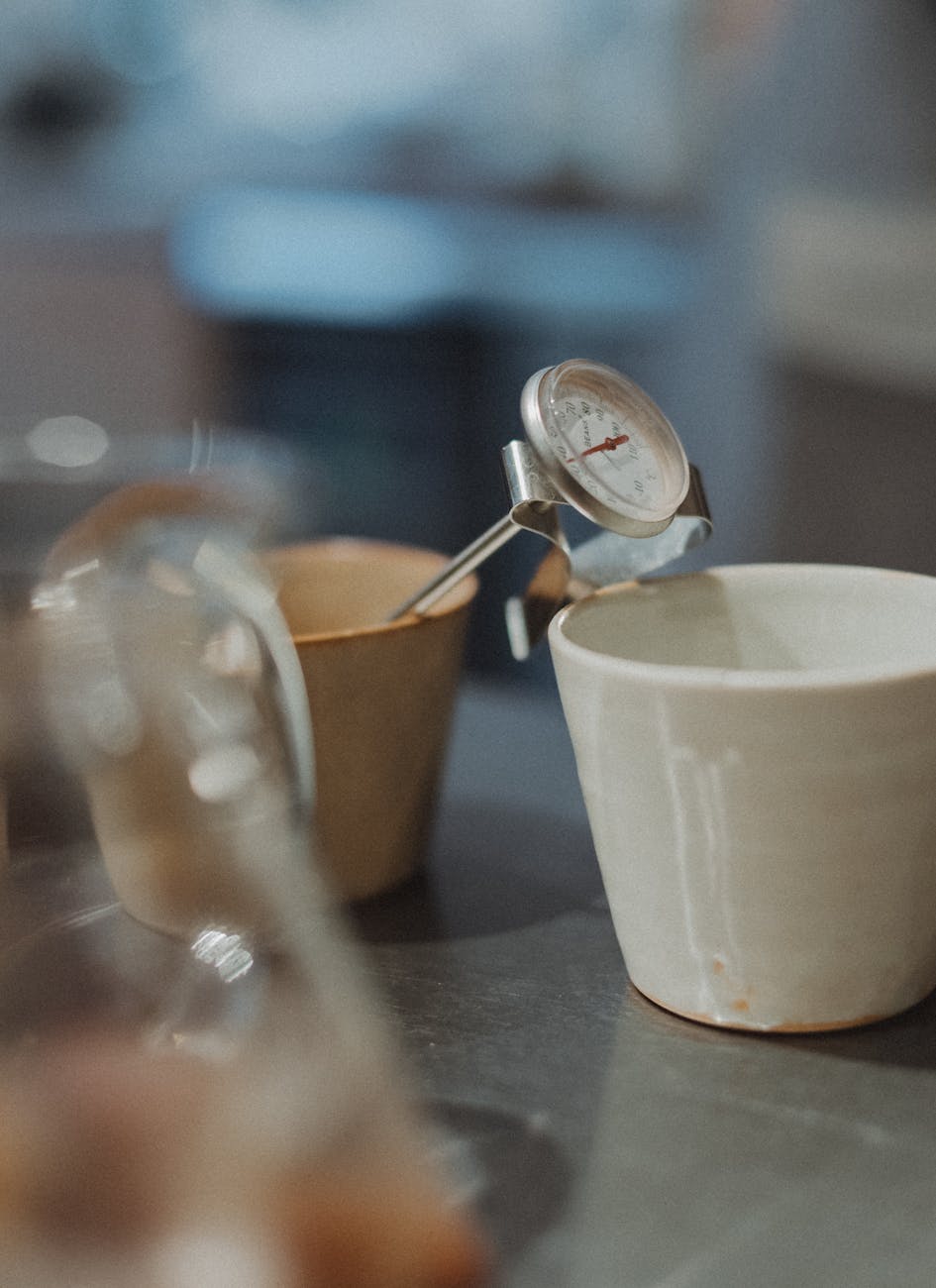
The quest for the perfect cup of coffee is a journey of precision, where every variable matters. While many home baristas focus on the grind size and bean origin, one of the most critical and often overlooked elements is water temperature. Using a simple open boiler or stovetop kettle without temperature control can lead to inconsistent and disappointing results. This article will explore how a simple digital thermometer can become your most powerful tool, transforming your open boiler brewing from a game of chance into an act of precision. We will delve into why temperature is so vital, how to choose the right tool for the job, and the exact steps to take to achieve a consistently delicious brew every single time.
Why water temperature dictates your coffee’s flavor
Coffee extraction is a delicate chemical process. When hot water meets ground coffee, it begins to dissolve hundreds of different compounds, including acids, sugars, oils, and other flavor components. The temperature of that water acts as a catalyst, dictating which compounds are extracted and how quickly. Think of it as a control dial for flavor. If your water is too hot, typically above 96°C (205°F), you risk over-extraction. This burns the delicate compounds and pulls out an excess of bitter, astringent flavors, resulting in a harsh and unpleasant cup. Conversely, if your water is too cool, below 88°C (190°F), you will under-extract the coffee. The water won’t have enough energy to dissolve the desirable sugars and oils, leaving you with a brew that tastes sour, weak, and underdeveloped. A digital thermometer removes the guesswork, allowing you to hit that “sweet spot” where you achieve a balanced extraction, highlighting the unique and delicious notes of your chosen beans.
Choosing the right digital thermometer for brewing
With your understanding of temperature’s importance, the next step is selecting the right instrument. Not all digital thermometers are created equal, and for coffee brewing, certain features are paramount. The most crucial factor is response time. You need an instant-read thermometer that can give you a reading in 2-3 seconds. Water temperature in an open kettle changes quickly, and waiting 10-20 seconds for a reading from a slow meat thermometer means you’ve already missed your target. Look for these key features:
- Accuracy: A thermometer accurate to within +/- 1°C (or 2°F) is essential for consistency.
- Readability: A large, clear, and preferably backlit digital display makes it easy to read the temperature quickly without squinting.
- Probe Length: A longer probe allows you to measure the temperature in the center of the kettle without getting your hand too close to the steam.
- Durability: Look for a water-resistant or waterproof model, as it will inevitably get splashed during use.
Investing a small amount in a quality instant-read thermometer specifically for your coffee routine is one of the most cost-effective upgrades you can make to your entire setup. It provides more control than even the most expensive grinder if your temperature is inconsistent.
The step-by-step method for temperature precision
Armed with your digital thermometer, you can now implement a simple and repeatable process for perfect water temperature every time. The easiest and most consistent method is not to try and stop the heat at the right moment, but to boil the water and let it cool to your target.
- Bring your water to a full boil. This creates a consistent starting point and is especially important at higher altitudes where the boiling point is lower than 100°C (212°F).
- Remove the kettle from the heat source. Once boiling, take it off the stove and remove the lid to allow it to cool more quickly.
- Start measuring. Place the probe of your digital thermometer into the center of the water, ensuring it’s not touching the bottom or sides of the kettle, as this can give you an inaccurate reading of the metal’s temperature.
- Wait for your target temperature. This is where you exercise patience. Watch the display as the temperature drops. This process usually takes between 30 to 90 seconds, depending on the volume of water and ambient temperature.
- Pour when ready. Once you hit your desired temperature, it’s time to start your brew. For methods like a pour-over that require multiple pours, place the lid back on the kettle between stages to minimize heat loss.
To help you find your ideal starting point, here are some generally recommended temperature ranges:
| Brew Method | Roast Level | Recommended Temperature (°C) | Recommended Temperature (°F) |
|---|---|---|---|
| Pour-Over | Light | 92 – 96°C | 198 – 205°F |
| Pour-Over | Medium/Dark | 88 – 92°C | 190 – 198°F |
| French Press | All Roasts | 90 – 94°C | 194 – 201°F |
| AeroPress | All Roasts | 80 – 95°C | 176 – 203°F |
Remember, these are starting points. Use your new tool to experiment and dial in the perfect temperature for your specific beans and taste preferences.
Advanced considerations and adjustments
Once you have mastered the basic technique, you can begin to use your thermometer for more advanced applications. The temperature you use is not a static number; it’s a variable you can adjust to complement your coffee. Lighter roasts are denser and less soluble, often benefiting from water on the hotter end of the spectrum (around 94-96°C) to properly extract their complex, fruity, and floral notes. Conversely, darker roasts are more porous and soluble, making them prone to over-extraction. Using slightly cooler water (around 88-92°C) can help you avoid pulling out excessive bitterness and roasty flavors. Another critical factor is pre-heating. Use your hot water to thoroughly pre-heat your brewer, whether it’s a ceramic V60 or a glass French press. A cold brewer can drop your water temperature by several degrees on initial contact, shocking the coffee grounds and leading to under-extraction. By pre-heating, you create a stable thermal environment for a more even and consistent brew from start to finish.
In conclusion, mastering the art of open boiler brewing is not about owning the most expensive equipment, but about controlling the essential variables. As we’ve seen, water temperature is arguably the most impactful factor on the final taste in your cup. It governs the entire extraction process, separating a sour, underdeveloped brew from a bitter, harsh one. By choosing a fast, accurate digital thermometer and implementing the simple method of boiling and cooling, you remove all guesswork. This single, inexpensive tool empowers you to unlock the true potential of your coffee beans, adjusting for roast level and brew method with confidence. Ultimately, a digital thermometer elevates your role from a coffee maker to a coffee crafter, giving you the precision needed to brew a truly exceptional cup, consistently.
 No products in the cart.