

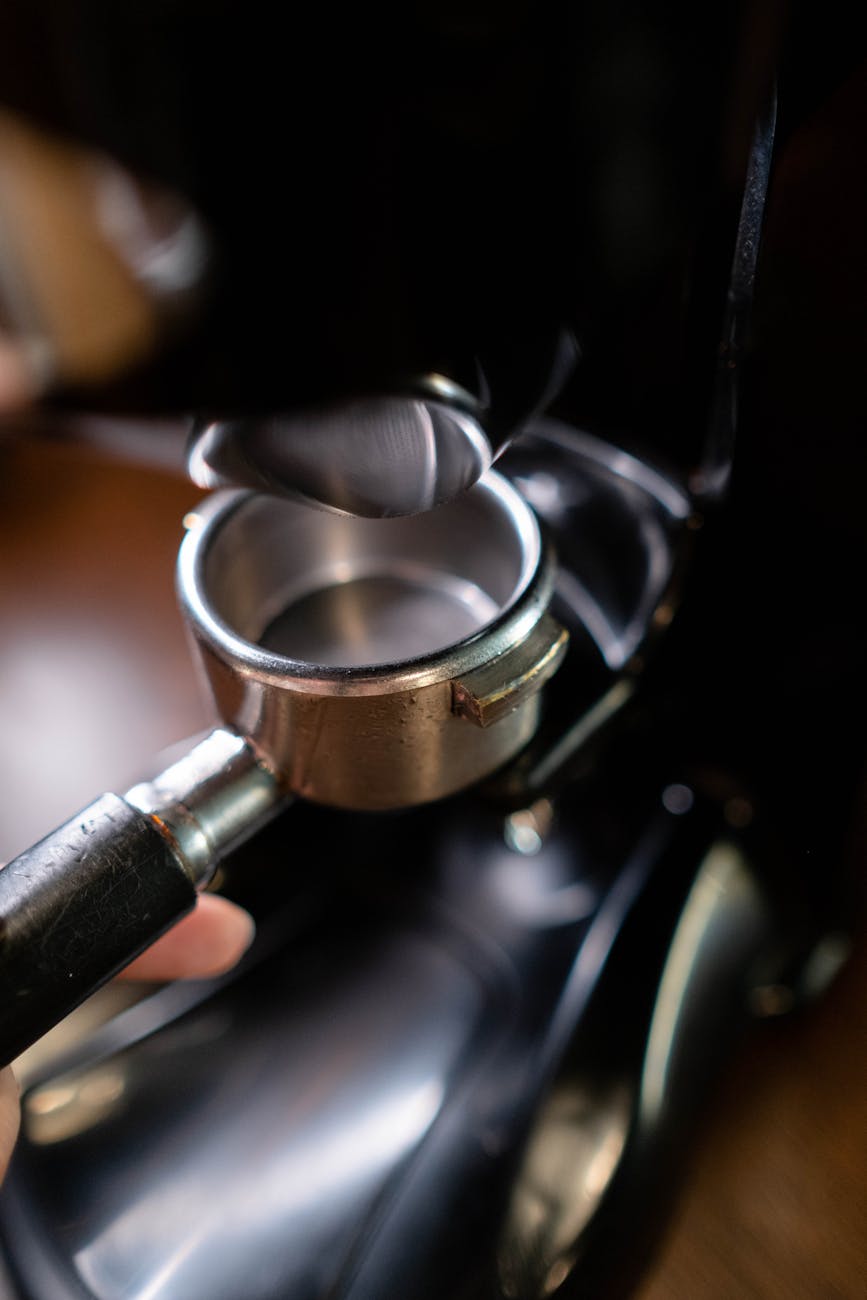
How to use a bottomless portafilter to perfect your dark roast extraction
There’s nothing quite like the rich, bold flavor of a perfectly pulled dark roast espresso. It’s a cup full of deep chocolate, nutty, and roasty notes, with a thick, syrupy body. However, brewing dark roasts can be a tightrope walk. These beans are more soluble and brittle, making them incredibly sensitive to over-extraction, which quickly leads to a bitter, ashy taste. This is where the bottomless portafilter, also known as a naked portafilter, transforms from a beautiful accessory into an essential diagnostic tool. By removing the spouts, it exposes the bottom of the filter basket, giving you a raw, unfiltered view of your extraction in real-time. This article will guide you through using this feedback to master your dark roast espresso shots.
Understanding the unique challenge of dark roasts
Before we can fix problems, we need to understand why dark roasts are so notoriously tricky. The roasting process fundamentally changes the coffee bean’s structure. Dark roast beans are roasted longer, making them less dense, more porous, and more brittle than their lighter counterparts. This has several direct impacts on extraction:
- Faster extraction: Because they are more soluble, the desirable flavor compounds in dark roasts are extracted more quickly. This gives you a much smaller window for a perfect shot before bitter flavors begin to dominate.
- Increased fines: The brittle nature of dark beans means they shatter more during grinding, creating a higher volume of microscopic coffee particles called “fines.” These fines can easily clog the filter basket, impeding water flow and causing channeling.
- Lower density: A scoop of dark roast beans weighs less than the same scoop of light roast. This means you may need to adjust your dose (the amount of coffee in the basket) to achieve the right puck depth and resistance.
A standard spouted portafilter hides the chaos that might be happening inside the basket. The two spouts merge the streams, masking issues like channeling. A bottomless portafilter provides the honest feedback you need to address these specific challenges head-on.
Dialing in your grind and dose
With the challenges of dark roasts in mind, your first adjustments should happen at the grinder. The common instinct is to grind finer to slow down the shot, but with dark roasts, this often backfires by creating even more fines and compacting the puck too much, leading to severe channeling.
Instead, start with a slightly coarser grind than you would for a medium roast. This helps reduce the production of fines and allows water to flow through the coffee bed more evenly. From this starting point, use the visual feedback from your bottomless portafilter to make small, methodical adjustments. If your shot gushes out and is watery (a “gusher”), your grind is too coarse. If the shot chokes the machine or takes over 40 seconds to pull, it may be too fine.
Pay close attention to your dose as well. Ensure you are using a consistent dose that is appropriate for your basket size. A scale is non-negotiable for this. An incorrect dose—either too much or too little—can leave improper headspace in the basket, which affects water distribution and can be a primary cause of an uneven extraction.
Mastering puck prep for an even flow
Your technique for preparing the “puck” of coffee in the portafilter is the most critical factor for a beautiful, even extraction. Any inconsistencies here will be immediately visible with a bottomless portafilter. For dark roasts, meticulous puck prep is everything.
First, focus on distribution. After grinding into your portafilter, the grounds will be clumpy and unevenly distributed. Use a Weiss Distribution Technique (WDT) tool—essentially a set of fine needles—to rake through the grounds. This breaks up clumps and evenly distributes the coffee across the entire basket, eliminating dense spots and empty pockets. This single step is the number one defense against channeling.
Next comes tamping. The goal of tamping is not to press as hard as you can, but to create a level and uniformly compressed bed of coffee for the water to pass through. Ensure your tamper is level before you apply pressure. Press down firmly and consistently until the coffee bed stops compressing, then give it a gentle polish without twisting too hard. A crooked tamp will force water to one side of the puck, resulting in a lopsided and uneven extraction that is plain to see.
Reading the visual feedback from your shot
This is where the magic happens. Watching your shot unfold through a bottomless portafilter provides a roadmap for what to fix. A perfect shot will begin with a few dark droplets appearing evenly across the basket’s bottom. These will quickly coalesce into a single, steady, syrupy stream right in the center, resembling a beautiful cone of flowing honey. The color will be a rich, dark brown with reddish-brown “tiger striping.”
However, you will often see flaws. Learning to identify them is key to improving your espresso. Here is a breakdown of common issues and how to solve them:
| Visual cue | Problem name | Likely cause and solution |
|---|---|---|
| Thin, watery jets shooting out from the puck. | Channeling | Water has found a path of least resistance. Improve distribution with a WDT tool. Check for a level tamp. Your grind might also be too fine, causing excessive pressure buildup. |
| Extraction begins only around the outer edge. | Donuting | Often caused by poor distribution where grounds are less dense at the edges. A thorough WDT can fix this. Can also be a sign of tamping harder in the center than on the sides. |
| The entire shot flows very fast and turns blonde (pale yellow) quickly. | Under-extraction | Your grind is too coarse. Adjust your grinder one small step finer and try again. Could also be an insufficient dose of coffee in the basket. |
| The stream is messy and sprays in multiple directions. | Spritzing / Spurting | This is a severe form of channeling. It indicates significant gaps or cracks in the coffee puck. Re-evaluate your entire puck prep routine, from distribution to tamping. |
By observing these signs, you can stop guessing and start making targeted adjustments to your grind, dose, and technique, bringing you closer to that perfect shot.
Conclusion: From guesswork to precision
The bottomless portafilter demystifies the art of espresso extraction, especially for temperamental dark roasts. It transforms the process from a black box of hidden variables into a clear, visual experience. By providing instant feedback, it empowers you to diagnose and correct the flaws that lead to bitterness and inconsistency. Remember the core principles: dark roasts require a slightly coarser grind to manage fines and solubility, and meticulous puck preparation using tools like a WDT is paramount to prevent channeling. By learning to read the signs of your extraction—the evenness of the flow, the color, and the timing—you turn guesswork into precision. This tool is your best teacher on the journey to pulling consistently rich, balanced, and delicious dark roast espresso at home.

 No products in the cart.