

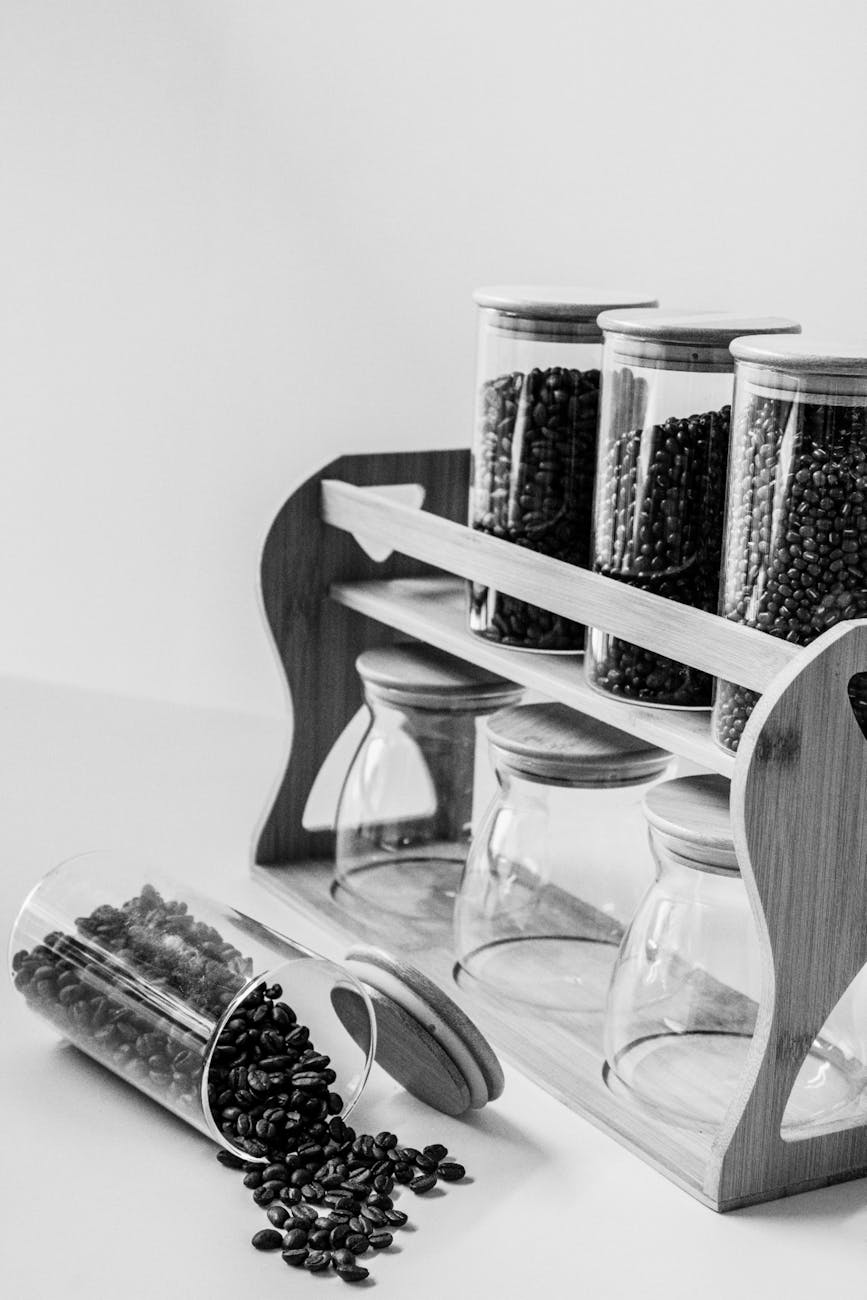
Investing in an espresso machine with a saturated grouphead is a testament to your commitment to quality coffee. These machines offer unparalleled temperature stability, creating a controlled environment where the only variables should be your skill and your beans. However, even the most advanced equipment is at the mercy of its primary ingredient: the coffee itself. The journey from roaster to a perfectly pulled shot is fraught with peril for delicate espresso beans. Improper storage can undo the roaster’s hard work and your investment in a single day, leading to lackluster, flat, and disappointing espresso. This guide will explore the essential methods for storing your espresso beans to maintain peak freshness, ensuring every shot you pull is as vibrant and flavorful as it was meant to be.
Understanding the four enemies of coffee freshness
Before we can talk about the right way to store coffee, we need to understand what we’re fighting against. Roasted coffee is a delicate, volatile product. Its amazing aromas and flavors are the result of complex chemical compounds that begin to break down almost immediately after roasting. Four primary culprits accelerate this process of staling. For a barista using a saturated group machine, controlling these variables is non-negotiable, as the machine’s consistency will only highlight imperfections in the beans.
These enemies are:
- Oxygen: This is coffee’s number one adversary. Oxidation is a chemical process that degrades the oils and aromatic compounds in roasted beans. When these oils break down, they create a stale, rancid, or cardboard-like taste. Every time your beans are exposed to air, this process speeds up.
- Light: You might love a sun-drenched kitchen, but your coffee beans do not. Ultraviolet (UV) light acts as a catalyst, speeding up the chemical reactions that cause staling. This is why you’ll rarely see specialty coffee sold in clear bags or containers.
- Heat: Heat is another catalyst that accelerates the degradation of your coffee. It excites the molecules in the beans, causing aromatic compounds to dissipate more quickly and oils to turn rancid faster. Storing beans near a heat source—like on top of your espresso machine or next to an oven—is one of the fastest ways to ruin them.
- Moisture: Roasted coffee beans are hygroscopic, meaning they absorb moisture from their surroundings. Moisture can not only dilute the precious oils but also create a breeding ground for mold and introduce off-flavors into your coffee. It’s a particularly insidious enemy for those considering freezing their beans.
By understanding these four factors, you can make informed decisions about where and how you store your coffee, creating a defensive strategy to preserve its integrity from the moment you open the bag.
Day-to-day storage for active use
Once you’ve opened a bag of beans, the clock is ticking. For the beans you plan to use over the next one to two weeks, the goal is to minimize exposure to the four enemies as much as possible. The worst place to store your daily beans is in the grinder’s hopper. While convenient, a hopper is typically not airtight or light-proof, leaving your beans exposed and vulnerable.
The best practice is to use a dedicated, opaque, airtight coffee canister. Look for containers with features like a one-way CO2 valve, which allows the natural gases from degassing beans to escape without letting oxygen in. Materials like ceramic or stainless steel are ideal as they are non-reactive and block light completely. Store this canister in a cool, dark place like a pantry or cupboard, far away from your espresso machine, stove, or any windows.
A common mistake is to pour the beans directly from the bag into the canister. For even better protection, keep the beans in their original bag (if it has a one-way valve) and place the entire bag inside the airtight canister. This provides a double barrier against oxidation. Only measure out the beans you need for your next shot or two, a practice known as single dosing, to keep the bulk of your coffee sealed and protected for as long as possible.
Long-term storage and the freezer debate
What about that beautiful five-pound bag of coffee you bought from your favorite roaster? You certainly won’t use it all in two weeks. This is where long-term storage comes into play, and it almost always leads to a heated discussion: should you freeze your coffee beans? The answer is a qualified yes, but only if you do it correctly. Done wrong, you risk destroying your beans with moisture and freezer burn.
The key to successful freezing is to eliminate air and prevent condensation. The best method is to portion your beans into smaller, single-use amounts (enough for a day or two) and vacuum seal them. If you don’t have a vacuum sealer, use high-quality freezer bags and remove as much air as possible before sealing.
When you’re ready to use a frozen portion, here’s the critical step: do not open the bag while the beans are still cold. You must allow the sealed bag to come to room temperature completely, which can take several hours. Opening it prematurely will cause condensation to form on the cold beans, instantly introducing moisture and undoing all your hard work. Once a portion of beans has been thawed, never refreeze it.
The following table compares common storage methods:
| Storage method | Protection from oxygen | Protection from light | Best for duration | Key consideration |
|---|---|---|---|---|
| Original bag (unsealed) | Poor | Good | 1-3 Days | Convenient but offers minimal protection. |
| Airtight canister | Excellent | Excellent | 1-2 Weeks | Ideal for daily use. Store in a cool, dark place. |
| Vacuum sealed (freezer) | Superior | Excellent | 1-3 Months | Must be thawed properly in the sealed bag. |
The crucial role of degassing
Freshly roasted coffee contains a significant amount of trapped carbon dioxide (CO2) from the roasting process. The gradual release of this gas is called degassing. This process is vital for espresso. If you try to pull a shot with beans that are too fresh (typically less than 3-5 days off roast), the excess CO2 will interfere with extraction. It creates a foamy, gassy puck that resists water, leading to severe channeling, sputtering, and a sour, underdeveloped shot. No amount of technique can save it.
Proper storage allows beans to degas in a controlled manner. An ideal window for espresso is generally between 7 and 21 days after the roast date. Your short-term storage method—the airtight canister—is perfect for managing this period. The one-way valve allows CO2 to escape without letting oxygen in, hitting that sweet spot where the beans are stable enough for a clean extraction but still bursting with fresh, vibrant flavors. Freezing essentially pauses the degassing and aging process. When you thaw the beans, they will be at roughly the same state they were in when you froze them, allowing you to “lock in” beans at their peak flavor for later use.
In conclusion, the exceptional thermal stability of a saturated grouphead espresso machine demands equally exceptional coffee. To achieve this, a meticulous storage strategy is not a luxury; it’s a necessity. The core principle is to protect your beans from their four main enemies: oxygen, light, heat, and moisture. For daily use, an opaque, airtight canister stored in a cool, dark place is your best tool. For long-term preservation, freezing is a viable option, but only when done with precision—using vacuum-sealed, portioned bags and allowing them to thaw completely before opening. Understanding and managing the degassing period is the final piece of the puzzle, ensuring your beans are at their peak when they meet the grinder. By adopting these practices, you honor the coffee, your equipment, and your craft.



 No products in the cart.