

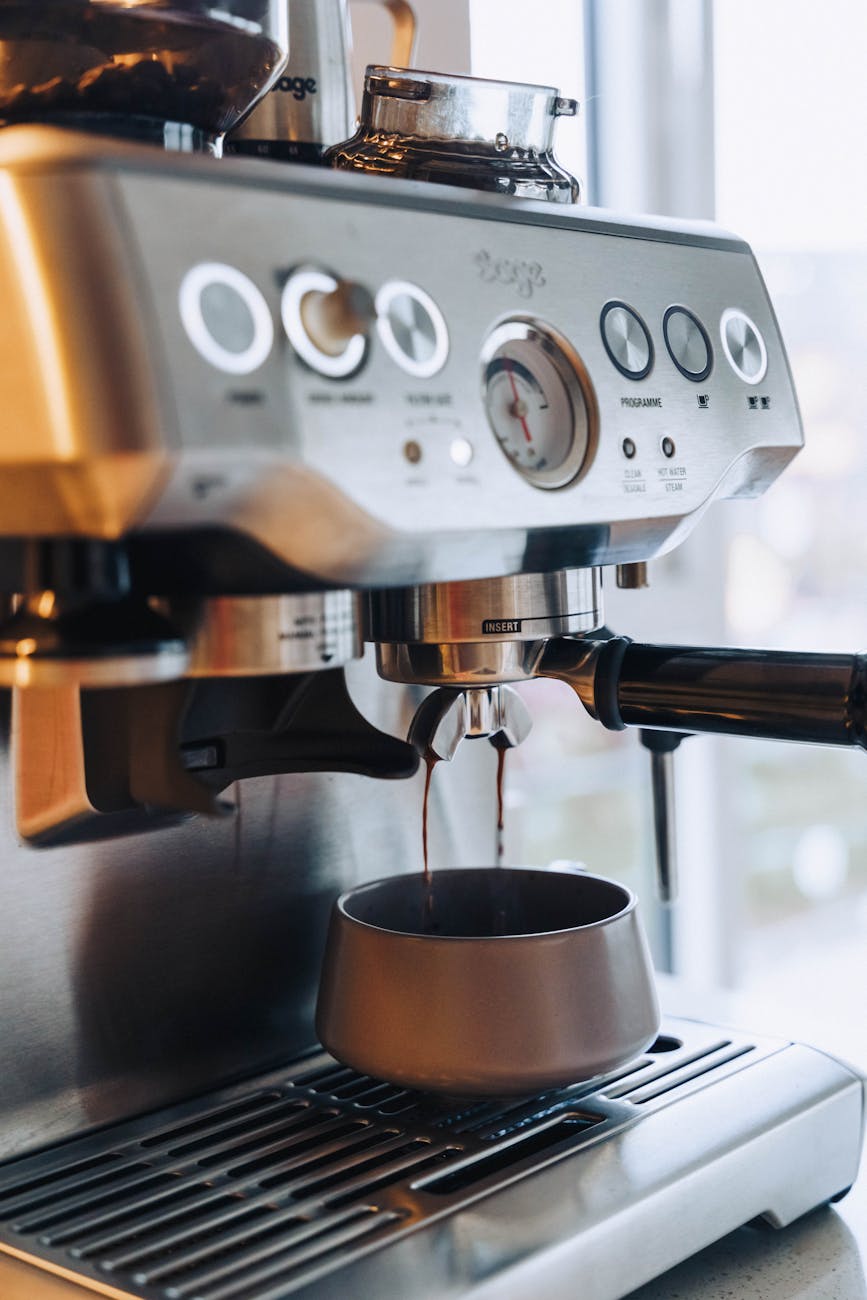
Say goodbye to watery espresso: A guide to fixing your automatic machine
There are few things more disappointing than anticipating a rich, aromatic shot of espresso only to be met with a thin, watery, and sour cup. For owners of automatic espresso machines, this experience can be particularly frustrating. You invested in a device designed for convenience and consistency, yet it’s delivering a subpar result. The good news is that watery espresso is a common and often easily solvable problem. It rarely means your expensive machine is broken. More often, it’s a sign that a few key variables are out of sync, from the beans you’re using to simple settings that need a quick adjustment. This guide will walk you through the most common causes of watery shots and provide clear, actionable steps to get you back to brewing delicious, full-bodied espresso.
The foundation: Your coffee beans and grind size
Before you even touch your machine’s settings, the first place to look is at the coffee itself. The quality and preparation of your beans are the building blocks of a great shot. An automatic machine can’t create flavor that isn’t there to begin with.
The freshness factor: Coffee beans are a fresh product. After roasting, they immediately begin to release CO2 and volatile oils, which are responsible for the rich crema and complex flavors in espresso. Beans that are several months old will have lost most of these compounds. When water passes through stale grounds, it meets little resistance and extracts very little flavor, resulting in a fast, watery shot. Always check the “roasted on” date on the bag. For best results, use beans that were roasted within the last month.
The all-important grind: This is arguably the single most important factor you can control. The grind size determines how quickly water can pass through the coffee. Think of it like trying to pour water through a bucket of gravel versus a bucket of sand.
- Too coarse: If the grind is too coarse (like gravel), the water flows through almost instantly. It doesn’t have enough contact time to extract the coffee’s sugars and oils, leading to a classic watery, sour, and under-extracted shot.
- Too fine: If the grind is too fine (like sand), the water struggles to push through. This can “choke” the machine, resulting in a bitter, over-extracted shot or just a few drips.
Most automatic machines have a dial inside the bean hopper to adjust the grind. To fix a watery shot, you need to make the grind finer. Make small, incremental adjustments—moving the dial just one or two notches at a time—and only adjust the grinder while it is running to prevent jamming the burrs. Brew a shot after each adjustment to see the effect.
Dialing in your machine’s settings
Once you’ve ensured your beans are fresh and your grind is in the right ballpark, the next step is to look at the machine’s brewing parameters. Automatic machines simplify espresso by pre-programming these settings, but they almost always offer user control over the key variables that affect strength and concentration.
Coffee dose or aroma strength: This setting controls how much coffee the machine grinds for each shot. A higher dose means more coffee grounds in the puck, which provides more resistance for the water and more flavor to extract. If your dose is too low, the puck will be thin and the water will channel right through it, resulting in a weak shot. On most machines, this setting is represented by coffee bean icons (from 1 to 5) or a “strength” or “aroma” setting. If your shots are watery, increase the coffee strength setting to the maximum or second-to-maximum level.
Water volume or cup size: Many people mistake a larger volume of liquid for a stronger coffee. In espresso, the opposite is true. A traditional espresso shot is a concentrated beverage of about 1 to 1.5 ounces (30-45 ml). Many automatic machines default to a lungo (long shot) or are programmed to fill a larger cup, which pushes too much water through the same amount of coffee. This extra water does nothing but dilute the flavor. Check your machine’s manual to see how you can program the shot volume. Aim for a smaller, more concentrated output to drastically improve the body and taste of your espresso.
The crucial role of cleaning and maintenance
If you’ve dialed in your beans and settings but your shots are still inconsistent or watery, the problem may be a lack of regular maintenance. A dirty machine cannot perform properly, no matter how good your coffee is. Over time, coffee oils and fine grounds build up in critical components, disrupting water flow and pressure.
A dirty brew group: The brew group is the mechanical heart of your machine. It’s where the coffee is tamped, brewed, and ejected. Old coffee grounds and sticky oils can cake onto its parts, preventing it from creating a tight seal and applying even pressure. This can lead to “channeling,” where water finds a path of least resistance and bypasses most of the coffee puck, leading directly to a watery shot. Most machines have a removable brew group that should be rinsed with plain water weekly and deep-cleaned with coffee degreasing tablets monthly.
Mineral scale buildup (descaling): Tap water contains minerals that, when heated, form limescale. This scale can clog the machine’s internal pipes, pump, and thermoblock. A scaled-up machine struggles to reach the correct brewing temperature and maintain stable pressure—two elements essential for proper extraction. An inconsistent pump pressure is a direct cause of watery shots. Heed your machine’s descaling alerts and run a descaling cycle using the manufacturer-recommended solution whenever prompted. Regular descaling is the single best thing you can do for your machine’s long-term health and performance.
Quick troubleshooting guide
Sometimes it’s helpful to see the problem, cause, and solution laid out simply. Use this table as a quick reference for diagnosing your watery espresso issues.
| Symptom | Likely Cause(s) | Solution(s) |
|---|---|---|
| Shot is pale, flows very fast, and tastes sour. | Grind is too coarse; coffee dose is too low; beans are stale. | Adjust grinder to a finer setting. Increase coffee strength/aroma setting. Buy fresh beans with a recent roast date. |
| Shot starts okay but quickly becomes pale and blond. | Water volume is too high for the amount of coffee. | Reprogram the shot volume to a smaller amount (e.g., 1.5 oz / 45 ml). Stop the shot manually when it starts to turn blond. |
| Shots used to be good but are now inconsistent and weak. | Brew group is dirty; machine needs descaling. | Remove and rinse the brew group. Run a cleaning cycle with a degreasing tablet. Run a descaling cycle. |
| Machine is making loud or unusual noises during brewing. | Pump is struggling due to scale buildup or potential failure. | Perform a descaling cycle immediately. If the problem persists, contact customer support or a service technician. |
Conclusion: Achieving consistency and flavor
A watery shot of espresso from your automatic machine is not a verdict on its quality but a call for a little fine-tuning. By approaching the problem systematically, you can easily diagnose and solve the issue. Remember to start with the most fundamental element: high-quality, fresh coffee beans. From there, make small, methodical adjustments to your grind size, moving it finer until you achieve a balanced extraction. Complement this by increasing the coffee dose and reducing the total water volume for a more concentrated, flavorful shot. Finally, never underestimate the power of regular cleaning. A well-maintained machine is a happy machine. With a little patience and attention to these details, you can transform your disappointing, watery coffee into the rich, syrupy, and delicious espresso your machine was designed to make.

 No products in the cart.