

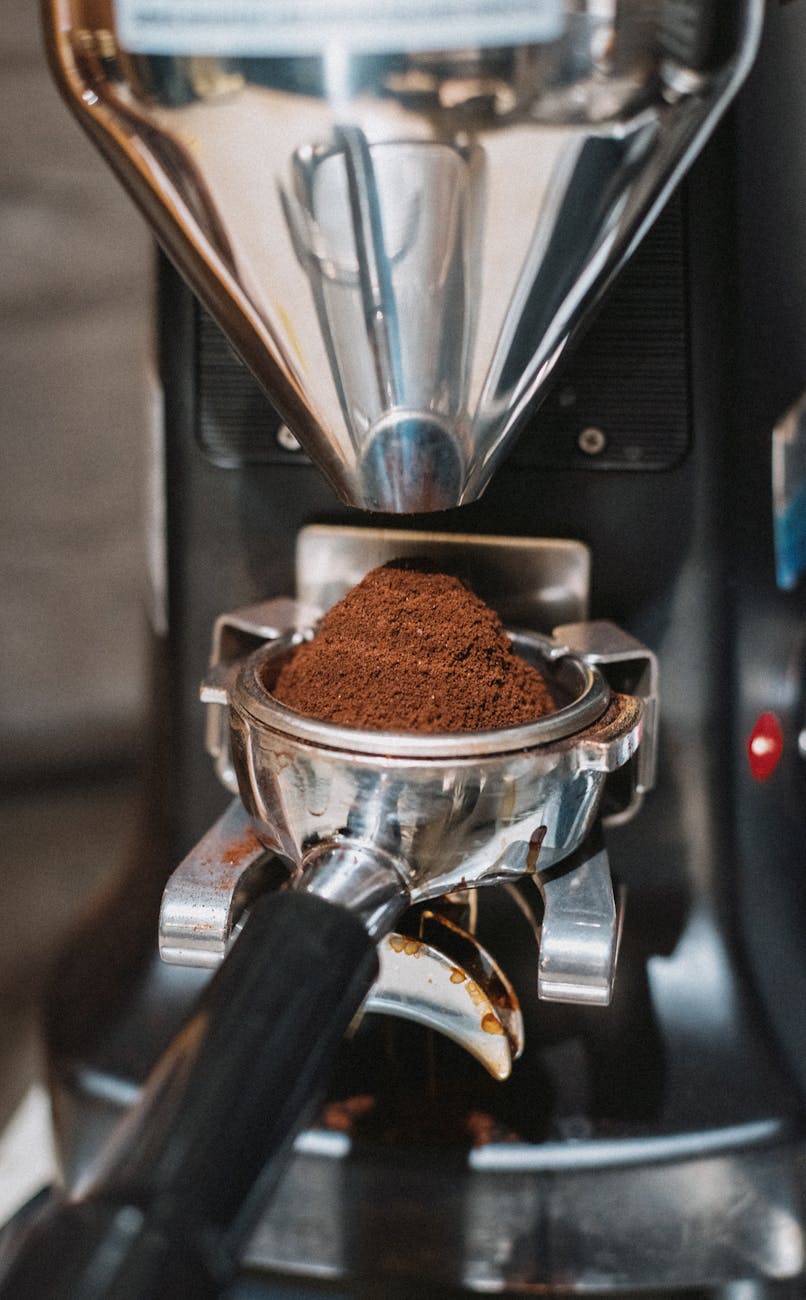
Taming the static: Your guide to a clump-free espresso grind
There’s nothing more frustrating in a carefully prepared espresso routine than the chaotic spray of static-charged coffee grounds. They cling to the grinder, your counter, and your hands, creating a mess that disrupts an otherwise zen-like process. Even worse are the clumps that fall into your portafilter, creating dense pockets that resist water and lead to channeling and an uneven, disappointing shot. This phenomenon is a common battle for home baristas, turning a precise science into a game of chance. But it doesn’t have to be this way. Understanding the root causes of static and clumping is the first step toward a cleaner, more consistent, and ultimately more delicious espresso workflow. This guide will walk you through the why and the how, providing actionable solutions to tame the static and banish clumps for good.
Understanding the enemy: Why static and clumping happen
Before you can solve the problem, you need to understand the science behind it. The primary culprit behind your messy coffee counter is static electricity. As coffee beans are shattered and ground by the burrs, the friction between the beans, burr surfaces, and other coffee particles creates a static charge. Think of it like rubbing a balloon on your hair. This effect is significantly worse in environments with low humidity, which is why you might notice the problem is more severe during dry winter months. Dry air is a poor electrical conductor, allowing the static charge to build up on the coffee grounds with nowhere to go.
This static charge directly leads to clumping. The individual coffee particles become electrically charged and are attracted to one another, forming small clumps. However, static isn’t the only factor. Other variables contribute to the problem:
- Bean characteristics: Very dark, oily roasts can sometimes clump due to the sticky surface oils, while very light, dry roasts are often more prone to high levels of static.
- Grinder mechanics: High-speed grinders tend to generate more friction and heat, which can exacerbate static. The material and geometry of the burrs also play a role.
- Fines production: All grinders produce a certain amount of ultra-fine coffee particles, or “fines.” These fines can act as a binding agent, contributing to the formation of clumps, especially when combined with static or oils.
By recognizing that static is an environmental and mechanical issue, we can move on to targeted solutions that address these root causes.
Simple techniques for immediate results
Fortunately, you don’t need to buy a new grinder to start fighting static and clumps. Some of the most effective methods are simple, cheap, and can be integrated into your workflow today. The most famous and effective of these is the Ross Droplet Technique (RDT).
RDT is the simple act of adding a tiny amount of water to your beans before grinding. The moisture helps to dissipate the static charge generated during grinding, preventing grounds from clinging to surfaces and each other. To do it correctly:
- Weigh your whole beans for your dose.
- Use a small spray bottle to give the beans a single, light spritz of water. Alternatively, you can dip the handle of a spoon in water and use the single droplet clinging to it to stir your beans.
- Shake the beans to distribute the minimal moisture evenly.
- Grind as usual.
The key is to use an incredibly small amount of water. Too much can cause wet grounds to clog your grinder’s burrs and chute, leading to a different kind of clumping and potential long-term damage like rust. When done right, RDT almost completely eliminates static.
Even with RDT, some minor clumping may occur. This is where the Weiss Distribution Technique (WDT) becomes essential. While RDT prevents clumps from forming, WDT is the cure for any that make it into your portafilter. By using a tool with very fine needles to stir the grounds in the basket, you break up any remaining clumps and ensure an even, fluffy bed of coffee. This step is critical for preventing channeling and achieving a balanced extraction.
Grinder maintenance and environment control
Your techniques are only part of the equation; the condition of your equipment and your environment play a massive role. A clean grinder is a happy grinder, and it’s also one that produces less static and clumping. Over time, coffee oils and fines build up on the burrs and inside the grind chamber and chute. This residue can increase friction and cause fresh grounds to stick, worsening the problem.
A regular cleaning routine is non-negotiable. At least once a month, you should perform a deep clean:
- Unplug your grinder and remove the hopper.
- Run the grinder for a few seconds to purge any remaining beans or grounds.
- Disassemble the top burr carrier according to your manufacturer’s instructions.
- Use a stiff brush, a bellows, and a vacuum to thoroughly clean the burrs, the grind chamber, and the exit chute.
- Wipe away any stubborn oily residue with a dry cloth. Avoid using water on steel burrs, as it can lead to rust.
- Reassemble your grinder and recalibrate your zero point if necessary.
Beyond cleaning, consider your environment. Since dry air is the main amplifier of static, controlling your room’s humidity can be a game-changer. Placing a small humidifier near your coffee station during dry seasons can create a more stable environment, reducing static year-round and making techniques like RDT even more effective.
Comparing solutions: What’s right for you?
With several techniques and strategies available, it can be helpful to see them laid out side-by-side. Not every solution is practical for every person, so you can mix and match to find the perfect workflow for your setup and budget. For instance, a beginner can get amazing results with just RDT and regular cleaning, while a dedicated enthusiast struggling in a very dry climate might invest in a humidifier or even a grinder with built-in static reduction technology.
Here is a breakdown of the most common solutions:
| Technique or Tool | Approximate Cost | Effort Level | Primary Impact |
|---|---|---|---|
| Ross Droplet Technique (RDT) | Minimal (cost of a spray bottle) | Low (adds 5 seconds to workflow) | Dramatically reduces static |
| Weiss Distribution Technique (WDT) | Low-Medium | Medium (adds 15-20 seconds to workflow) | Eliminates clumps and improves distribution |
| Regular Grinder Cleaning | Free | Medium (monthly maintenance) | Reduces clumping from oil/fine buildup |
| Using a Humidifier | Medium | Low (set it and forget it) | Reduces ambient static potential |
| Grinder with Ionizer | High (cost of a premium grinder) | None (built-in feature) | Actively neutralizes static at the source |
Ultimately, the goal is to create a seamless process that delivers fluffy, evenly distributed grounds to your portafilter every single time. By combining these methods, you can build a robust defense against static and clumping.
Conclusion: Achieving a clean and consistent grind
Dealing with static and clumping is a universal challenge in the pursuit of great espresso, but it is entirely solvable. The problem stems from a combination of friction during grinding, environmental factors like low humidity, and the characteristics of the beans themselves. By taking a multi-faceted approach, you can effectively eliminate this frustrating issue. Start with the simplest, most impactful techniques: implement the Ross Droplet Technique to stop static at the source and adopt the Weiss Distribution Technique to ensure a perfectly even puck. Complement these habits with a consistent grinder cleaning schedule to prevent buildup. For a more permanent solution, consider controlling your room’s humidity. A clean, clump-free workflow not only saves you from a messy cleanup but more importantly, it is fundamental to achieving consistent, delicious, and channel-free espresso shots.



 No products in the cart.