

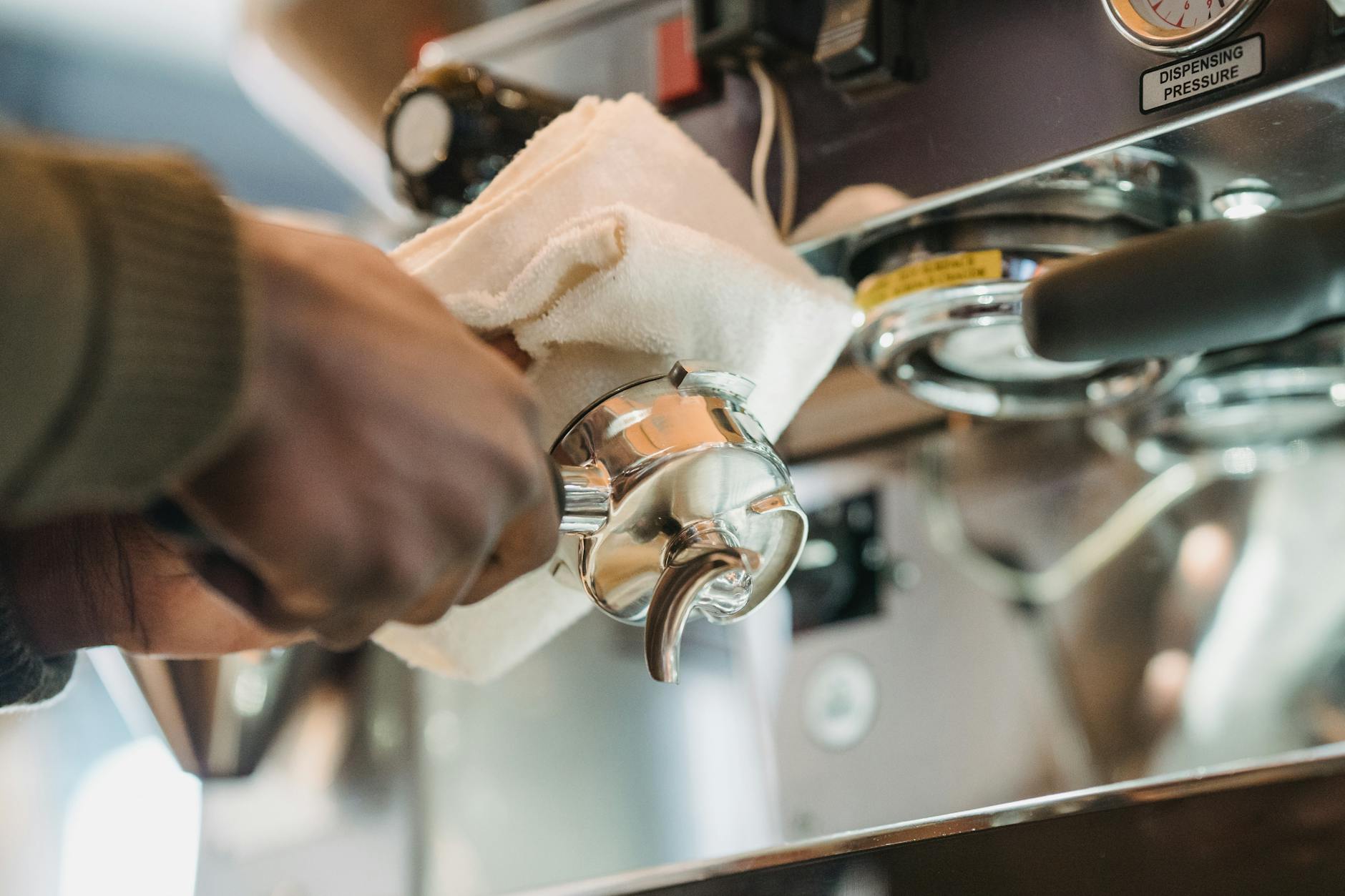
How to maintain your La Marzocco group head for long-term performance
The saturated group head is a hallmark of La Marzocco’s engineering, a key component responsible for the incredible temperature stability and shot consistency the brand is known for. It is the heart of your espresso machine, the final point of contact before water meets coffee. However, even the most robust engineering requires consistent care. Neglecting group head maintenance leads to a gradual decline in espresso quality, characterized by channeling, bitter or rancid flavors, and inconsistent extraction. Over time, this neglect can lead to more significant, costly repairs. This guide provides a comprehensive maintenance plan, breaking down the essential daily, weekly, and periodic tasks needed to keep your La Marzocco performing at its peak for years to come.
Daily cleaning rituals for consistent espresso
Consistency in coffee is built upon a foundation of daily habits. The tasks performed at the end of each day are not just about cleanliness; they are about preventing the buildup of coffee oils and fine particles that can quickly turn rancid and taint every subsequent shot. These simple, non-negotiable steps are your first line of defense in preserving the quality of your espresso.
Immediately after every shot, it’s crucial to purge the group head by running water through it for a few seconds. This flushes out any loose grounds that have been lifted into the group during extraction. At the end of service, the main daily task is a water-only backflush. This is done using a blind portafilter basket (one with no holes). Lock the portafilter into the group head and engage the pump for 5-10 seconds. You will see pressure build on the gauge. Stop the pump, and the pressure will be released through the three-way solenoid valve, flushing water and loose coffee grounds out into the drip tray. Repeat this process 5-10 times. This simple flush clears the internal pathways and prevents a hard residue from forming overnight.
The weekly deep clean: backflushing with detergent
While a daily water flush is essential, it isn’t enough to break down the stubborn, baked-on coffee oils that accumulate deep within the group head’s components, including the solenoid valve. Once a week, you need to perform a deep clean using a specialized espresso machine detergent like Cafiza or a similar product. This process is similar to the daily backflush but far more potent.
Follow these steps for a thorough weekly clean:
- Insert your blind basket into the portafilter.
- Add a small amount (usually 1/8 to 1/4 teaspoon, but check the product instructions) of espresso machine cleaning powder to the basket.
- Lock the portafilter into the group head and run the pump for 10 seconds. Stop for 10 seconds. Repeat this cycle five times.
- Remove the portafilter. You will notice discolored, brown foam, which is the dissolved coffee oil.
- Rinse the portafilter and blind basket thoroughly.
- Re-insert the portafilter and repeat the backflush cycle with only water at least 10 times to completely rinse any residual detergent from the system. This final rinse is critical to prevent a chemical taste in your next espresso.
This weekly chemical backflush dissolves the otherwise insoluble oils, ensuring water flows freely and cleanly, which is paramount for a balanced extraction.
Periodic maintenance: shower screens and gaskets
Beyond daily and weekly flushing, certain components of the group head are wear-and-tear items that require periodic inspection and replacement. The two most important are the group gasket and the shower screen.
The group gasket is the rubber ring that creates a seal between the portafilter and the group head. Over time, it becomes hard, brittle, and caked with old coffee grounds. A failing gasket is easy to diagnose: you might see water leaking from around the portafilter during an extraction, or you may find yourself having to turn the portafilter handle much further to the right than when it was new. Most gaskets should be replaced every 6 to 12 months, depending on the volume of use. Replacing it involves prying out the old one with a pick and pressing a new, lubricated gasket into place.
The shower screen and the dispersion screw that holds it in place should be removed for cleaning at least once a month. This allows you to scrub both sides of the screen and to clean the area behind it, which is inaccessible during a normal backflush. A clogged or damaged shower screen will cause uneven water distribution, leading directly to channeling and poor extractions. If the screen is dented or the holes are permanently blocked, it should be replaced.
A long-term maintenance schedule
Maintaining your La Marzocco group head is not a single event but a series of interconnected routines. Adhering to a schedule transforms complex maintenance into a manageable set of habits. Paying attention to these details prevents small issues from becoming major problems. For example, ignoring a worn gasket can lead to inefficient pressure and potential safety issues, while neglecting to clean the shower screen guarantees poor shot quality. Following a structured plan ensures every aspect of the group head is cared for, from its visible surfaces to its internal pathways. Below is a simple table to help you track these essential tasks.
| Task | Frequency | Purpose |
|---|---|---|
| Group head purge | After every shot | Rinses loose coffee grounds. |
| Water-only backflush | Daily | Clears internal pathways of fresh debris. |
| Detergent backflush | Weekly | Dissolves built-up coffee oils and residues. |
| Remove and clean shower screen | Monthly | Ensures even water distribution and cleans hidden areas. |
| Inspect/replace group gasket | Every 6-12 months | Maintains a proper seal and prevents leaks. |
| Professional service/check-up | Annually | Addresses deeper issues like scale and valve wear. |
Finally, remember that the water you use is as important as any cleaning routine. Using properly filtered and softened water will prevent the buildup of limescale, the silent killer of espresso machines. Scale can clog the intricate water paths within the group head, severely impacting thermal stability and ultimately requiring a costly professional teardown and descale.
In conclusion, the longevity and performance of your La Marzocco group head are directly in your hands. It is not an overly complicated or time-consuming endeavor but one that requires consistency and attention to detail. By integrating these practices into your workflow—from the simple daily water flush to the weekly detergent backflush and the periodic replacement of gaskets and screens—you are actively preserving the heart of your machine. This proactive approach does more than just prevent repairs; it guarantees that every espresso you pull is as delicious and consistent as the machine was designed to produce. Think of maintenance not as a chore, but as an essential ingredient in the recipe for perfect coffee and a worthy investment in your craft.

 No products in the cart.