

Investing in a quality espresso setup is the first step toward crafting café-quality coffee at home. But that initial purchase is only half the battle. To protect your investment and ensure every shot you pull is as delicious as the last, a consistent maintenance routine is non-negotiable. Old coffee oils, mineral buildup, and stray grounds can quickly turn a sweet, balanced espresso into a bitter, disappointing drink. This guide will break down the essential steps for maintaining your espresso tools, from the daily rituals to the less frequent deep cleans. By integrating these simple habits into your coffee-making process, you will guarantee long-term performance from your equipment and consistently fantastic flavor in your cup.
The foundation: Daily and weekly cleaning rituals
Great maintenance starts with small, consistent habits. These are the tasks you should perform every time you use your machine to prevent the buildup of coffee oils and milk residue, which can quickly turn rancid and spoil the taste of your coffee. Think of these as the basic hygiene for your espresso setup.
Immediately after pulling a shot:
- Purge the group head: Run water through the group head for a few seconds to flush out any coffee grounds left on the shower screen.
- Clean the portafilter: Knock out the used puck and wipe the filter basket clean with a dry cloth or rinse it. Stubborn oils can impart bitter flavors onto your next shot.
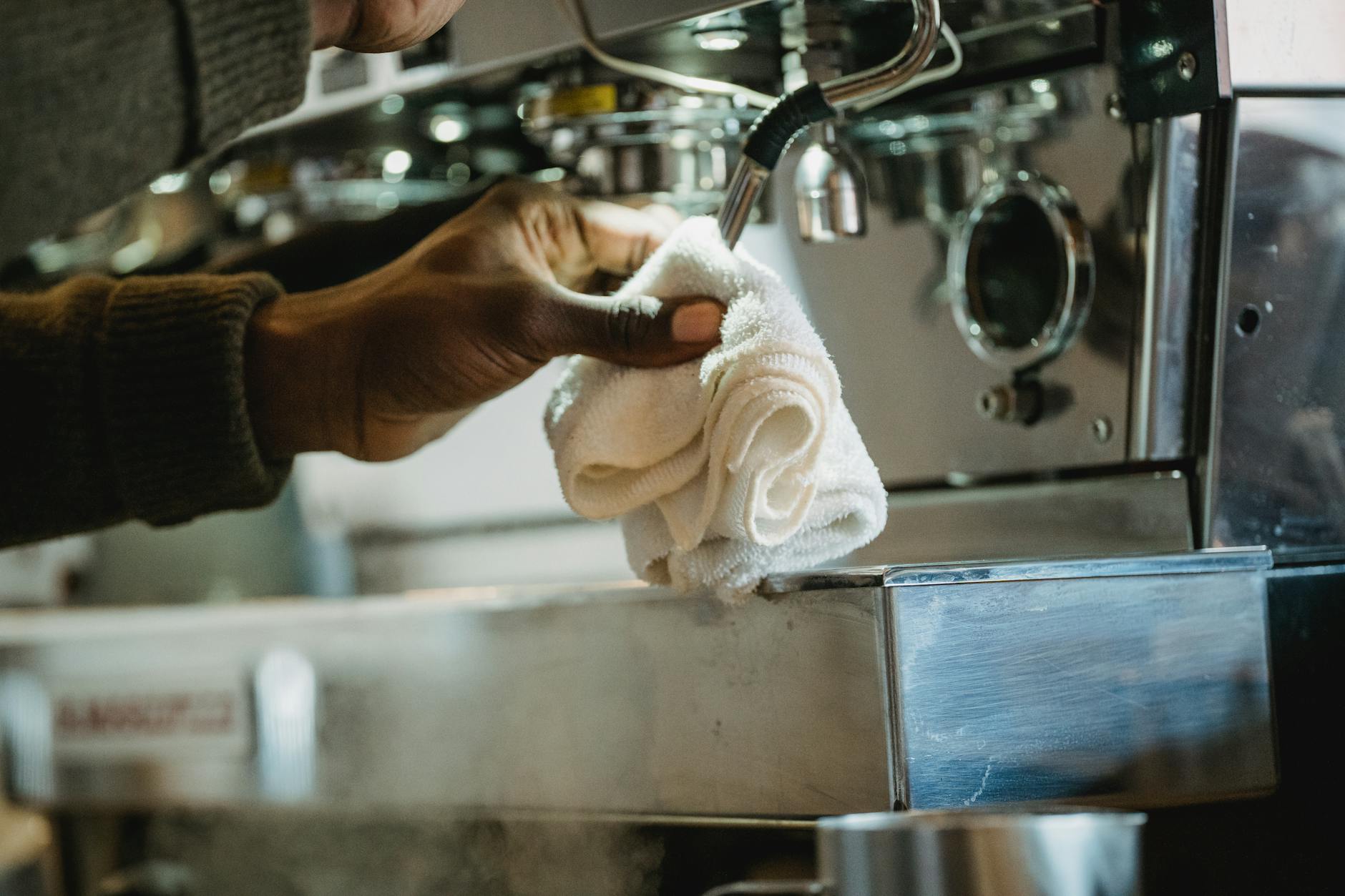
- Wipe the steam wand: This is critical. After steaming milk, immediately wipe the wand with a dedicated damp cloth and then purge it for a second or two. Dried-on milk is not only unsanitary but can clog the steam tip, affecting performance.
At the end of the day or weekly, depending on usage, a slightly more thorough cleaning is beneficial. Soak your portafilter and filter baskets (but not the handle) in a solution of hot water and a coffee-specific cleaning detergent like Cafiza for about 20-30 minutes. This will dissolve the accumulated coffee oils that simple rinsing can’t remove, leaving your equipment sparkling clean and flavor-neutral.
Going deeper: Backflushing and descaling explained
While daily wiping and rinsing are essential, the internal pathways of your machine also need attention. This is where backflushing and descaling come in. These processes tackle the buildup you can’t see.
Backflushing is a process for machines equipped with a three-way solenoid valve, which releases pressure from the group head after an extraction. This process cleans the valve and the group head’s internal components. To perform it, you use a “blind” basket (one with no holes) in your portafilter. A simple water backflush can be done daily, but a detergent backflush is needed every few weeks. This involves adding a small amount of espresso machine cleaner to the blind basket, running the pump for a few seconds, and repeating the cycle. This forces the detergent-infused water up into the group head, dissolving stubborn coffee oils and residue.
Descaling, on the other hand, addresses mineral buildup (limescale) from the water itself. Limescale can clog pipes, reduce heating efficiency, and eventually cause catastrophic failure. How often you descale depends entirely on your water hardness. You should use a descaling solution specifically designed for espresso machines, as common household solutions like vinegar can damage internal components. The process typically involves running the solution through the boiler and water lines according to your machine’s specific instructions.
Don’t forget the grinder: Ensuring a fresh grind
A clean espresso machine is only half the equation for great taste. Your grinder plays an equally important role, yet it’s often overlooked in cleaning routines. Over time, coffee grounds and oils build up on the burrs and in the chute. These oils go rancid, and the stale grounds will mix with your fresh beans, introducing unpleasant, bitter flavors into your espresso.
For regular maintenance, simply using a soft brush and a small vacuum to clean the grinder chute and burr area every week can make a big difference. For a deeper clean, consider using grinder-specific cleaning pellets. These are food-safe, grain-based pellets that you grind just like coffee beans. They absorb the built-up oils and push out old grounds. For those comfortable with it, periodically disassembling the top burr carrier to access and thoroughly clean both burrs will provide the best results, ensuring your grinder performs as well as the day you bought it.
Preventative care: Water quality and wearable parts
The best maintenance strategy is a proactive one. Instead of just cleaning up messes, you can prevent them from happening in the first place. The single most important preventative measure you can take is using the right water. Tap water, especially in hard water areas, is the primary cause of limescale. Using properly filtered and softened water will drastically reduce how often you need to descale, protecting the delicate internal workings of your machine. An inexpensive water test kit can tell you your water’s hardness, helping you create an appropriate filtration strategy.
Additionally, pay attention to simple, wearable parts. The group head gasket, the rubber ring that creates a seal between your portafilter and the group head, is a prime example. Over time, it becomes hard and brittle. If you notice your portafilter leaking during extraction or it becomes difficult to lock in, it’s time for a replacement. This is an inexpensive and easy fix that ensures proper pressure and a clean extraction.
| Task | Frequency | Why it’s important |
|---|---|---|
| Group head purge & portafilter wipe | After every shot | Prevents old grounds from tainting the next shot. |
| Steam wand purge & wipe | Immediately after use | Stops milk buildup, which is unhygienic and clogs the wand. |
| Water backflush (3-way valve machines) | Daily or every few uses | Keeps the group head’s internal pathways clear of loose grounds. |
| Detergent backflush | Every 2-4 weeks | Dissolves built-up coffee oils inside the group head. |
| Grinder cleaning (brush/vacuum) | Weekly | Removes stale grounds that impart bitter flavors. |
| Descaling | Every 2-6 months (water dependent) | Removes mineral scale that can damage heating elements and clog pipes. |
| Check/replace group head gasket | Every 6-12 months | Ensures a proper seal for correct extraction pressure and prevents leaks. |
Ultimately, maintaining your espresso tools is not about tedious chores; it’s an integral part of the craft of making exceptional coffee. By embracing a simple routine of daily, weekly, and periodic tasks, you do more than just clean. You actively preserve the integrity of your equipment and take control over the flavor of your coffee. From the immediate post-shot rinse to the proactive use of quality water, each step contributes to the whole. This consistent care ensures your machine and grinder will perform reliably for years to come, rewarding you every single morning with a pure, delicious, and perfectly extracted shot of espresso. It is the best way to honor your passion for coffee and your investment.

 No products in the cart.