

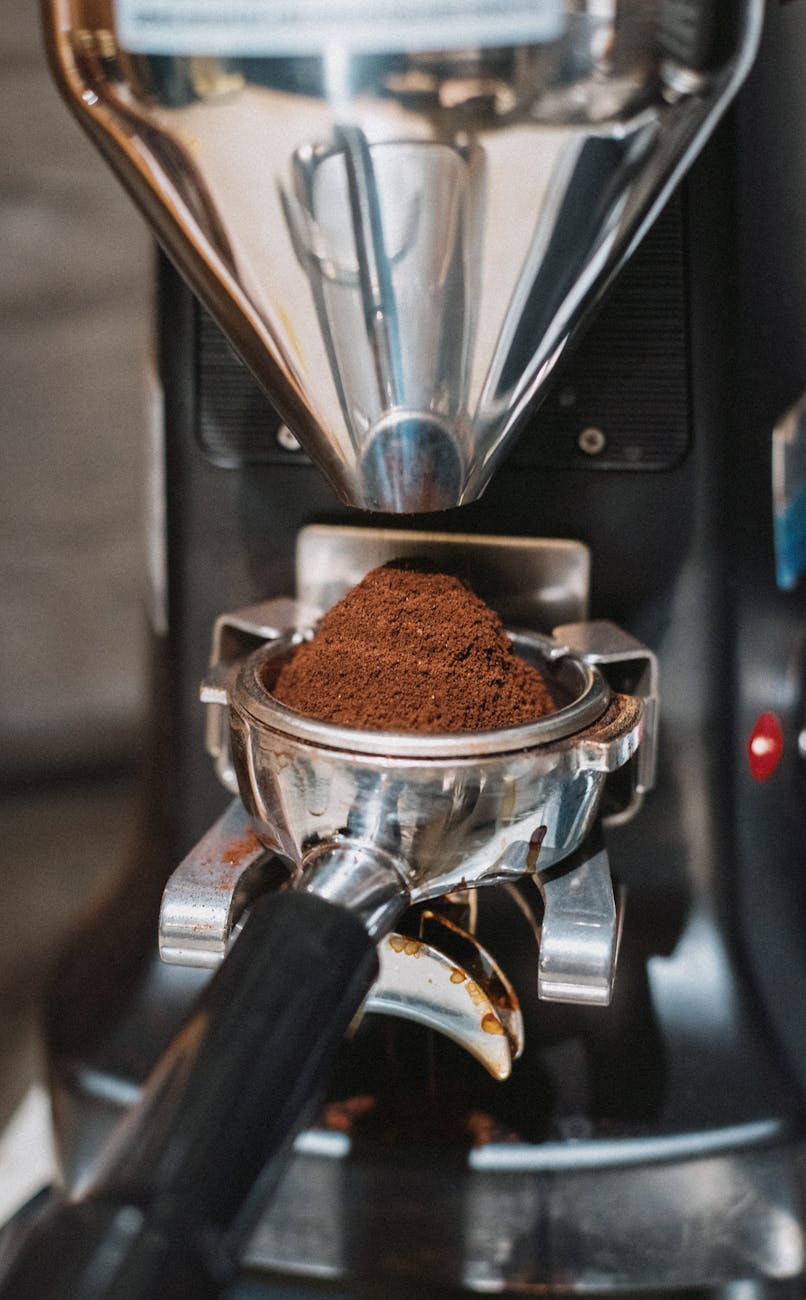
Are you chasing that perfect, syrupy espresso shot but find your grinder chokes, stalls, or whines in protest every time you dial the burrs finer? This is a common and frustrating problem for home baristas. Pushing your equipment to its limits for a finer grind often leads to a clogged machine and inconsistent results. But what if there was a simple technique to achieve that super-fine, fluffy grind without overwhelming your grinder’s motor? Enter slow feeding. This article will explore this game-changing method, explaining why your grinder chokes and how gradually introducing beans can unlock a new level of grind quality, improve your coffee’s flavor, and even extend the life of your valuable equipment. Get ready to say goodbye to grinder stalls forever.
Understanding why grinders choke on fine settings
Before we can appreciate the solution, we must first understand the problem. A coffee grinder isn’t just a simple crushing device; it’s a precision tool. Inside, two burrs—one stationary and one rotating at high speed—cut and shatter coffee beans into smaller, uniform particles. When you adjust your grinder to a finer setting, you are physically moving these two burrs closer together.
The issue arises from a combination of three factors: burr proximity, bean volume, and motor power. On a fine setting, the gap between the burrs is minuscule. If you dump a full dose of beans into the hopper and turn it on, the motor is instantly tasked with forcing a large volume of hard beans through this tiny space. The beans jam up, creating immense resistance. Your grinder’s motor strains against this load, causing it to slow down, overheat, or stop completely—what we call “choking” or “stalling.” This not only produces a terrible, inconsistent grind but also puts significant wear and tear on the motor and burrs.
The slow feeding technique explained
Slow feeding is a beautifully simple yet highly effective method to counteract the problem of grinder choking. Instead of filling the hopper and grinding the entire dose at once, you introduce the beans into the running grinder gradually. The core principle is to manage the workload, feeding the burrs only as many beans as they can comfortably process at any given moment.
Here’s the process:
- Start with an empty hopper. Do not put any beans in the grinder yet.
- Turn the grinder on. This is often called a “hot start.” The burrs should be spinning at full speed, free of any load.
- Weigh your dose of coffee beans separately.
- Pour the beans slowly and steadily into the spinning burrs. Don’t dump them in. Aim for a gentle, continuous stream. The goal is to hear the motor maintain a consistent, high-pitched whir rather than a low, struggling grumble.
By doing this, you are effectively spoon-feeding your grinder. The motor never faces the massive initial torque required to break down a large volume of beans simultaneously. Instead, it handles a few beans at a time, easily pulverizing them before the next ones arrive. This keeps the burrs clear, the motor stress low, and the grinding process smooth, even at the finest espresso settings.
Benefits beyond just preventing stalls
The most immediate advantage of slow feeding is the ability to grind much finer than you previously could. But the benefits don’t stop there. This technique fundamentally improves the entire grinding process, leading to tangible improvements in your cup.
- Improved grind consistency: When a motor is under strain, its speed fluctuates. This inconsistency translates directly to the burrs, resulting in a wider particle size distribution—a mix of boulders and fines. Slow feeding allows the motor to maintain a constant RPM, leading to a much more uniform and consistent grind. This is crucial for achieving an even extraction and avoiding channeling in espresso.
- Reduced heat generation: The friction of grinding and the heat from a struggling motor can actually scorch your coffee grounds before they ever touch water, baking away delicate aromatic compounds. Because slow feeding reduces both motor strain and friction within the burr chamber, the grounds come out cooler, preserving the coffee’s intrinsic flavor and aroma.
- Longer equipment lifespan: Repeatedly stalling or overloading your grinder’s motor is the fastest way to wear it out. By dramatically reducing the stress placed on the motor, bearings, and burrs, slow feeding is a simple habit that can significantly extend the operational life of your machine.
Comparing grinding methods: A practical overview
To truly see the difference, it helps to compare the traditional “dump and grind” method with the slow feeding technique. The impact on your grinder and your coffee is significant, as illustrated in the table below.
| Metric | Traditional Method (Dump and Grind) | Slow Feeding Method |
|---|---|---|
| Choke Risk | High, especially on fine settings | Extremely low, even on the finest settings |
| Motor Strain | Very high initial torque and load | Low and consistent load throughout |
| Heat Generation | Moderate to high from motor and friction | Minimal, preserving coffee aromatics |
| Grind Consistency | Less uniform due to motor speed fluctuation | More uniform due to stable motor speed |
| Best Use Case | Coarse to medium grinds (e.g., French press, drip) | Fine grinds (e.g., espresso, Turkish) |
As the table shows, while the traditional method is perfectly acceptable for coarser grinds where the burr gap is wider, slow feeding becomes an indispensable technique for anyone serious about pursuing high-quality espresso.
Conclusion: A small change for a big impact
In summary, grinder choking is a mechanical problem caused by overloading the burrs and motor when grinding fine. The slow feeding technique masterfully bypasses this issue by introducing beans gradually, allowing the grinder to operate under a consistent, manageable load. This simple change in your workflow not only empowers you to grind finer without fear of stalling but also yields significant rewards in quality. You’ll achieve a more uniform grind, reduce heat buildup that can damage flavor, and ultimately prolong the life of your grinder. It’s a technique that costs nothing to implement but pays dividends in every single cup. The next time you prepare an espresso, give slow feeding a try—your grinder and your taste buds will thank you.
 No products in the cart.