

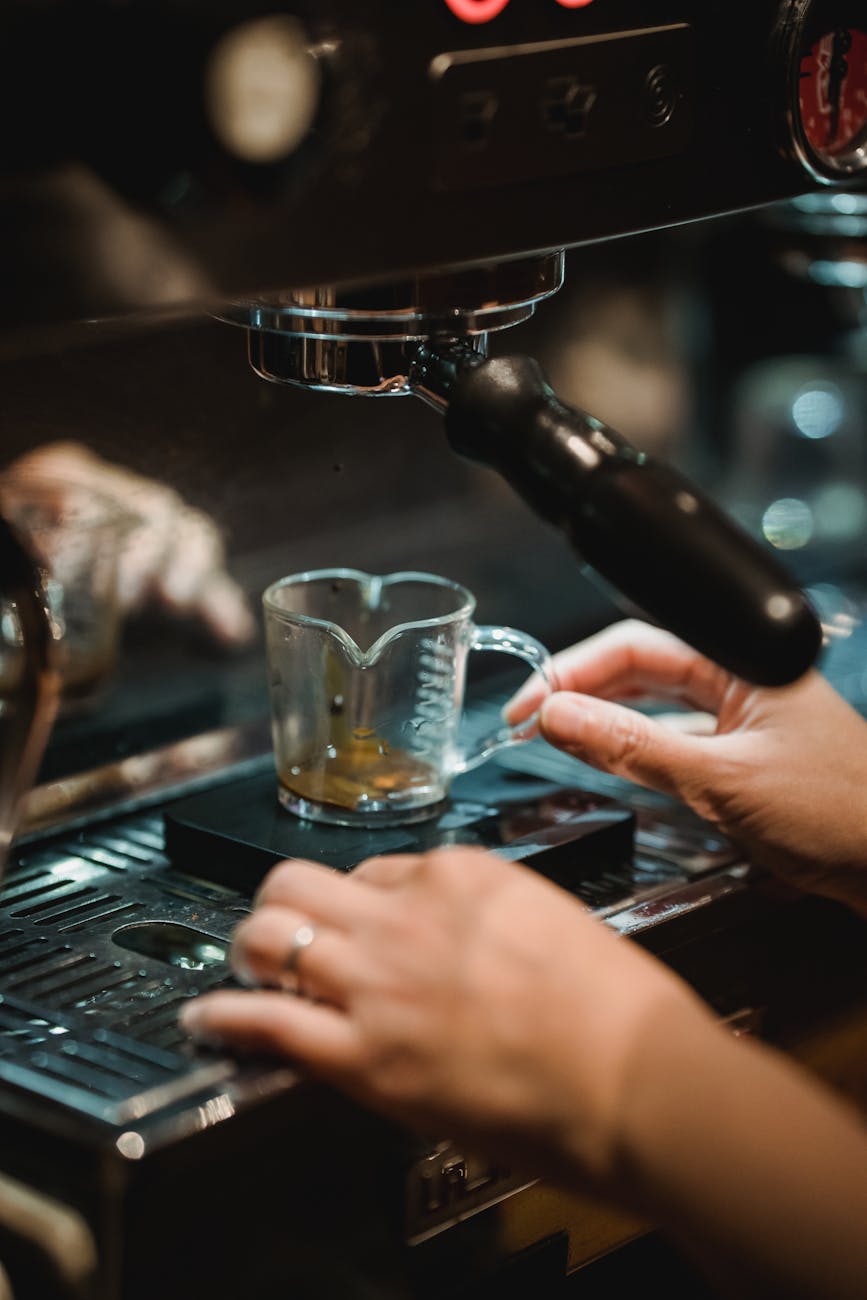
Pulling a beautiful, syrupy espresso shot is one of home brewing’s greatest rewards. But what happens when that shot runs too fast, spurts chaotically from the portafilter, and tastes disappointingly sour and bitter? You’ve likely encountered channeling, a common frustration for baristas at every level. This issue is particularly prevalent when using deeper espresso baskets, such as those designed for 20g, 22g, or even larger doses. The increased depth of the coffee bed creates a unique set of challenges. This article will dive deep into why channeling occurs more frequently in these baskets and provide a systematic, step-by-step guide to help you diagnose and fix the problem, leading you to consistently delicious and well-extracted espresso.
Understanding why deep baskets are prone to channeling
Channeling occurs when water finds a path of least resistance through the coffee puck instead of flowing evenly through the entire bed of grounds. This results in some parts of the coffee being over-extracted (leading to bitterness) while other parts are under-extracted (causing sourness), all in the same cup. While this can happen in any basket, deep baskets amplify the problem.
Imagine the coffee puck as a densely packed forest. In a shallow basket, the water has a relatively short journey. In a deep basket, that journey is significantly longer. Any small inconsistency in density—a clump of grounds, a tiny air pocket, or an uneven tamp—creates a weakness. Under 9 bars of pressure, water will exploit that weakness, carving a “channel” straight through. This is because the increased puck depth makes it much harder to achieve uniform density from top to bottom. Even a perfectly prepared surface can hide inconsistencies deep within the puck, which become the starting point for a channel.
The signs are often clear:
- Visual cues: You might see tiny jets of water spraying from the bottom of a naked portafilter, or the extraction will start in one spot and blond prematurely.
- Taste: The shot will have a thin body and a jarring taste profile, combining acidic, sour notes with a harsh, bitter finish.
The ultimate fix: Mastering puck preparation
Since the root cause of channeling is uneven density, the solution lies in meticulous puck preparation. This is not about tamping harder; it’s about creating a homogenous and evenly distributed bed of coffee grounds before you tamp. This process has two crucial stages: grinding and distribution.
Grind quality is non-negotiable. A high-quality burr grinder that produces a consistent particle size is essential. If your grinder produces too many fine particles (fines) and large particles (boulders), you are starting with an uneven foundation that is almost impossible to correct.
Distribution is where the magic happens. For deep baskets, distribution is the single most important step.
- Weiss Distribution Technique (WDT): This is your most powerful tool. Using a WDT tool with very fine needles (0.4mm or less), you stir the grounds in the portafilter. The goal is to break up every single clump and create a fluffy, uniform mass of coffee. Work your way from the bottom of the basket to the top in circular or raking motions. This ensures there are no dense pockets hidden deep within the puck.
- Settling and Tapping: After WDT, gently tap the side of the portafilter to settle the grounds vertically, filling in any micro-pockets of air. A single, firm tap down on a counter can also help create a flat bed to tamp. Avoid aggressive tapping, as it can reintroduce density issues.
- Grooming Tools: Spinning distribution tools can be used after WDT to create a perfectly level surface, but they should never be a substitute for proper WDT. They only affect the top few millimeters and can mask underlying density problems.
Perfecting the tamp and using modern tools
With a perfectly distributed bed of coffee, the tamping stage becomes much simpler. The goal of tamping isn’t to apply maximum force, but to apply consistent and level pressure to compress the grounds into a uniform puck.
A crooked tamp is a guaranteed cause of channeling. If you press down unevenly, one side of the puck will be more compressed than the other, creating a major path of least resistance for the water. To avoid this, focus on keeping your elbow, wrist, and the tamper in a straight line. Self-leveling or calibrated tampers are excellent tools that remove the guesswork, ensuring you apply even pressure every single time.
For an extra layer of protection, consider using a puck screen. This thin metal disc sits on top of your tamped coffee. Its primary function is to help the water from the shower screen distribute more gently and evenly across the entire surface of the puck. Instead of a high-pressure jet hitting one spot, the water is dispersed, reducing the risk of the initial pressure surge disrupting the puck’s surface and initiating a channel. This is especially effective in deep baskets where the water has a longer path to travel.
Dialing in your machine and troubleshooting
Even with perfect puck prep, machine variables can still contribute to channeling. Gentle pre-infusion is a key feature to utilize if your machine has it. By wetting the puck at a low pressure (2-4 bars) for a few seconds, the coffee has time to swell and saturate evenly. This helps settle the bed and reduces the shock when the full 9 bars of pressure are applied, minimizing the chance of the puck fracturing.
If you’ve followed every step and still face issues, don’t just default to grinding finer. Sometimes, grinding too fine can increase the puck’s resistance so much that it makes channeling worse, as water is forced to find any tiny flaw. Instead, use a systematic approach to troubleshoot.
| Symptom | Likely Cause | Primary Solution |
|---|---|---|
| Shot runs very fast with visible spurts | Severe channeling from uneven density or a tilted tamp. | Refine your WDT technique, ensuring you reach the bottom of the basket. Use a self-leveling tamper. |
| “Donut” extraction (flows only from the edges) | Center of the puck is too dense compared to the edges. | Focus WDT on breaking up clumps in the center. Avoid distributors that push grounds to the side. |
| Shot starts evenly then suddenly blondes | Puck is fracturing under pressure. | Grind slightly coarser to reduce resistance. Ensure pre-infusion is being used to saturate the puck gently. |
| Consistently sour shots despite a “good” looking flow | Micro-channeling is occurring, leading to under-extraction. | Introduce a puck screen to improve water distribution. Double-check grind consistency. |
By adjusting one variable at a time—be it your grind, your dose, or your prep technique—you can systematically eliminate the source of the problem.
Conclusion
Taming channeling in deep espresso baskets can seem like a daunting task, but it is entirely achievable. The problem rarely stems from a single, isolated mistake, but rather from small inconsistencies in the puck preparation workflow. The increased depth of these baskets doesn’t forgive shortcuts. By focusing on creating a truly homogenous bed of coffee through diligent WDT, ensuring a perfectly level tamp, and leveraging tools like puck screens and pre-infusion, you directly combat the root cause of channeling. It’s a process that rewards patience and attention to detail. Once you master this workflow, you will unlock the full potential of your deep baskets, producing consistently rich, balanced, and delicious espresso shots that are free of channeling’s flaws.


 No products in the cart.