

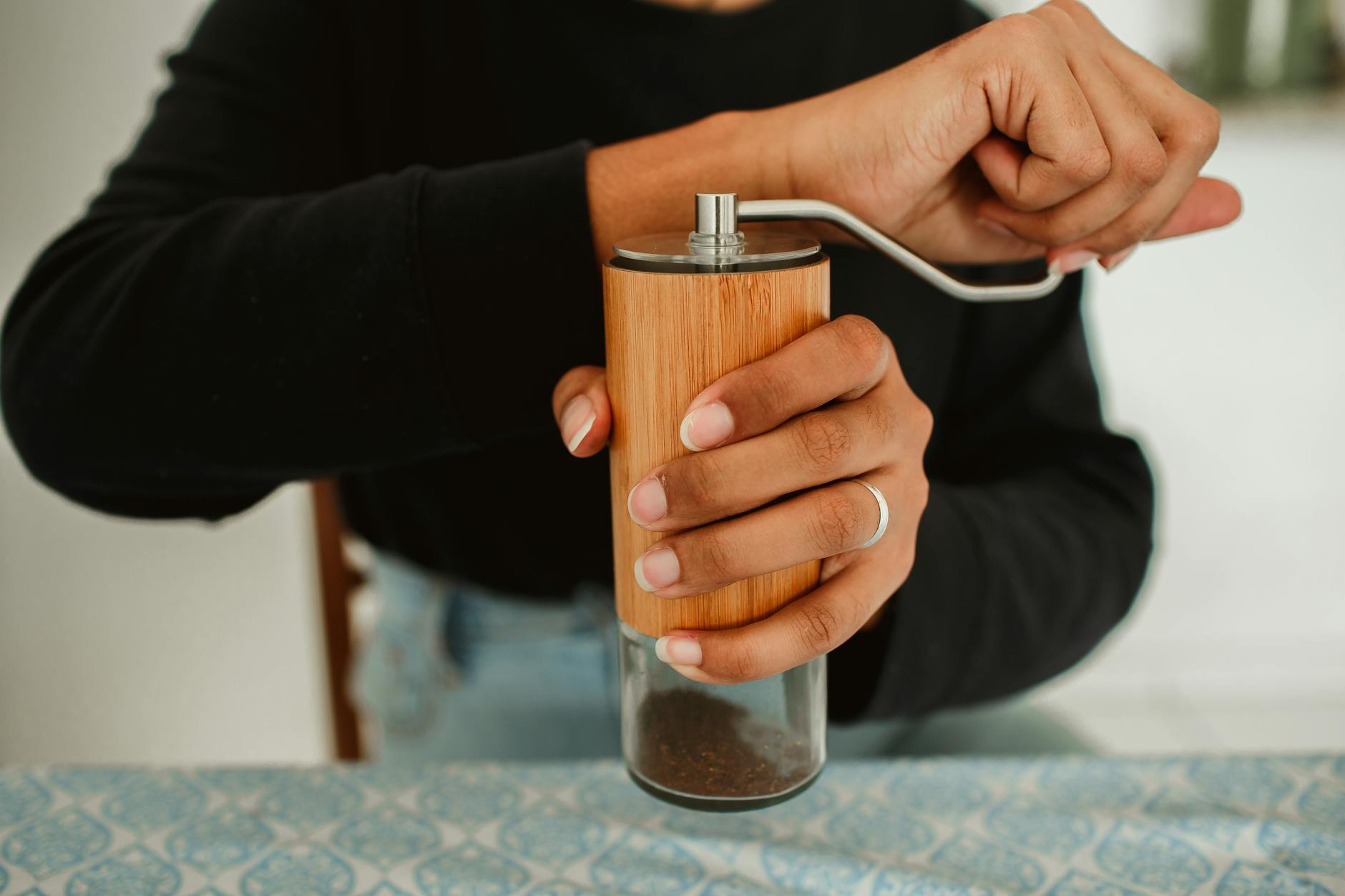
Choosing an espresso grinder can feel overwhelming. Manufacturers bombard you with specifications: 64mm flat burrs, a 400-watt motor, 700 RPM, and more. While these numbers offer a starting point, they are a poor indicator of a grinder’s true performance. They don’t tell you how the coffee will taste, how messy your counter will be, or how frustrating it is to dial in. The real evaluation of a grinder begins where the spec sheet ends. This guide will walk you through the critical, real-world factors you must consider to find a grinder that doesn’t just look good on paper, but actually produces exceptional espresso. We will explore grind consistency, workflow, burr design, and the ultimate test: the taste in the cup.
Grind consistency is king
The single most important job of an espresso grinder is to produce coffee grounds of a consistent and uniform size. A spec sheet might list a burr size, but it says nothing about the quality of the output. In espresso, we are looking for a tight particle size distribution (PSD). Imagine your coffee grounds as a collection of tiny rocks. Ideally, you want all the rocks to be roughly the same size. This allows water to flow through them evenly, extracting all the delicious flavors at the same rate.
When a grinder produces a poor PSD—with a mix of large particles (boulders) and super-fine particles (fines)—your extraction becomes a chaotic mess. The water rushes past the boulders, under-extracting them and creating sour flavors. At the same time, it over-extracts the fines, pulling out bitter, ashy notes. This is the primary cause of a dreaded “unbalanced” shot that is somehow both sour and bitter. A high-performing grinder minimizes these boulders and fines, giving you a fluffy, uniform mound of grounds that paves the way for a sweet, balanced, and complex espresso. The first test is always visual, but the final proof is in the taste.
Workflow and user experience
Even a grinder with perfect consistency is useless if you despise using it every morning. The daily user experience, or workflow, is a critical performance metric that spec sheets completely ignore. One of the biggest workflow killers is retention, which refers to the amount of old grounds left inside the grinder after each use. A grinder with high retention will mix stale, oxidized coffee from yesterday with your fresh beans today, tainting the flavor of your shot. Look for “zero retention” or “low retention” grinders, especially if you enjoy switching between different coffee beans.
Other key workflow factors include:
- Static and clumping: Does the grinder spray a fine mist of coffee all over your counter? Do the grounds come out in dense, hard clumps? Excessive static creates a mess, while clumping forces you to spend extra time breaking up the grounds with a tool (a process called WDT) to avoid channeling. A great grinder minimizes both.
- Adjustment mechanism: How easy is it to make small changes to your grind size? Stepless grinders offer infinite control, which is ideal for dialing in the perfect espresso shot. Stepped grinders have predefined clicks, which can be faster and more repeatable but might lack that perfect in-between setting.
- Noise and build: A loud, high-pitched motor can be an unpleasant start to the day. A solid, metal construction not only feels more premium but often leads to better stability and longevity than a flimsy plastic body.
Burr geometry and alignment
This is where we get into the heart of the grinder. While the spec sheet tells you the burr size, it’s the geometry and alignment that truly define the flavor profile. The two main types are flat and conical burrs, and neither is inherently better—they are just different.
Flat burrs tend to produce a more unimodal grind distribution (more particles of the same size). This often translates to espresso with higher clarity, allowing you to taste distinct flavor notes and bright acidity. They can be less forgiving of poor puck preparation.
Conical burrs typically produce a bimodal distribution (a main peak of one size, with a smaller peak of fines). This can result in an espresso with a richer, heavier body and more texture, sometimes blending flavors together into a more cohesive whole. They are often considered more forgiving for beginners.
Even more important than geometry is alignment. If the two burrs are not perfectly parallel, they will grind the coffee unevenly, completely negating the benefits of a high-quality burr set. A well-aligned, smaller burr set will always outperform a poorly-aligned, massive one. This is a factor you can only learn about through detailed reviews and user feedback, as no manufacturer lists “burr alignment” on a box.
The sensory evaluation
Ultimately, all the technical aspects must translate into a superior cup of coffee. The final evaluation is a sensory one. After dialing in your grinder, what do you actually taste? A top-tier grinder allows you to achieve a high, even extraction. This means your espresso should taste predominantly sweet and balanced. You should be able to grind fine enough to get the desired brew time without the shot “choking” the machine or tasting intensely bitter.
Pay attention to the clarity of flavors. Can you pick out the tasting notes listed on the coffee bag, like “strawberry, chocolate, and orange zest”? Or is the flavor muddy and generic? Also, consider the texture and mouthfeel. Is it thin and watery, or is it rich, syrupy, and satisfying? The table below summarizes what to look for beyond the numbers.
| Feature | What to look for beyond the specs | Impact on espresso |
|---|---|---|
| Grind consistency | Uniformity of particles, lack of fines/boulders | Even extraction, less channeling, balanced flavor |
| Workflow | Low retention, minimal static, easy adjustment | Fresh coffee every time, clean workspace, ease of use |
| Burr quality | Burr geometry (flat/conical), alignment | Flavor profile (clarity vs. body), shot consistency |
| In-cup quality | Sweetness, balance, clarity, texture | The ultimate measure of performance |
The spec sheet offers a glimpse, but the story of a grinder’s performance is written in the grounds it produces and the shots it pulls. By moving beyond simple numbers like burr size and motor wattage, you can start to evaluate a grinder on what truly matters. Assess its grind consistency, the practicality of its daily workflow, the quality of its burr design and alignment, and, most importantly, the sensory experience it delivers in the final cup. Reading reviews and watching videos from trusted sources who focus on these elements is far more valuable than comparing spec sheets. An espresso grinder is an investment in your daily ritual, so choose the one that provides not just good numbers, but a genuinely great experience.

 No products in the cart.