

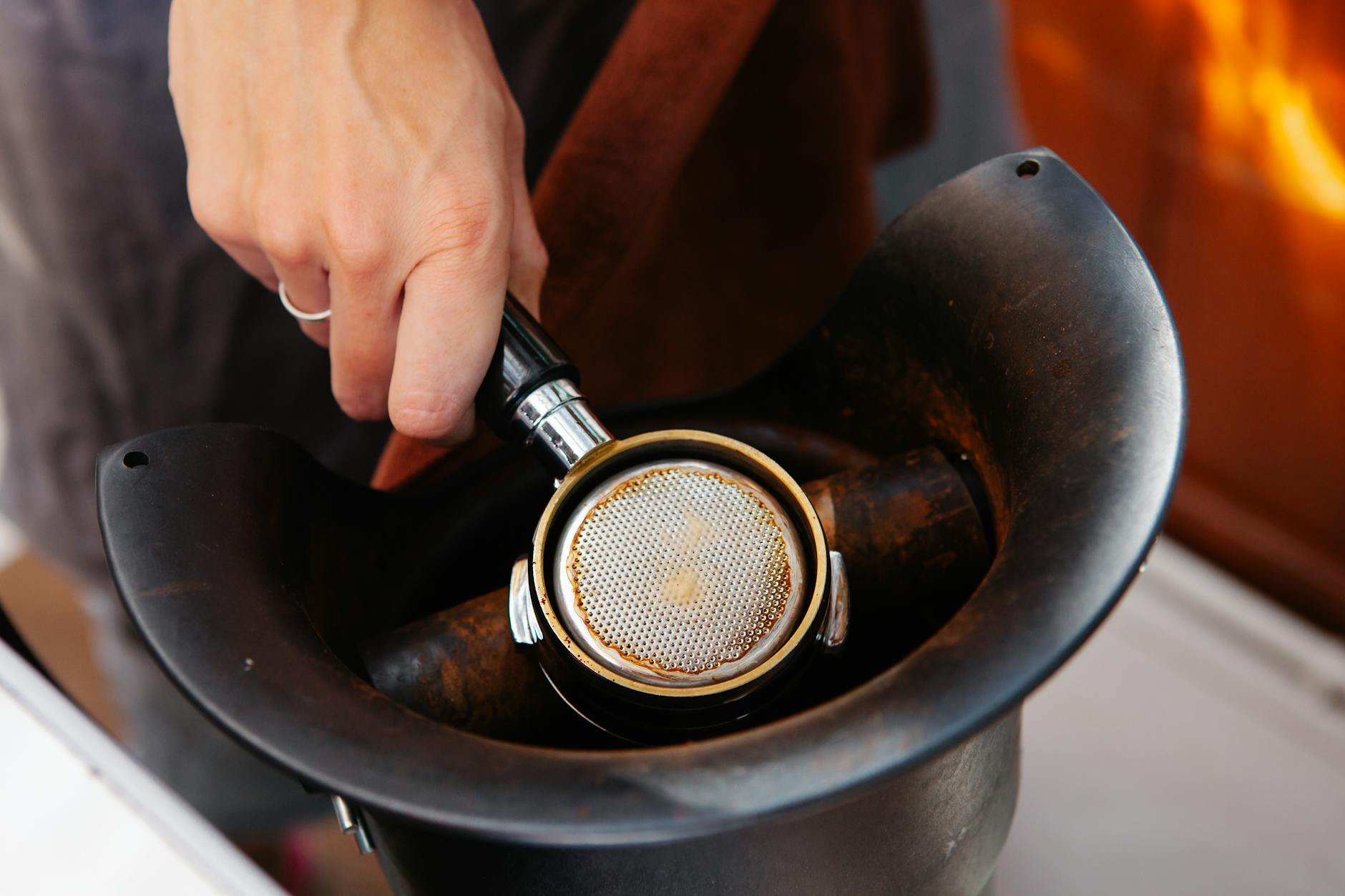
The Flair 58 is more than just a manual espresso machine; it’s a precision instrument that offers direct, tactile control over every variable in the brewing process. For baristas seeking to push the boundaries of flavor, this control is the key to unlocking high-extraction espresso. This isn’t about pulling bitter, harsh shots. Instead, it’s a methodical pursuit of a perfectly balanced cup, rich with sweetness, clarity, and complex flavors that are often hidden within the bean. Achieving this requires a deeper understanding of espresso theory and a specific workflow tailored to the Flair 58. This guide will walk you through the essential steps, from perfecting your puck preparation to mastering advanced pressure profiles, to help you consistently brew delicious, high-yield espresso at home.
Understanding high extraction and the Flair 58
Before pulling the lever, it’s crucial to understand what we mean by “high extraction.” In simple terms, extraction is the process of dissolving coffee solids into water. An espresso shot’s flavor is determined by which and how many of these solids are dissolved. A low-extraction (or under-extracted) shot tastes sour because we’ve only dissolved the fast-extracting organic acids. A high-extraction shot aims to dissolve those acids, plus the sugars and oils, to create a sweet and complex flavor profile. The danger zone is over-extraction, where you begin to pull in unwanted bitter and astringent compounds.
Our goal is to hit a high extraction yield, often measured as 20% or higher, without tipping into over-extraction. This is where the Flair 58 shines. Its key features make it the perfect tool for this pursuit:
- Thermal management: The integrated electric preheat system provides stable and consistent brew temperatures, a critical factor for efficiently extracting solubles from lighter roast coffees.
- Real-time pressure gauge: The gauge gives you instant feedback, allowing you to execute and repeat precise pressure profiles. You are not guessing; you are in complete control.
- Manual control: Unlike a pump machine with a fixed pressure curve, the Flair 58 allows you to manipulate pressure and flow throughout the entire shot, from pre-infusion to the final drops.
This combination of features allows you to use techniques, like extended pre-infusion and pressure tapering, that are essential for extracting the most out of a finely ground coffee puck without creating channels.
Dialing in your foundation: Dose, grind, and puck prep
A successful high-extraction shot is built on a flawless foundation. Any inconsistency in your preparation before the pull will be magnified by the demands of this brew style. The most important variable here is your grind size. To increase surface area and allow the water to extract more from the coffee, you must grind finer than you would for a standard 9-bar, 30-second shot. This fine grind, however, makes your coffee puck extremely susceptible to channeling, where water punches a hole through the puck instead of flowing evenly. Therefore, your puck preparation must be perfect.
Start with a consistent dose, for example, 18 grams in the 58mm basket. After grinding, use a Weiss Distribution Technique (WDT) tool to break up all clumps and evenly distribute the grounds. This step is not optional; it is fundamental for creating a homogenous puck density. Next, use a coffee distributor to level the bed of coffee before tamping. Finally, tamp firmly and, most importantly, perfectly level. An uneven tamp will create weak spots that lead directly to channeling. Using a self-leveling tamper can help ensure consistency. A puck screen placed on top of the tamped coffee is also highly recommended, as it helps disperse the water gently and evenly across the puck’s surface, providing one last layer of defense against channels.
Mastering the pull: Pressure and flow profiling
With a finely ground, perfectly prepared puck, you cannot simply apply 9 bars of pressure and hope for the best. This would choke the machine or instantly create channels. Instead, you need to use a gentle and controlled pressure profile designed to work with the dense puck.
Your shot should begin with a long, low-pressure pre-infusion. Pull the lever just enough to register 2-3 bars on the gauge. The goal is to hold this pressure for 15, 20, or even 30 seconds. During this phase, you are gently saturating the entire coffee bed from bottom to top, allowing it to swell and settle. This minimizes the risk of the water fracturing the puck when you apply higher pressure. Once you see the first drips forming, you can begin to slowly and smoothly ramp up the pressure. Aim for a peak pressure between 6 and 9 bars. You don’t need to slam it to the max; a lower peak pressure can often yield sweeter results.
As the shot progresses, you’ll notice that you need to ease off the lever to maintain a steady flow. This is because the puck is eroding and becoming less resistant. This is the art of pressure profiling. A declining pressure profile, where you might end the shot around 4-5 bars, is key to a balanced high-extraction shot. It helps you gently extract the final, desirable solubles without pulling in the astringency that can come from forcing water through a degraded puck at high pressure.
Putting it all together: A sample workflow and recipe
Now let’s combine these concepts into a practical, step-by-step workflow. This recipe is a starting point, particularly for light to medium roast coffees. Remember to only change one variable at a time when dialing in your coffee.
Workflow Steps:
- Set your Flair 58 to your desired preheat temperature (e.g., 94°C for a light roast).
- Weigh and grind your coffee dose (e.g., 18g) on a fine setting.
- Perform meticulous puck prep: WDT, distribute, and tamp level.
- Insert the portafilter, add a puck screen, and fill the brew chamber with water.
- Start your timer and immediately begin a low-pressure pre-infusion.
- Once pre-infusion is complete, ramp up to your peak pressure.
- Maintain a steady flow by gradually decreasing pressure as the shot pulls.
- Stop the shot when you reach your target yield.
Here is a sample recipe to begin your experiments:
| Parameter | Starting Point |
|---|---|
| Dose | 18 grams |
| Yield | 45 grams (1:2.5 ratio) |
| Total time | 45-60 seconds (including pre-infusion) |
| Temperature | 92-96°C (higher for lighter roasts) |
| Pressure profile | 20-second pre-infusion at 2 bar, slow ramp to 8 bar peak, decline to 4 bar by end of shot. |
When you taste the result, diagnose it. If it’s sour, you are under-extracted; try grinding finer or increasing your ratio (e.g., to 1:2.75). If it’s unpleasantly bitter or astringent, you may have channeling. In this case, don’t immediately grind coarser. First, focus on improving your puck prep. Astringency in a high-extraction shot is almost always a sign of uneven flow, not just a grind that is too fine.
Brewing high-extraction espresso with the Flair 58 is a rewarding process that transforms your coffee experience. It is a departure from the conventional 30-second shot and an entry into a world of greater flavor clarity and sweetness. This guide has outlined the essential pillars for success: a fine grind to maximize surface area, flawless puck preparation to prevent channeling, and a sophisticated pressure profile to gently and evenly extract flavor. The journey hinges on the synergy between these elements. Mastering the long, low-pressure pre-infusion followed by a tapering pressure curve is the key to unlocking the potential of your finely ground coffee. The Flair 58 provides all the control you need; the rest is about patience, practice, and tasting.


 No products in the cart.