

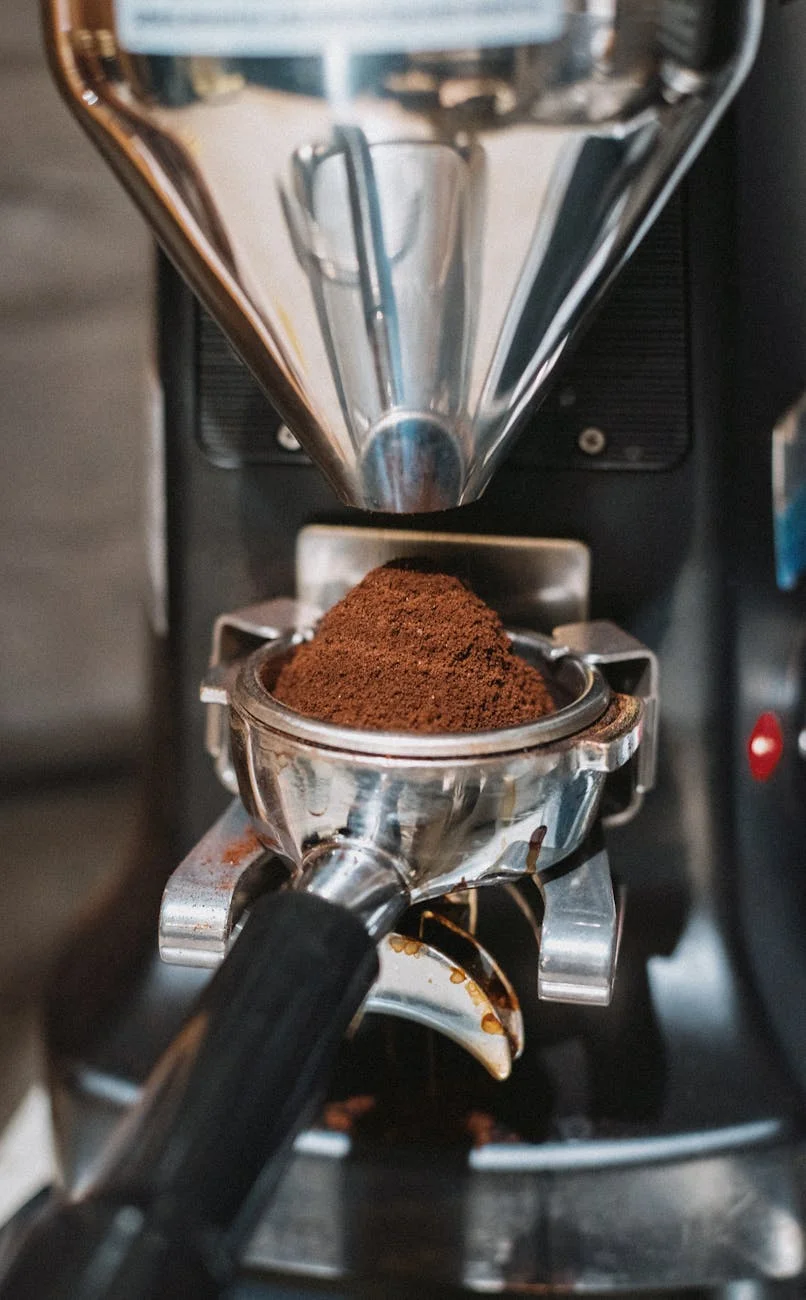
How to align your grinder burrs for better extraction
Perfecting your espresso or pour-over often feels like chasing a moving target. You dial in your dose, adjust your grind, and perfect your technique, yet sometimes the results are still inconsistent. The culprit might not be your beans or your puck prep, but something deeper within your grinder: burr alignment. This crucial, yet often overlooked, aspect of grinder maintenance is the key to unlocking true grind consistency. Poorly aligned burrs create an uneven particle distribution, leading to a muddled cup with both sour and bitter notes. In this guide, we’ll explore why alignment is so fundamental to extraction, how to diagnose a problem, and the step-by-step methods to achieve a perfectly aligned set of burrs for a sweeter, more balanced brew.
Why alignment is the foundation of grind quality
At its core, a coffee grinder’s job is to crush coffee beans into particles of a consistent size. The magic happens in the microscopic space between the two burrs, one stationary and one that rotates. Perfect alignment means that the surface of the rotating burr is perfectly parallel to the surface of the stationary burr at all points. When this is achieved, the gap between them is uniform, and every coffee bean passing through is subjected to the same crushing force, resulting in a uniform particle size distribution.
When burrs are misaligned, the gap is wider on one side and narrower on the other. This creates chaos in the grinding process. Beans passing through the wider gap are ground too coarsely, while those passing through the narrower side are ground too finely, sometimes even being re-ground into dust. This mix of boulders and fines wreaks havoc on your extraction. The fine particles over-extract quickly, releasing bitter and astringent compounds. The coarse particles under-extract, contributing sour, underdeveloped flavors. The result is a messy, unbalanced cup that lacks clarity and sweetness, no matter how skilled your brewing technique is.
Diagnosing misalignment: Signs you can see, hear, and taste
Before you start taking your grinder apart, it’s important to know what you’re looking for. Misalignment often presents clear symptoms. Learning to recognize them can save you a lot of frustrating mornings. The three main ways to diagnose the problem are by listening to the grinder, visually inspecting the grounds, and tasting the final coffee.
- The sound test: The most common audible sign is a chirping sound. Unload your grinder of all beans. With the machine running, slowly adjust the grind setting finer and finer. As you approach the “zero point” where the burrs should touch, listen carefully. If you hear a repetitive chirping or scraping sound (shh-shh-shh) before the burrs make full, constant contact, it means one high spot on a burr is hitting the other. In a perfectly aligned grinder, the burrs will go from silence to a smooth, constant whirring sound (a “whine”) as they make full contact simultaneously.
- The visual test: Look closely at your grounds. Do they look uniform, or can you see a clear mix of very large and very small particles? Excessive clumping or a high amount of fine dust clinging to the grinder chute can also be indicators of misalignment creating too many fines.
- The taste test: This is the ultimate test. If your espresso shots consistently feature both sour and bitter notes at the same time (a phenomenon known as “sollowness”), it’s a strong sign of uneven extraction caused by inconsistent grind size.
Troubleshooting guide
| Symptom | What it indicates | How to confirm |
|---|---|---|
| Repetitive chirping sound when near zero | A high point on one burr is making premature contact. This is the clearest sign of parallel misalignment. | Listen carefully while adjusting the grinder finer without beans. |
| Astringent and sour taste in the same cup | Simultaneous over-extraction (from fines) and under-extraction (from boulders). | Taste your brews critically. This is especially noticeable in espresso. |
| Visibly inconsistent grounds (fines and boulders) | The grinder is producing a bimodal or wide particle size distribution. | Grind a small dose onto a white piece of paper and spread it out for inspection. |
The alignment process: Using the marker test and foil shims
Once you’ve diagnosed misalignment, the most accessible and effective way to fix it at home is with the marker and foil shim method. This process allows you to visualize the high and low spots and correct them.
What you will need:
- Tools to disassemble your grinder (screwdrivers, hex keys)
- A dry-erase marker (any color will do)
- Aluminum foil
- Scissors
- Patience
The step-by-step guide:
- Disassemble and clean: First, unplug your grinder. Disassemble it to the point where you can remove the stationary burr (this is often the top burr, but consult your grinder’s manual). Thoroughly clean both burrs and the burr carrier with a brush and air blower to remove all coffee grounds and oils.
- The marker test: Take your dry-erase marker and carefully color the flat outer edge of the stationary burr. Don’t color the cutting faces, just the flat perimeter.
- Reassemble and test: Carefully place the burr back into its carrier. Reassemble the grinder just enough so you can adjust the grind setting. With the grinder off, slowly turn the main shaft by hand (if possible) or turn the machine on for just a split second—a quick flick of the power switch—while the burrs are set to be just touching. You want them to barely kiss.
- Read the results: Disassemble the grinder again and look at the marker on the burr. If the marker is wiped off evenly all the way around, congratulations, your burrs are well-aligned! More likely, you will see that the marker is wiped clean in one area and completely untouched in the opposite area. The area where the marker is wiped off is the high spot.
- Apply the shims: The goal is to raise the low spot to be level with the high spot. The low spot is directly opposite the high spot (where the marker is still intact). Cut small strips or squares of aluminum foil. Place one or two layers of foil under the burr on the low side, directly on the burr carrier.
- Repeat: Clean the burr, re-apply the marker, and repeat the test. You may need to add or remove foil shims a few times. The goal is to get the marker to wipe away evenly from at least 80% of the burr’s circumference. Perfect 100% erasure is very difficult, but getting close will make a world of difference.
Verifying your work and long-term maintenance
After you’ve successfully shimmed your grinder, the final step is to verify the improvement. Once reassembled, perform the sound test again. The chirping should be gone, replaced by a much more immediate and uniform sound as the burrs make full contact. The true test, however, is in the cup. Dial in your grinder and pull a shot of espresso or make a pour-over. You should immediately notice an increase in clarity and sweetness. The muddled flavors should be replaced by a more defined and balanced taste profile, allowing you to taste the distinct notes of your coffee beans.
Maintaining this alignment is straightforward. The foil shims are stable and should not shift during normal use. The most important maintenance task is regular cleaning. Built-up coffee oils and fine particles in the burr chamber can sometimes affect how the burrs are seated, so keeping your grinder clean not only prolongs its life but also helps ensure your hard-won alignment remains stable for years to come.
Achieving perfect burr alignment is more than just a technical tweak; it’s a fundamental step towards mastering coffee extraction. By ensuring your burrs are perfectly parallel, you eliminate one of the biggest variables standing between you and a delicious cup. We’ve walked through why alignment dictates grind quality, how to spot the signs of misalignment through sound, sight, and taste, and the practical steps of the marker test and shimming process. While it may seem daunting at first, aligning your burrs is an empowering process that gives you greater control over your grinder’s performance. The reward for your efforts will be immediately apparent in the cup: greater clarity, sweetness, and consistency in every single brew you make.



 No products in the cart.