

The Technivorm Moccamaster is revered in the coffee world for its precision, durability, and ability to brew coffee at the optimal temperature. It’s a machine built to produce a fantastic cup with minimal fuss. However, even the best equipment can be held back by technique. A common challenge for Moccamaster owners is achieving even saturation of the coffee grounds in the brew basket. When water doesn’t wet all the grounds uniformly, you get uneven extraction, resulting in a cup that might be simultaneously sour and bitter. This article will serve as your guide to mastering your Moccamaster, providing you with practical steps and techniques to ensure every coffee particle contributes to a perfectly balanced and delicious brew.
The foundation: Grind size and bed preparation
Before water even touches the coffee, the first step toward even saturation is set. It all begins with your coffee grind and how you prepare the coffee bed. The goal is to create a uniform foundation that encourages water to flow through it evenly, rather than carving out fast-flowing channels. An inconsistent grind, with a mix of large boulders and fine dust, will lead to disaster. The water will rush past the large particles (under-extracting them) while getting stuck on the fine particles (over-extracting them).
For a Moccamaster, the ideal starting point is a medium-coarse grind, similar in consistency to coarse sand or sea salt. A quality burr grinder is non-negotiable here, as blade grinders produce a highly inconsistent particle size. Once you have your grounds, don’t just dump them into the filter. Give the brew basket a gentle side-to-side shake to level the bed. A flat, even surface prevents water from immediately creating a channel in a low spot, ensuring the initial water charge spreads out more evenly across the top layer of coffee.
Managing the water flow for optimal contact
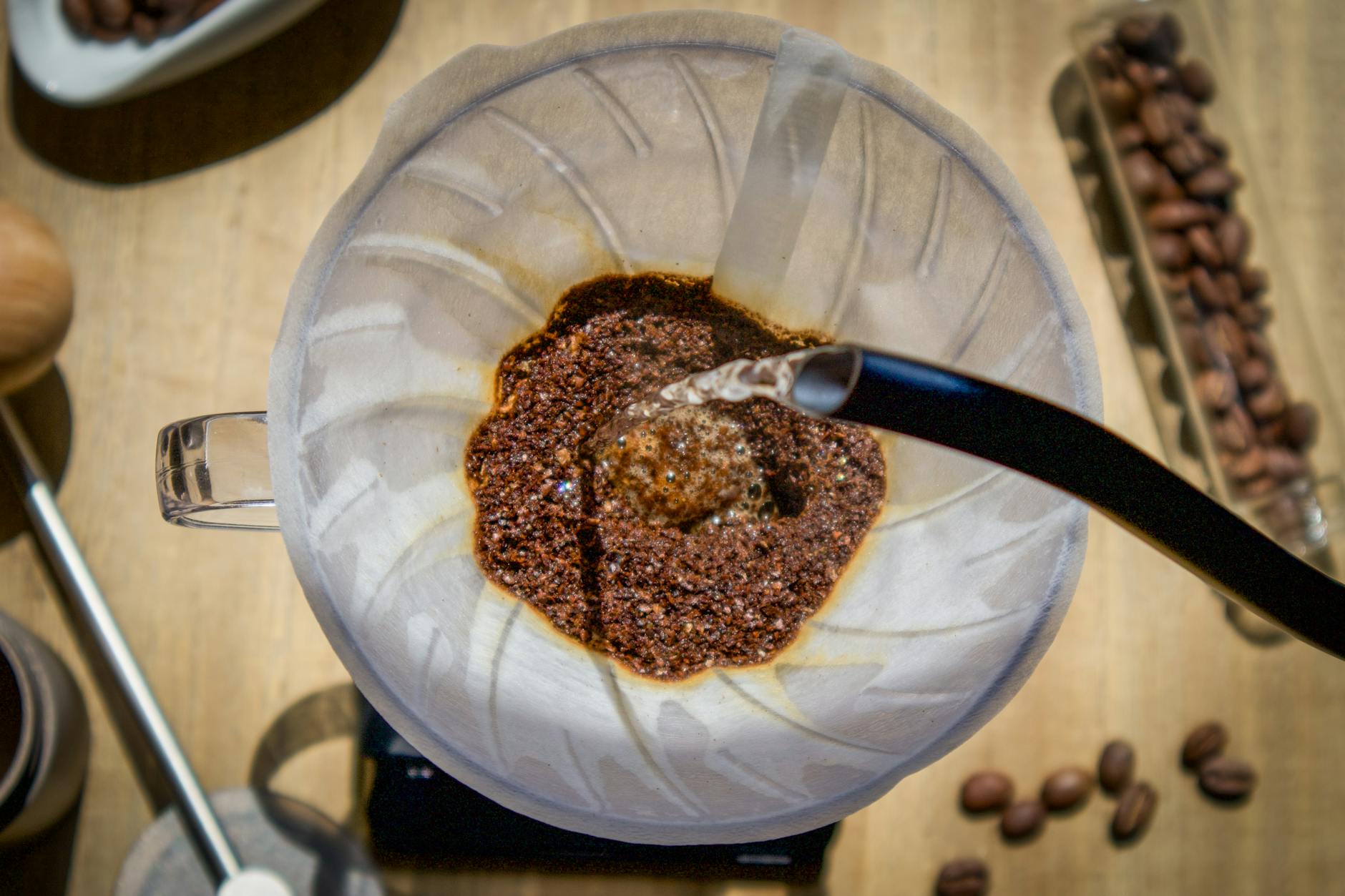
The Moccamaster’s 9-hole water outlet is incredibly efficient at delivering water at the right temperature, but its design tends to concentrate the flow toward the center of the brew basket. This can leave grounds on the outer edges under-saturated. To counteract this, a little manual intervention can make a world of difference. The most effective technique is to introduce a manual bloom and a gentle stir.
As the first bit of water begins to saturate the grounds (within the first 30-45 seconds), slide the carafe away and use the pause-switch on the brew basket to stop the flow. Take a small spoon or a bamboo paddle and gently stir the slurry, making sure all the grounds are wet. This simple action breaks up dry clumps and ensures the entire coffee bed is primed for extraction. After about 45 seconds, open the switch and let the brew cycle complete. This single step does more to promote even saturation than any other and is the key to unlocking a more balanced flavor profile.
The critical role of the paper filter
The paper filter is more than just a tool to separate grounds from your final drink; it plays an active role in water flow and extraction. Many users place a dry filter in the basket, add coffee, and start brewing. This is a missed opportunity. Pre-wetting your filter is a simple but impactful step. Before adding your coffee, place the filter in the brew basket and rinse it thoroughly with hot water. This has three primary benefits:
- It removes paper taste: Rinsing away the loose paper fibers and residues results in a cleaner-tasting cup of coffee.
- It pre-heats the brewer: Warming the brew basket and carafe helps maintain thermal stability throughout the brewing process.
- It helps the filter seal: A wet filter clings perfectly to the sides of the brew basket. This prevents water from finding an easy path down the side wall, bypassing the coffee bed entirely—a major cause of under-extraction.
By ensuring the filter is seated correctly, you force the water to go where it’s supposed to: through the coffee grounds.
Brew variables and advanced techniques
Once you have the fundamentals of grind, bed preparation, and water management down, you can start experimenting with other variables to fine-tune your brew. One popular advanced technique is to place a second, rinsed paper filter on top of the coffee bed after leveling it. This top filter acts as a dispersion screen, catching the water from the 9-hole outlet and spreading it more gently and evenly across the entire surface of the grounds. This further reduces the chance of channeling and promotes a very uniform saturation.
Understanding how different variables interact is key to consistent results. Here’s a quick summary of the most important factors:
| Variable | Recommended starting point | Impact on saturation and extraction |
|---|---|---|
| Grind size | Medium-coarse (like coarse sand) | Finer grinds increase contact time but can clog. Coarser grinds reduce contact time but can lead to under-extraction if saturation is poor. |
| Coffee-to-water ratio | 1:15 to 1:17 (e.g., 60g coffee to 1L water) | This primarily affects brew strength, but an incorrect dose can alter the geometry of the coffee bed, impacting flow dynamics. |
| Manual bloom/stir | Stir gently within the first 45 seconds | The single most effective technique for ensuring all grounds are saturated at the start of the brew cycle. |
| Filter rinsing | Always rinse with hot water | Prevents channeling along the sides of the filter and removes paper taste for a cleaner cup. |
Achieving a truly exceptional cup of coffee from a Moccamaster is a process of turning a great automatic brewer into a precision tool with a few manual touches. The journey to perfect saturation is built on a foundation of a consistent, medium-coarse grind and a carefully leveled coffee bed. From there, actively managing the water flow by introducing a manual bloom with a gentle stir will conquer the machine’s tendency to centralize its pour. Rinsing your paper filter is a non-negotiable step that eliminates paper taste and prevents water from bypassing the coffee. By mastering these core techniques, you transform the brewing process from a simple automated drip into a controlled and repeatable method for achieving a balanced, sweet, and complex cup every single time.

 No products in the cart.