

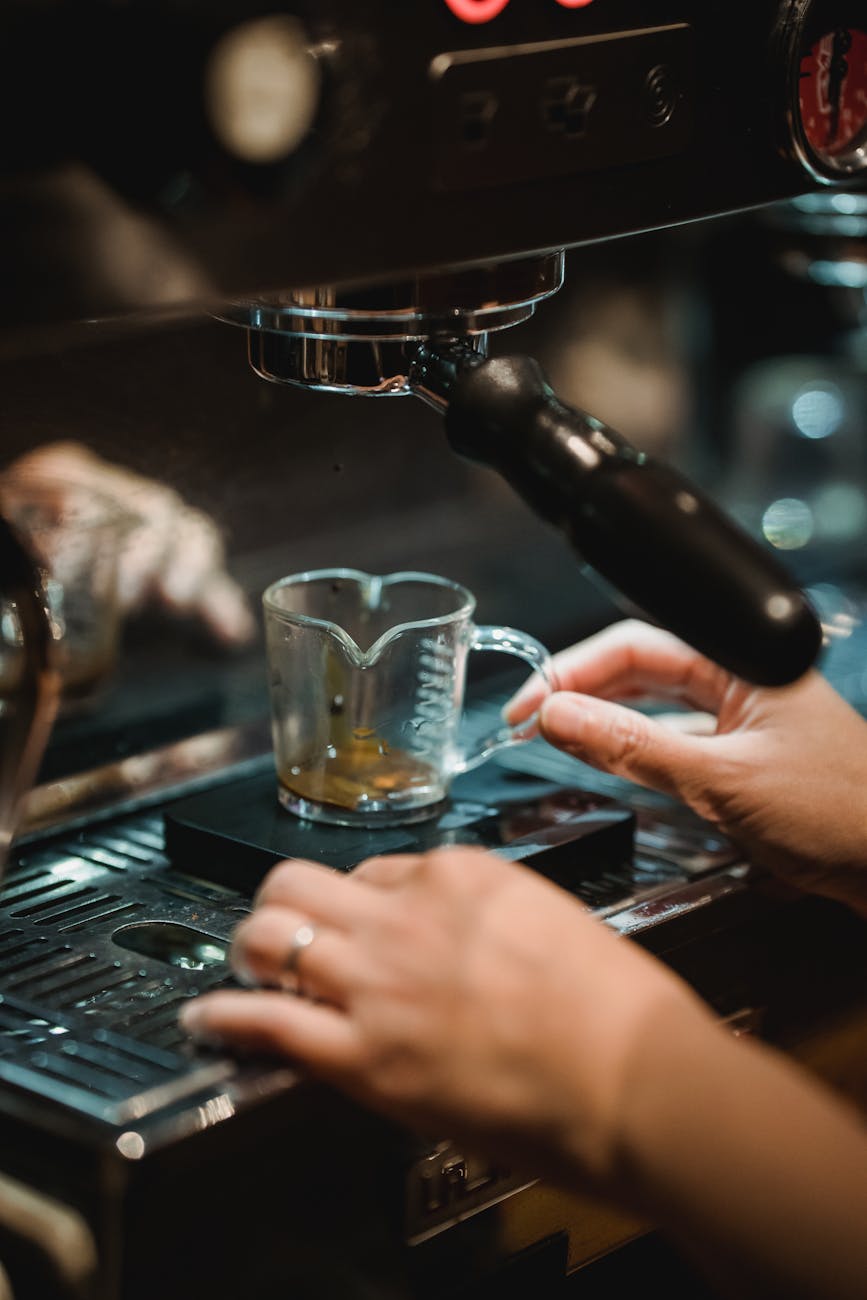
Mastering consistency: Your guide to high-precision espresso baskets
For any coffee enthusiast, the ultimate goal is the perfect espresso shot, not just once, but every single time. You might have premium beans and a top-tier machine, yet still face the frustration of inconsistent results. One shot is rich and syrupy, the next is thin and sour. The key to bridging this gap often lies in a small, overlooked component: the portafilter basket. Standard baskets that come with most machines can be a major source of variability. This article will explore how upgrading to a high-precision espresso basket can revolutionize your coffee routine. We will delve into what sets these baskets apart, the essential preparation techniques they demand, and how to properly dial in your shots to achieve unparalleled consistency and flavor clarity.
What makes a precision basket different?
At first glance, a stock espresso basket and a high-precision one might look similar, but the difference is in the microscopic details. A standard basket is a mass-produced component, often with inconsistencies that can sabotage your shot. The holes may vary in size, be unevenly spaced, or have rough, burred edges from the manufacturing process. These imperfections create preferential pathways for water to flow through the coffee puck, leading to an uneven extraction and the dreaded phenomenon of channeling.
High-precision baskets, from brands like VST or IMS, are engineered to eliminate these variables. Their defining features include:
- Uniform hole size: Every single hole is precision-drilled or laser-cut to be identical in diameter, down to the micron. This ensures that water passes through the entire coffee bed at the same rate.
- Consistent hole pattern: The holes are perfectly distributed across the entire bottom of the basket, promoting a balanced and homogenous extraction.
- Superior finish: The metal is often electro-polished, creating a smooth surface that reduces coffee oil buildup and allows the puck to be knocked out cleanly, leaving less residue behind.
- Ridgeless design: Many precision baskets are ridgeless, meaning they lack the internal groove that holds a stock basket in the portafilter. This smooth interior wall prevents puck fracturing around the edges during tamping, a common and often invisible cause of side-channeling.
By controlling for these manufacturing variables, a precision basket provides a stable foundation for a perfect extraction. However, this precision also means the basket is less forgiving of mistakes elsewhere in the process, which leads us to the critical importance of puck preparation.
The foundation: Puck preparation is non-negotiable
A high-precision basket is a tool that reveals the truth about your technique. Because it is designed for perfect, even water flow, any flaw in your coffee puck preparation will be immediately exposed as channeling. To unlock its potential, you must adopt a meticulous and consistent puck prep routine. This isn’t just about going through the motions; it’s about creating a perfectly homogenous and level bed of coffee grounds for the water to saturate evenly.
The three pillars of excellent puck prep are:
- Grinding: Your grinder is the most important piece of equipment. You need a high-quality burr grinder capable of producing a consistent particle size with minimal clumps. The fine adjustments required for dialing in with a precision basket are impossible with a low-quality grinder.
- Distribution: This is arguably the most crucial step. Simply grinding into the portafilter creates a dense cone in the middle and sparse areas around the edges. Using a Weiss Distribution Technique (WDT) tool, which is a set of fine needles, is essential. Stir the grounds thoroughly with the WDT tool to break up all clumps and evenly distribute the coffee particles throughout the basket, creating a fluffy, uniform bed.
- Tamping: The goal of tamping is not to press as hard as possible, but to compact the grounds into a level and evenly dense puck. Use a high-quality, calibrated tamper that fits your basket snugly. Focus on applying firm, consistent pressure and ensuring your tamp is perfectly level. An uneven tamp will create one side that is denser than the other, encouraging water to flow through the less dense side, causing channeling.
Mastering this workflow turns your coffee puck from a chaotic mound into a precisely engineered filter, ready to interact perfectly with your precision basket.
Dialing in your shot with a precision basket
With a perfectly prepped puck, it’s time to dial in your espresso recipe. One of the first things you’ll notice when switching to a precision basket is that you will almost certainly need to grind significantly finer than you did with your stock basket. The uniform holes create more resistance, allowing for a finer grind without choking the machine. This finer grind increases the surface area of the coffee, which in turn allows for a higher, more even extraction, unlocking more complex and delicate flavors from your beans.
Follow a methodical approach to dial in your shot. The core variables are dose (grams of coffee in), yield (grams of espresso out), and time. A great starting point is a 1:2 brew ratio.
Here is a simple workflow for dialing in:
| Step | Action | Goal |
|---|---|---|
| 1. Fix your dose | Use a scale to weigh your coffee grounds. Adhere to the basket’s recommended dose (e.g., 18g for an 18g basket). Keep this constant. | Consistency. |
| 2. Set a target yield | Place your cup on a scale and aim for a 1:2 ratio. For an 18g dose, your target yield is 36g of liquid espresso. | Control the strength of your shot. |
| 3. Adjust your grind | Pull a shot and time it from the moment you start the pump. Your target is a total extraction time of 25-30 seconds to reach your 36g yield. | Control the extraction. |
| 4. Analyze and repeat | If the shot runs too fast (<25s), grind finer. If it runs too slow or chokes (>30s), grind coarser. Make one small adjustment at a time. | Find the sweet spot for a balanced taste. |
Throughout this process, watch the extraction itself. A well-extracted shot from a bottomless portafilter should show the first drops appearing in the center, gradually coalescing into a single, steady, syrupy stream. Any spurting or multiple streams indicate channeling that needs to be addressed by improving your puck prep.
Troubleshooting common issues
Even with a meticulous process, you might encounter some issues. Understanding what they mean is key to fixing them. Since a precision basket is so revealing, the visual cues from a bottomless portafilter are your best diagnostic tool.
Problem: The shot has spurts and jets (channeling).
This is the most common issue and it almost always points back to puck prep. The water has found a weak spot (a channel) and is rushing through it instead of saturating the puck evenly.
Solution: Re-evaluate your distribution. Are you using your WDT tool effectively to break up all clumps and create a fluffy, level bed? Is your tamp perfectly level? Even a slight tilt can cause channeling along the side of the basket.
Problem: The shot runs way too fast and tastes sour (under-extracted).
This means the water is flowing through the coffee too quickly, not giving it enough time to extract the desirable sugars and oils.
Solution: Your grind is too coarse. Make a small adjustment to a finer setting on your grinder. Also, double-check your dose to ensure you are not under-dosing the basket, as this can also lead to a fast flow rate.
Problem: The shot is very slow, drips, or chokes the machine and tastes bitter (over-extracted).
This is the opposite problem. The coffee grounds are packed so tightly that the water struggles to get through, leading to an extended contact time that pulls out bitter, unpleasant compounds.
Solution: Your grind is too fine. Make an adjustment to a coarser setting. Also, confirm you haven’t accidentally over-dosed the basket, which can reduce headspace and choke the shot.
Conclusion
Upgrading to a high-precision espresso basket is one of the most impactful changes you can make to your espresso setup, but it’s not a magic fix. Instead, it’s a precise tool that rewards a meticulous and consistent workflow. By removing the variable of an inconsistent basket, it places the focus squarely on your skills: your grinder’s quality, your puck preparation technique, and your ability to dial in a recipe. The journey requires patience and attention to detail, from a clump-free grind and thorough WDT to a perfectly level tamp. Once you master this process, the precision basket will empower you to eliminate channeling, achieve truly even extractions, and finally unlock the repeatable, delicious, and nuanced espresso shots you’ve been chasing.

 No products in the cart.