

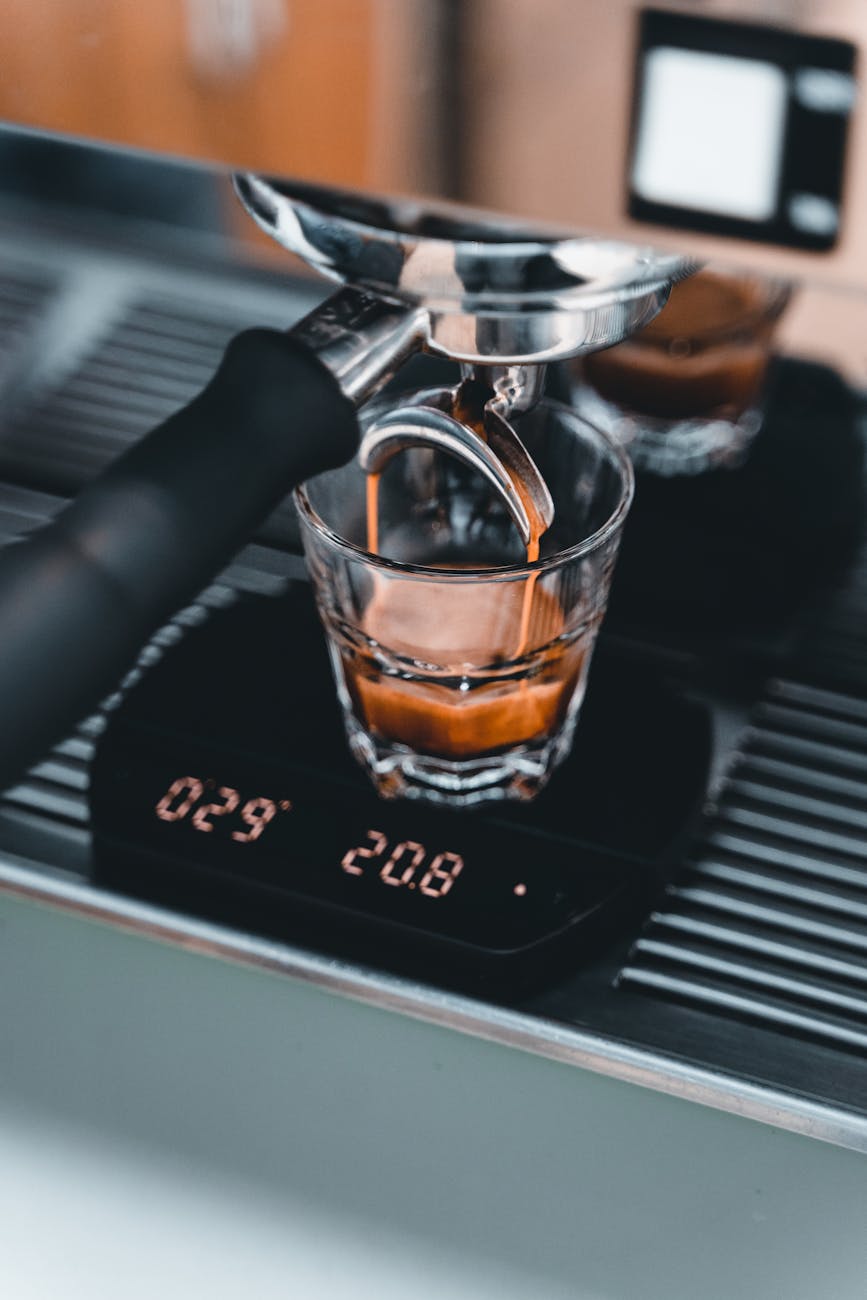
Mastering the flow: A guide to consistent extraction with high-flow precision baskets
Upgrading to a high-flow precision espresso basket, like those from VST or IMS, is a popular step for enthusiasts seeking to elevate their coffee. These tools promise higher extraction yields, improved flavour clarity, and shot-to-shot consistency. However, many baristas are quickly humbled when their shots start gushing, creating messy channeling and sour, underextracted coffee. The very design that allows for superior performance also makes these baskets far less forgiving than standard stock baskets. This article is your guide to taming these powerful tools. We will explore the fundamental adjustments required in your grinding, puck preparation, and recipe development to finally unlock the true potential of your precision basket and achieve consistently delicious espresso.
Understanding the challenge of high-flow baskets
Before you can fix the problem, it’s crucial to understand why high-flow baskets behave so differently. A standard basket often has fewer holes, and those holes can be less uniform in size and shape. Its design can create more back-pressure, essentially helping to restrict water flow. This built-in resistance can mask minor flaws in your coffee distribution and tamp, allowing you to pull a decent shot even with imperfect technique.
A high-flow precision basket, on the other hand, is engineered for the opposite effect. It features a much larger number of precisely drilled, perfectly uniform holes across its entire surface. This design minimizes the basket’s own influence on flow restriction. The intention is to have the coffee puck itself be the sole source of resistance. Consequently, any inconsistency in the puck’s density—a clump of grounds, a slightly uneven surface, or a tilted tamp—will be immediately exploited. Water will always choose the path of least resistance, rushing through these weaker areas and creating channels while other parts of the puck remain underextracted. The basket isn’t the problem; it’s a diagnostic tool revealing flaws in your preparation.
Dialing in your grinder for precision
The single most important adjustment you must make for a high-flow basket is to grind finer. Since the basket offers less resistance, the coffee grounds must provide it. A coarser grind that works perfectly in a stock basket will result in a “gusher”—a shot that runs far too quickly—in a precision basket. You need to increase the surface area of the coffee particles to slow the water down, allowing for proper contact time and extraction.
This is also where the quality of your grinder is put to the test. A grinder that produces a consistent particle size with minimal “fines” (very small coffee dust) is essential. Excessive fines can clog the basket’s tiny holes, while a mix of boulders and dust creates an unstable puck structure prone to collapse and channeling. When dialing in, don’t be afraid to grind so fine that your first shot chokes the machine completely. From there, make small, incremental adjustments coarser until you reach your desired shot time, typically in the 25-35 second range for a traditional 1:2 ratio.
Meticulous puck preparation is essential
With a fine grind and an unforgiving basket, your puck preparation technique moves from a routine to a critical, non-negotiable process. Every step must be performed with intention and consistency to create a coffee bed of uniform density.
- Weiss Distribution Technique (WDT): This is arguably the most impactful step. A fine grind is more susceptible to clumping. Use a WDT tool with very fine needles (0.4mm or less) to rake through the grounds in the portafilter, breaking up every single clump and distributing the coffee evenly.
- Distribution and Leveling: After WDT, the bed of grounds should be fluffy and evenly distributed. A wedge or spin-style distribution tool can be used, but be gentle to avoid compressing the coffee unevenly. The primary goal is to create a perfectly flat and level surface before tamping.
- Consistent, Level Tamping: The force of your tamp is less important than making sure it is perfectly level. An angled tamp will create a pocket of lower density on one side, guaranteeing a channel. Use a self-leveling tamper or practice your technique to ensure you apply even pressure straight down every single time.
Rethinking your brew recipe and parameters
Once your grind and puck prep are locked in, you can begin to optimize your recipe to take full advantage of the basket’s capabilities. High-flow baskets are incredibly efficient at extraction, which may require you to adjust your old parameters. It’s helpful to compare a potential starting point for a standard basket versus a high-flow basket.
| Parameter | Standard Basket (Example) | High-Flow Basket (Starting Point) |
|---|---|---|
| Grind Setting | Coarser (e.g., grinder setting 10) | Significantly Finer (e.g., grinder setting 7) |
| Puck Prep | Basic distribution and tamp | Meticulous WDT, leveling, and level tamp |
| Ratio | 1:2 (e.g., 18g in, 36g out) | Start at 1:2, consider pushing to 1:2.5 or higher |
| Pre-infusion | Standard | Consider a longer, lower-pressure pre-infusion |
Because these baskets extract so efficiently, you may find that your traditional 1:2 ratio shots taste much brighter and more developed. This efficiency gives you the headroom to explore longer ratios, such as 1:2.5 or even 1:3, without introducing excessive bitterness. This can unlock more delicate, nuanced flavours in lighter roasts. If your machine allows it, using a longer, gentler pre-infusion can also be beneficial. This helps to slowly and evenly saturate the finely ground puck, further reducing the risk of channeling when the full pressure is applied.
Conclusion
Switching to a high-flow precision basket is not a simple plug-and-play upgrade; it is a commitment to a more precise and deliberate espresso-making workflow. These baskets are demanding, but the rewards are substantial. To achieve consistency, you must move beyond your old habits and embrace a new methodology. This involves grinding significantly finer to allow the coffee puck to control the flow, adopting a meticulous puck preparation routine centered around WDT and level tamping, and being willing to adjust your brew ratios to harness the basket’s high extraction potential. The journey may involve some initial frustration, but by mastering these techniques, you will transform your precision basket from a source of inconsistency into a tool that produces exceptionally clear, sweet, and delicious espresso with every shot.



 No products in the cart.