

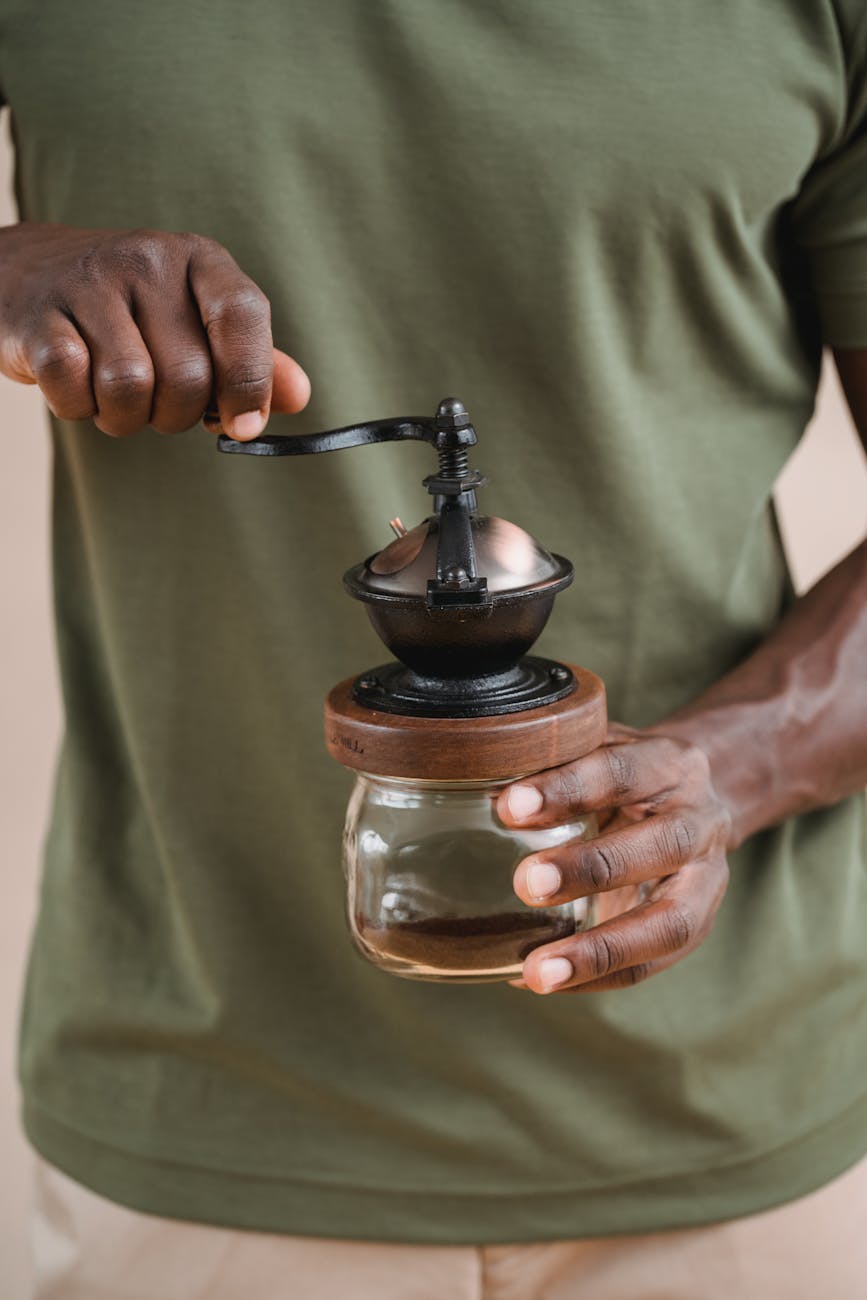
How to achieve cafe-quality results with a dedicated espresso grinder
That perfect shot of espresso from your favorite cafe can feel like a moment of magic. It’s rich, syrupy, and complex, a stark contrast to the often bitter or sour coffee made at home. Many home baristas believe a high-end espresso machine is the secret, but that’s only half the story. The true foundation of exceptional espresso isn’t the machine that brews it, but the grinder that prepares the beans. A dedicated espresso grinder is the single most important tool in your arsenal. It provides the precision and consistency that pre-ground coffee or a standard blade grinder simply can’t match. This article will guide you through why a specialized grinder is essential and how to use it to finally unlock cafe-quality espresso in your own kitchen.
Why a dedicated grinder is non-negotiable
To understand why a dedicated grinder matters so much, we need to think about what espresso actually is: a small, concentrated coffee brewed by forcing hot, pressurized water through a tightly packed puck of finely ground coffee. The success of this entire process hinges on the quality of that coffee puck. If the coffee grounds are inconsistent in size, water will find the path of least resistance, a phenomenon called channeling. This means some grounds get over-extracted (becoming bitter) while others are under-extracted (remaining sour). The result is a messy, unbalanced shot.
A blade grinder, which works by smashing beans with a spinning blade, creates a chaotic mix of large chunks and fine dust. It’s impossible to get a uniform grind. Even a standard burr grinder designed for drip coffee often lacks the fine-tuning necessary for espresso. A dedicated espresso grinder, on the other hand, is built for one purpose: producing a consistent, fine grind with microscopic levels of adjustment. This consistency ensures water flows evenly through the entire coffee puck, extracting all the desirable flavors in a balanced way. It’s the difference between controlled brewing and a game of chance.
Understanding the key features of an espresso grinder
Not all espresso grinders are created equal. When you start shopping, you’ll encounter a few key terms that define a grinder’s performance. Understanding them is crucial for making the right choice.
- Burr type: Grinders use burrs, not blades, to crush beans. The two main types are conical and flat. Neither is definitively “better,” but they produce slightly different results. Conical burrs often produce a wider range of particle sizes, which can lead to a fuller body and richer texture. Flat burrs tend to produce a very uniform grind, which can highlight clarity and delicate flavor notes, making them a favorite for single-origin coffees.
- Adjustment mechanism: This is perhaps the most critical feature for espresso. Grinders come with either stepped or stepless adjustments. A stepped grinder clicks between a set number of grind settings. For espresso, you need a stepless or micro-stepped grinder. This allows for tiny, incremental changes between settings, giving you the precision needed to perfectly “dial in” a shot.
- Retention: This refers to how much ground coffee is left inside the grinder after use. A high-retention grinder means you’re always getting a mix of fresh and stale grounds from your previous session, which kills consistency. Look for a grinder advertised as having low retention, ensuring the coffee you grind is the coffee you use.
Here’s a simple breakdown of burr types:
| Feature | Conical burrs | Flat burrs |
|---|---|---|
| Grind distribution | Bimodal (two main particle sizes) | Unimodal (very uniform particle size) |
| Flavor profile | Emphasizes body, texture, and sweetness. Great for blends. | Emphasizes clarity, acidity, and complex flavors. Great for single origins. |
| Retention | Generally lower retention | Can be higher, though modern designs have improved this |
The art of dialing in your grind
Owning a great grinder is the first step; learning to use it is the second. “Dialing in” is the process of adjusting your grind size to achieve a specific brew recipe. The most common starting point for a double espresso is a 1:2 ratio. For example, you might aim for 18 grams of ground coffee in your portafilter to produce 36 grams of liquid espresso in about 25-30 seconds.
Here’s how to approach it:
- Weigh your dose: Use a coffee scale to weigh your whole beans before grinding. Consistency starts here. Aim for your target dose (e.g., 18g).
- Grind and pull a shot: Grind the coffee, prepare your puck, and start brewing with your scale under the cup. Start a timer the moment you start the pump.
- Analyze the results: Stop the shot when you reach your target output (e.g., 36g). Now, look at the timer.
- Is the shot time less than 25 seconds? Your grind is too coarse. The water is flowing through too quickly. You need to make a small adjustment to a finer setting.
- Is the shot time more than 30 seconds? Your grind is too fine. The machine is choking and struggling to push water through. You need to make a small adjustment to a coarser setting.
- Repeat: Make one small adjustment and pull another shot. The key is to only change one variable at a time—the grind size. Keep the dose and yield the same. It may take a few shots, but you’ll eventually hit that sweet spot of time and taste.
Beyond the grind: Puck prep for perfection
Your grinder has delivered a perfect, fluffy pile of consistently sized coffee grounds. The final step before brewing is to prepare this coffee in the portafilter, known as “puck prep.” A flawless grind can be undermined by poor preparation, so these techniques are essential for translating your grinder’s quality into the final cup.
First, focus on distribution. Even with a great grinder, grounds can form clumps. The Weiss Distribution Technique (WDT) is a simple method to fix this. You use a tool with very fine needles to stir the grounds in the portafilter, breaking up clumps and ensuring an even density throughout. This simple act drastically reduces the chance of channeling.
Next comes tamping. The goal of tamping isn’t to press as hard as you can; it’s to create a level and uniformly compacted bed of coffee. An uneven tamp will create dense and loose spots, encouraging water to channel. Use a good quality tamper and focus on applying firm, even pressure until the coffee bed is flat and polished. A level puck is a happy puck, and it’s the final step in ensuring your beautiful grind leads to a beautiful extraction.
Investing in a dedicated espresso grinder is the most significant step you can take toward replicating the quality of your favorite cafe. It’s the tool that gives you control over the most important variable in espresso brewing: the coffee itself. We’ve seen that the consistency provided by quality burrs and the fine-tuning from a stepless adjustment mechanism are non-negotiable for proper extraction. By mastering the art of dialing in—adjusting your grind to hit a target time and yield—you move from guessing to brewing with intention. Paired with proper puck prep techniques like WDT and level tamping, your grinder’s potential is fully unlocked. While a fancy machine is nice, it’s the grinder that does the real heavy lifting. With a little practice, that perfect espresso shot is no longer magic, but a delicious and repeatable science you can master at home.
 No products in the cart.