

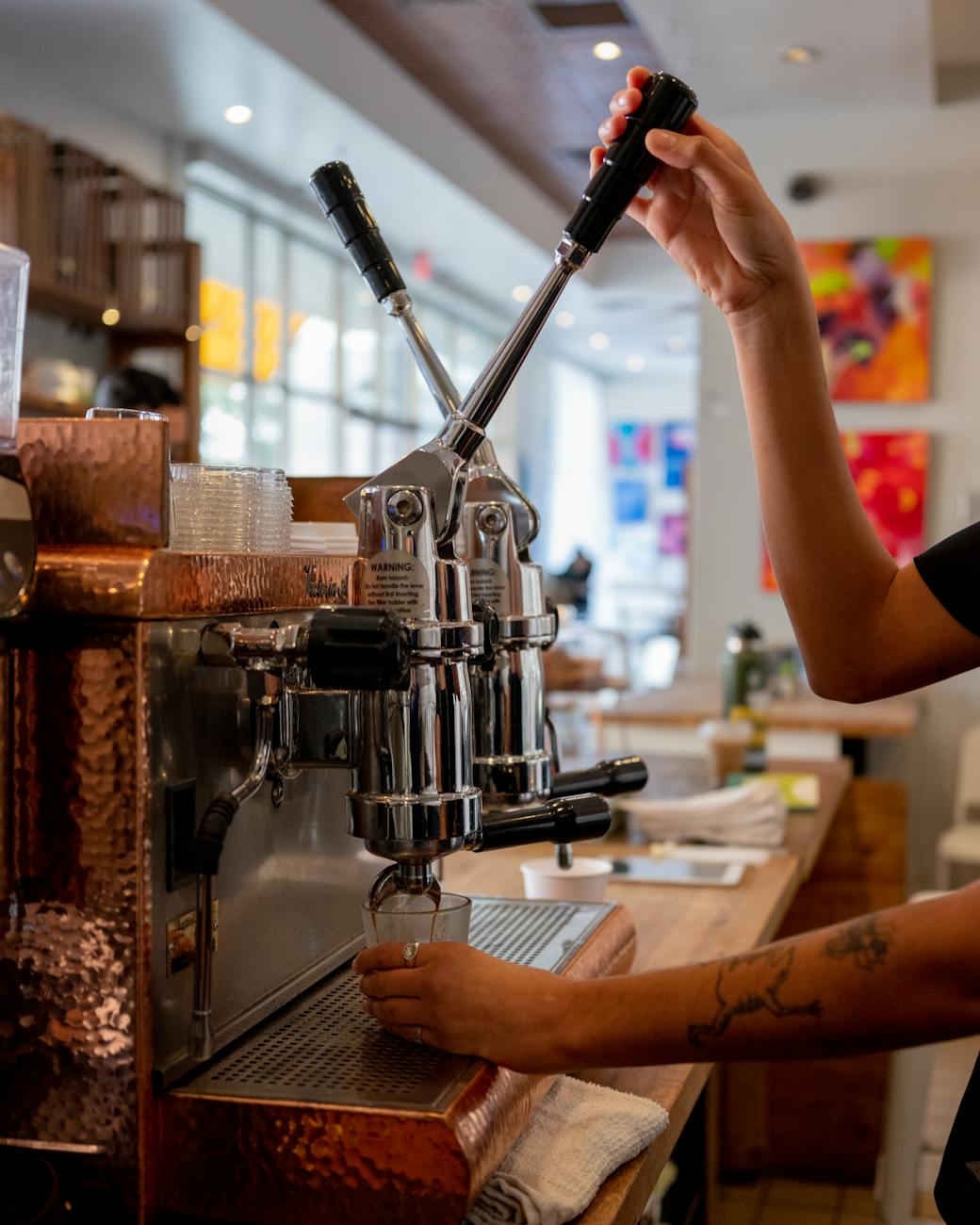
The art of the clean release: A guide for La Peppina users
The La Peppina is a marvel of vintage espresso engineering, offering a uniquely hands-on and rewarding coffee experience. Pulling a rich, syrupy shot from this manual lever machine is a true delight. However, this delight can quickly turn to frustration during cleanup. Many new and even experienced users struggle with a common problem: a wet, soupy coffee puck that sticks to the portafilter and creates a mess. This isn’t just about a tidy workflow; a soupy puck often indicates that extraction variables could be improved. This guide will walk you through the essential techniques and variables, from puck preparation to a special post-extraction maneuver, to help you achieve that satisfyingly dry, solid puck and a clean release every single time.
Understanding the ‘why’ behind a messy puck
Unlike modern semi-automatic or spring-lever machines, the La Peppina does not have a three-way solenoid valve or a spring-driven piston to vent pressure and dry the coffee puck after extraction. It’s a direct lever, open-boiler design, which means the state of the puck is entirely dependent on your technique. The primary culprit behind a wet puck is excess water left sitting on top of the coffee bed after the shot is finished. This happens for a few key reasons. First, excessive headspace—the gap between the top of the tamped coffee and the group head’s shower screen—allows water to pool. If the coffee dose is too low for the basket, this space becomes a small reservoir. Second, an improper grind or tamp can lead to channeling, where water rushes through paths of least resistance, leaving other parts of the puck under-extracted and saturated. The entire system relies on creating a compact and resistant coffee bed that forces water through it evenly, and any breakdown in that system results in a soupy mess.
Dialing in your preparation variables
Achieving a clean release begins long before you pull the lever down. Your puck preparation is the foundation for a good extraction and, consequently, a dry puck. Three variables are paramount: dose, grind, and tamp. Think of them as an interconnected system. Changing one will almost certainly require adjusting another.
- Dosing weight: This is arguably the most critical factor for managing headspace on the Peppina. You need to use enough coffee to create a puck that is close to the shower screen once tamped, leaving minimal room for water to pool. For a standard 49mm double basket, a starting point is often between 14 and 16 grams. Using a scale is non-negotiable. Dose too low, and you’re guaranteed a swampy puck. Dose too high, and you’ll struggle to lock in the portafilter, potentially damaging the group gasket. Experiment in 0.5-gram increments to find the sweet spot for your specific basket and coffee beans.
- Grind size: The grind must be fine enough to provide adequate resistance for the lever. If the grind is too coarse, water will flow through too quickly, resulting in an under-extracted shot and a soggy puck that lacks structural integrity. If it’s too fine, you might choke the machine entirely. The ideal grind allows you to apply firm, steady pressure on the lever for a 25-35 second shot, producing a syrupy, balanced espresso.
- Tamping technique: Your goal is not to press as hard as you can, but to create a level and uniformly compacted bed of coffee. An uneven tamp encourages channeling, which is a disaster for both shot quality and puck dryness. Use a tamper that fits your basket well, apply consistent pressure, and finish with a gentle polish to ensure the surface is flat.
The post-extraction technique for a dry puck
Even with perfect puck preparation, you can still end up with a wet puck if you neglect the final, crucial step. This is the “secret” that separates frustrated users from masters of the machine. The technique involves using the lever to create a vacuum and pull excess water off the puck. It’s a simple but delicate maneuver. After your shot has finished and you’ve removed your cup, do not just let the lever spring back up. Instead, begin to slowly and gently raise the lever. As you raise it, you will feel a slight resistance. This is the piston creating a vacuum in the chamber above the coffee, effectively “sucking” the pooled water from the surface of the puck back up through the shower screen. The key here is slowly. If you raise it too quickly, you’ll break the puck’s seal against the basket walls and destroy the vacuum, making an even bigger mess. A slow, controlled upward motion over a few seconds is all it takes. This single action is the most effective way to transform a soupy puck into a dry, easily knockable one.
Advanced tools and troubleshooting
Once you have a good grasp of the fundamentals, a few simple tools can further enhance your consistency and make achieving a dry puck even easier. The most popular addition is a metal puck screen. This thin, perforated metal disc is placed directly on top of your tamped coffee before you lock in the portafilter. It serves two purposes: it helps distribute the water more evenly across the coffee bed, reducing the chance of channeling, and it adds a solid layer that keeps the puck intact. This added structural integrity makes the post-extraction vacuum technique even more effective and the puck less likely to fracture. Some users also experiment with paper filters (like trimmed Aeropress filters) either below or on top of the puck for a similar effect.
If you’re still struggling, here is a quick troubleshooting guide:
| Problem | Potential cause | Solution |
|---|---|---|
| Puck is a soupy, muddy mess. | Dose is too low; grind is too coarse. | Increase coffee dose by 0.5g. Grind finer to increase resistance. |
| Puck is solid but wet on top. | Post-extraction technique was missed or rushed. | After the shot, raise the lever very slowly to suck water off the puck. |
| Water sputters from portafilter during shot (channeling). | Uneven grind, poor distribution, or uneven tamp. | Use a distribution tool (WDT). Ensure your tamp is perfectly level. |
| Puck seems dry but sticks to the shower screen. | Dose is slightly too high; headspace is too low. | Decrease coffee dose by 0.2-0.5g. Consider using a puck screen. |
Mastering the clean release on a La Peppina is a journey of precision and patience. It’s the culmination of a well-executed process, not the result of a single trick. By focusing on the core principles of proper dosing to manage headspace, dialing in a fine and consistent grind, and applying a level tamp, you set the stage for success. The final, critical element is the slow and deliberate post-extraction lever lift, which actively dries the puck. Tools like puck screens can aid consistency, but they are no substitute for sound technique. Ultimately, that clean, dry puck is more than a convenience; it is a clear indicator that your variables were aligned, your technique was sound, and you have likely just enjoyed a fantastic shot of espresso. It’s the satisfying final note in the symphony of a truly manual espresso extraction.
 No products in the cart.