

The Ristretto is often seen as the purest expression of espresso—a short, concentrated shot bursting with sweetness and a syrupy body. While deceptively simple, achieving a balanced Ristretto can be a challenge. When using beans from a beloved roaster like The Coffee Bean & Tea Leaf (CBTL), the goal is to highlight their unique flavor profile without veering into the unpleasant territories of sourness or bitterness. This guide is for the home barista looking to move beyond the standard espresso and master this intense, rewarding coffee. We will delve into the fundamentals of the Ristretto, how to select the right CBTL beans for the job, and the precise techniques required to dial in your equipment and pull a shot that is both powerful and perfectly balanced.
Understanding the Ristretto and your CBTL beans
Before twisting the portafilter into place, it’s crucial to understand what makes a Ristretto unique. The name itself is Italian for “restricted,” which is the key to the entire concept. Unlike a standard espresso which typically has a brew ratio of 1:2 (e.g., 18 grams of coffee grounds yielding 36 grams of liquid), a Ristretto is much shorter, with a ratio between 1:1 and 1:1.5. This means our 18-gram dose of coffee will yield only 18 to 27 grams of liquid.
Why does this matter? The flavors in coffee extract at different rates. The initial part of the extraction is rich in sugars, oils, and acids, creating sweetness and a heavy body. The latter part of the extraction pulls out more bitter compounds. By restricting the water flow and stopping the shot early, a Ristretto captures that sweet, syrupy beginning and leaves the bitterness behind. The result is a less caffeinated, more concentrated shot with a lingering, pleasant finish.
When choosing your beans, freshness is paramount. For a balanced Ristretto, CBTL’s medium-to-dark roasts are often the best starting point. Their signature Espresso Roast or Viennese Blend are excellent choices. These beans have developed chocolatey, nutty, and caramel notes that shine in a concentrated shot, and their lower acidity makes them more forgiving during the Ristretto’s fast extraction.
Dialing in your grind and dose
Your journey to the perfect Ristretto begins not at the espresso machine, but at the grinder. Because you are using less water and a shorter extraction time, you need to compensate by increasing the resistance the water faces as it passes through the coffee puck. This is achieved with a finer grind setting than you would use for a standard espresso shot.
A finer grind increases the surface area of the coffee and compacts the grounds more tightly, slowing down the water flow. This ensures that even in 15-22 seconds, the water has enough contact time to extract the desirable solids and oils. If your grind is too coarse, water will gush through, resulting in a thin, sour, and underextracted shot—essentially a failed Ristretto.
Alongside the grind, your dose must be impeccably consistent. Use a coffee scale to measure your beans to within 0.1 grams. A typical double basket holds between 18-20 grams. Pick a dose and stick with it while you are dialing in. Once dosed, distribute the grounds evenly in your portafilter before tamping. A level and firm tamp is critical; any unevenness will cause channeling, where water punches a hole through a weak spot in the puck, leading to a horribly unbalanced extraction.
The art of extraction: Pulling the shot
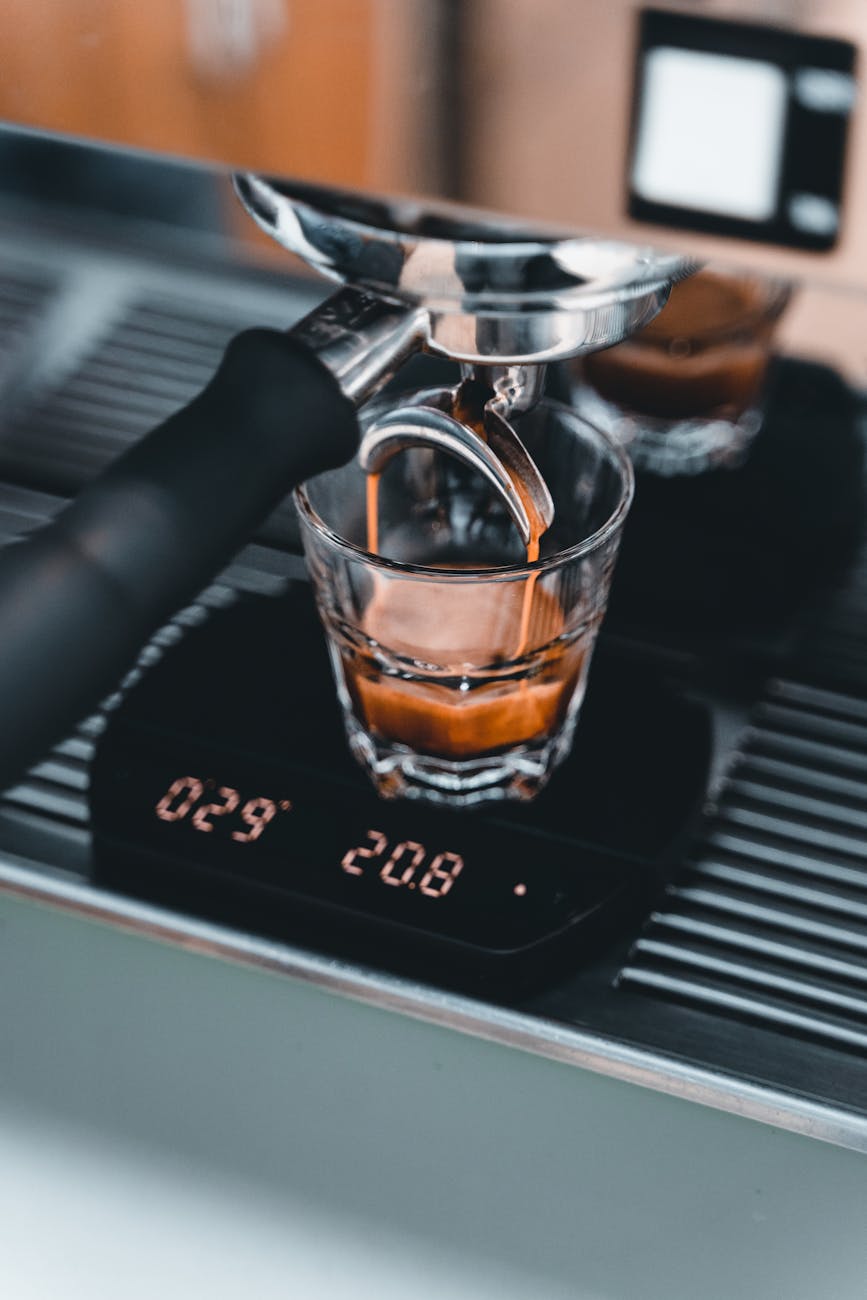
With your beans selected and your grinder dialed in, it’s time to pull the shot. This is where theory meets practice. Place your cup on a scale, tare it to zero, and start your shot and a timer simultaneously. Your primary targets are yield and time.
Remember the brew ratio: for an 18-gram dose, you are aiming for a liquid yield of 18-27 grams. Watch the scale and stop the shot just before you hit your target weight, as a few extra drips will follow. While yield is your main goal, time is your main diagnostic tool. A well-pulled Ristretto should typically finish in 15 to 22 seconds. Don’t fixate on this number; instead, use it to inform your grind adjustments.
Pay attention to the visual cues. A great Ristretto extraction begins with dark, syrupy drips that slowly come together into a single, steady stream often called a “mouse tail.” The color should be a rich, reddish-brown, topped with a thick, stable crema. If the shot blondes too early (turns a pale yellow), it’s a sign that the best parts of the extraction are over.
Taste is the final judge. Is it unpleasantly sour? This indicates underextraction. You need to grind finer to slow the shot and increase extraction. Is it harsh and bitter? This suggests overextraction or channeling. Try grinding a little coarser or focus on improving your puck preparation for a more even flow.
A starting recipe and troubleshooting guide
Dialing in can feel daunting, so here is a concrete starting point for a Ristretto using CBTL Espresso Roast beans. Use this as your baseline and adjust one variable at a time based on taste.
- Bean: The Coffee Bean & Tea Leaf Espresso Roast
- Dose: 18g in a double basket
- Yield: 22g liquid espresso
- Time: Aim for approximately 20 seconds from the first drip
- Water Temperature: 93°C (200°F), if your machine allows adjustment
To help you diagnose any issues, use this simple troubleshooting table:
| Problem in the Cup | Likely Cause | How to Fix It |
|---|---|---|
| Sour, acidic, thin body | Underextraction | Grind your coffee finer to slow the shot and increase contact time. |
| Bitter, harsh, burnt flavor | Overextraction or Channeling | Grind your coffee coarser to speed up the shot. Ensure your distribution and tamping are perfectly even. |
| Shot flows like a faucet (under 15 sec) | Grind is too coarse | Make a significant adjustment to a finer grind setting. |
| Shot chokes the machine (over 25 sec) | Grind is too fine | Make an adjustment to a coarser grind setting. |
Mastering the Ristretto is a rewarding skill that elevates your appreciation for coffee. By understanding the core principles of this restricted shot, you can unlock the deepest, sweetest flavors hidden within your favorite CBTL beans. We’ve walked through the importance of selecting a suitable roast, the non-negotiable precision of a fine grind and a consistent dose, and the art of managing your extraction through yield and time. Remember that recipes are merely starting points; your palate is the ultimate guide. Use the troubleshooting table to diagnose your shots, make small, deliberate adjustments, and don’t be discouraged by a few failed attempts. The pursuit of that perfect, syrupy, and balanced Ristretto is what makes being a home barista so enjoyable.
 No products in the cart.