

Every coffee enthusiast chasing the perfect espresso shot knows the importance of grind size, dose, and water temperature. We meticulously weigh our beans and time our extractions down to the second. But there’s a crucial, dynamic variable that often gets overlooked: the freshness of the coffee beans. How long has it been since they were roasted? This isn’t just about flavor, although that’s a huge part of it. The age of your beans directly and dramatically impacts the physics of your extraction, specifically the espresso flow rate. Understanding this relationship is the key to unlocking consistent, delicious shots. In this guide, we’ll explore the science behind coffee degassing and see how beans that are too fresh, too old, or just right will change how water moves through your coffee puck.
The science of coffee degassing
To understand espresso flow, we first need to talk about gas. When green coffee beans are roasted, they undergo thousands of chemical reactions. One major byproduct of this intense heat is the creation of a large amount of carbon dioxide (CO2) and other gasses, which get trapped within the bean’s cellular structure. Immediately after the roast is finished, this trapped CO2 begins to escape. This process is called degassing.
The rate of degassing is not linear. It’s most rapid in the first 24-72 hours after roasting and then slows down considerably over the following weeks. Several factors influence this rate:
- Roast level: Darker roasts are more porous and brittle, so they tend to degas faster than lighter roasts.
- Bean density: Harder, denser beans grown at high altitudes will often degas more slowly than softer, less dense beans.
- Storage: Beans stored in a valve bag can release CO2 without letting oxygen in, while beans exposed to open air will degas and oxidize (go stale) much faster.
This ever-changing CO2 content is the primary reason why a bag of coffee will behave differently on day 3 than it does on day 10 or day 30.
How very fresh beans disrupt your flow
It seems counterintuitive, but using beans that are too fresh is a common cause of frustrating espresso shots. When you grind beans that are only one to three days off-roast, they are still packed with an enormous amount of CO2. When you lock in your portafilter and start the extraction, the hot, pressurized water hits these grounds and causes a dramatic, almost violent, release of that trapped gas.
This rapid expansion of CO2 inside the puck works against the water, creating immense and uneven resistance. The gas can force open channels in the puck, leading to sputtering and a flow that starts slow and then suddenly gushes. The shot will often be fast, blond, and have a massive, bubbly crema that vanishes within a minute. The taste? Typically sour and under-extracted, because the water didn’t have a chance to flow evenly through the coffee and extract the desirable solids. You are essentially fighting a battle against the gas, and the water flow loses.
Finding the ‘sweet spot’ for a perfect extraction
This is where patience pays off. As the beans rest for a few days, the CO2 level subsides to a more stable and manageable state. This period, often called the “sweet spot,” can vary but typically falls between 5 and 14 days after the roast date. During this window, there is still enough CO2 present to play a positive role in the extraction, but not so much that it causes chaos.
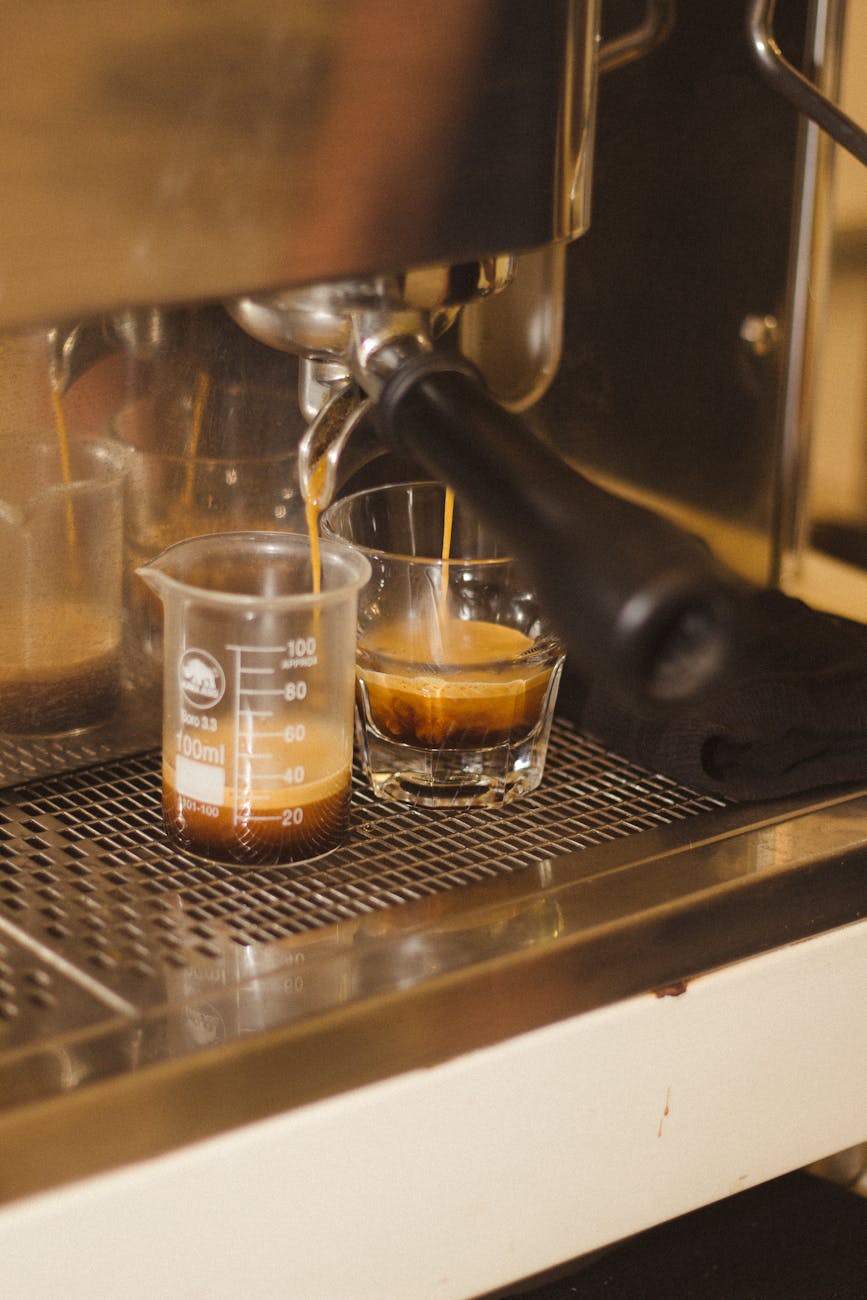
The remaining CO2 helps create a gentle and consistent resistance, allowing the water to saturate the coffee puck evenly. This promotes a steady, syrupy flow rate that looks like warm honey dripping from the spouts. This ideal flow allows the water enough contact time to dissolve the sugars and oils responsible for a balanced, sweet, and flavorful espresso. The CO2 also emulsifies with the oils during extraction, which is what creates a rich, stable, and long-lasting crema—the hallmark of a well-made shot. Dialing in your grind size becomes much easier and more predictable during this optimal phase.
The problem with stale coffee and rapid flow
Just as overly fresh beans cause problems, so do beans that are too old. After about four weeks (this can vary), most of the crucial CO2 has escaped. The beans have also been exposed to oxygen for a longer period, causing the delicate oils and aromatic compounds to degrade and taste flat or rancid. In terms of flow rate, the lack of CO2 means there is very little gas to provide resistance to the water.
When you pull a shot with stale beans, the water will likely pour through the puck with almost nothing to slow it down. This results in a “gusher”—an extremely fast shot that is watery, thin, and severely under-extracted. The taste will be sour and lifeless, and there will be little to no crema. A common reaction is to grind much, much finer to try and slow the shot down. While this might help the timing, it often leads to over-extraction of bitter compounds and can even choke the espresso machine, without ever restoring the body and sweetness that a proper amount of CO2 provides.
Here is a simple table to summarize the effects:
| Roast Age | CO2 Level | Typical Flow Rate | Shot Characteristics |
|---|---|---|---|
| Very Fresh (1-3 days) | Very High | Erratic & Fast | Sour, gassy, huge bubbly crema that dissipates quickly. |
| Optimal (5-14 days) | Balanced | Steady & Syrupy | Balanced, sweet, rich body with a stable, persistent crema. |
| Stale (4+ weeks) | Very Low | Very Fast (Gusher) | Watery, thin, sour, lifeless, with little to no crema. |
Ultimately, the freshness of your coffee is not a static property; it’s a moving target that directly governs your espresso’s flow rate. We’ve seen how excessive CO2 in overly fresh beans creates an unruly, fast shot, while the absence of it in stale beans leads to a watery gusher. The key to consistency and deliciousness lies in the “sweet spot,” typically a week or two after roasting, where the CO2 levels are perfect for creating the necessary resistance for a balanced, syrupy extraction. So next time you buy a bag of coffee, ignore the “best by” date and look for the “roasted on” date. Give your beans the proper time to rest, and you’ll be rewarded with a more predictable and flavorful espresso experience.

 No products in the cart.