

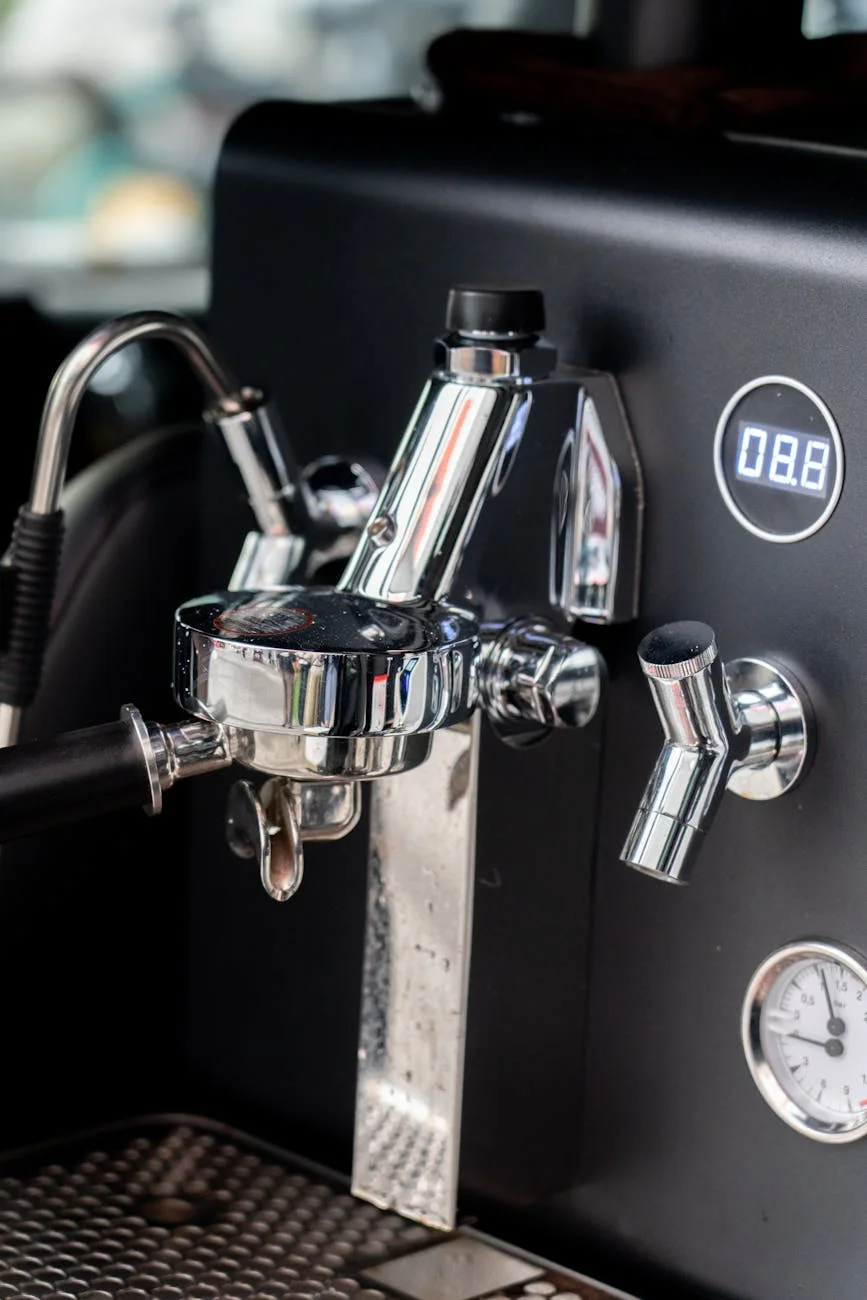
The Olympia Cremina is a legendary machine, celebrated for its robust build and the exceptional control it offers the home barista. It’s a purely mechanical marvel, but its performance is still governed by the laws of physics. One of the most overlooked variables in espresso making is altitude. For Cremina owners living high above sea level, achieving the perfect shot can be a frustrating puzzle. The familiar pressurestat settings that work in a coastal city will produce dramatically different results in the mountains. This article will delve into the science behind how altitude affects your Cremina’s boiler temperature and pressure. We’ll explore why your machine behaves differently at elevation and provide a clear, practical guide on how to adjust it for consistently delicious espresso, no matter where you live.
Understanding the physics: Water, pressure, and altitude
To understand why your Cremina needs adjustment at altitude, we first need to revisit a basic principle of physics: the boiling point of water. At sea level, where atmospheric pressure is approximately 1 bar (or 14.7 psi), water boils at 100°C (212°F). However, as you ascend, the column of air above you becomes shorter, and the atmospheric pressure decreases. With less pressure pushing down on its surface, water molecules find it easier to escape into a gaseous state. This means water boils at a lower temperature at higher altitudes.
This phenomenon directly impacts your Cremina’s boiler. The machine uses a pressurestat to regulate the heating element, turning it on and off to maintain a specific pressure inside the boiler. This boiler pressure, in turn, dictates the temperature of the water and steam. If the fundamental relationship between pressure and temperature is altered by your local atmospheric pressure, the entire system is thrown off balance. A setting that produces a perfect 120°C boiler temperature at sea level might only yield 115°C in a mountain town, which is a significant difference in the world of espresso.
The Cremina’s pressurestat and its role
The heart of the Cremina’s temperature management system is the pressurestat, or p-stat. This small but crucial component is a pressure-sensitive switch. When the pressure inside the boiler drops below a certain point, the p-stat closes an electrical circuit, activating the heating element. As the water heats up, it produces steam, and the pressure builds. Once the pressure reaches the p-stat’s upper set limit, the switch opens, and the heating element turns off. This cycle repeats, keeping the pressure within a narrow range.
Here’s the critical detail: the pressure gauge on your machine and the p-stat itself measure gauge pressure. This is the pressure above the surrounding atmospheric pressure. The total, or absolute pressure, inside the boiler is the gauge pressure plus the local atmospheric pressure. It is this absolute pressure that determines the boiling temperature of the water. This distinction is the key to understanding why altitude is such an important factor. A p-stat set to 1.0 bar of gauge pressure is aiming for a different target depending on the atmospheric pressure it’s working against.
How altitude creates a disconnect between pressure and temperature
Now we can connect the dots. Let’s imagine you set your Cremina’s p-stat to cycle at 1.0 bar.
- At sea level, the atmospheric pressure is roughly 1.0 bar. The absolute pressure in your boiler is 1.0 bar (gauge) + 1.0 bar (atmospheric) = 2.0 bar absolute. This corresponds to a water temperature of approximately 120°C (248°F), a great starting point for excellent brew temperatures and strong steam.
- Now, let’s move to Denver, Colorado (around 1,600 meters or 5,280 feet). The atmospheric pressure here is only about 0.83 bar. With the same 1.0 bar gauge pressure setting, the absolute pressure in your boiler is now 1.0 bar (gauge) + 0.83 bar (atmospheric) = 1.83 bar absolute. This lower absolute pressure results in a water temperature of only about 117°C (243°F).
A three-degree Celsius drop in boiler temperature is significant. It will lead to a lower grouphead temperature, resulting in shots that are likely sour, under-extracted, and lacking body. You’ll also notice that your steam power is noticeably weaker, making it difficult to properly texture milk. You are targeting a specific temperature for brewing, but by relying on a pressure setting alone, altitude has made you miss your mark.
Calibrating your Cremina for high-altitude brewing
The solution is not to get a new machine, but to recalibrate your existing one. To achieve the same target boiler temperature at a higher altitude, you must compensate for the lower atmospheric pressure by increasing the gauge pressure setting on your p-stat. The goal is to make the absolute pressure inside the boiler the same as it would be at sea level for your desired temperature.
Adjusting the p-stat on a Cremina is a simple mechanical process, usually involving a small screw on the p-stat itself. Turning it clockwise typically increases the pressure setting. However, you should do this in small, careful increments. The best approach is to use an objective measurement, such as a grouphead thermometer, to dial in the correct brew temperature rather than just relying on the pressure gauge.
Here is a table to serve as a starting guide for adjusting your machine. The goal is to achieve an absolute pressure of around 2.0 bar for a target boiler temperature of 120°C (248°F).
| Location (example) | Altitude | Approx. Atmospheric Pressure | Recommended P-stat Setting (gauge) |
|---|---|---|---|
| Sea Level | 0 m / 0 ft | 1.0 bar | 1.0 bar |
| Boise, ID | 820 m / 2,700 ft | 0.91 bar | 1.1 bar |
| Denver, CO | 1,600 m / 5,280 ft | 0.83 bar | 1.15 – 1.2 bar |
| Mexico City, MX | 2,250 m / 7,380 ft | 0.77 bar | 1.2 – 1.25 bar |
Note: These are estimates. Always make small adjustments and monitor your machine’s behavior and shot quality.
Conclusion
Living at a high altitude introduces a unique challenge for the Cremina owner, but it’s one that is easily overcome with a little knowledge of physics. The core issue is the drop in atmospheric pressure, which lowers the boiling point of water. Because your machine’s pressurestat measures gauge pressure, its factory settings will result in a lower boiler temperature and weaker steam power at elevation. The key is to understand that you’re not chasing a specific pressure reading on a gauge; you’re chasing a specific water temperature for optimal extraction. By carefully adjusting your Cremina’s pressurestat upwards to compensate, you can restore the ideal absolute pressure in the boiler and once again enjoy the rich, perfectly extracted espresso your machine was designed to produce.


 No products in the cart.