

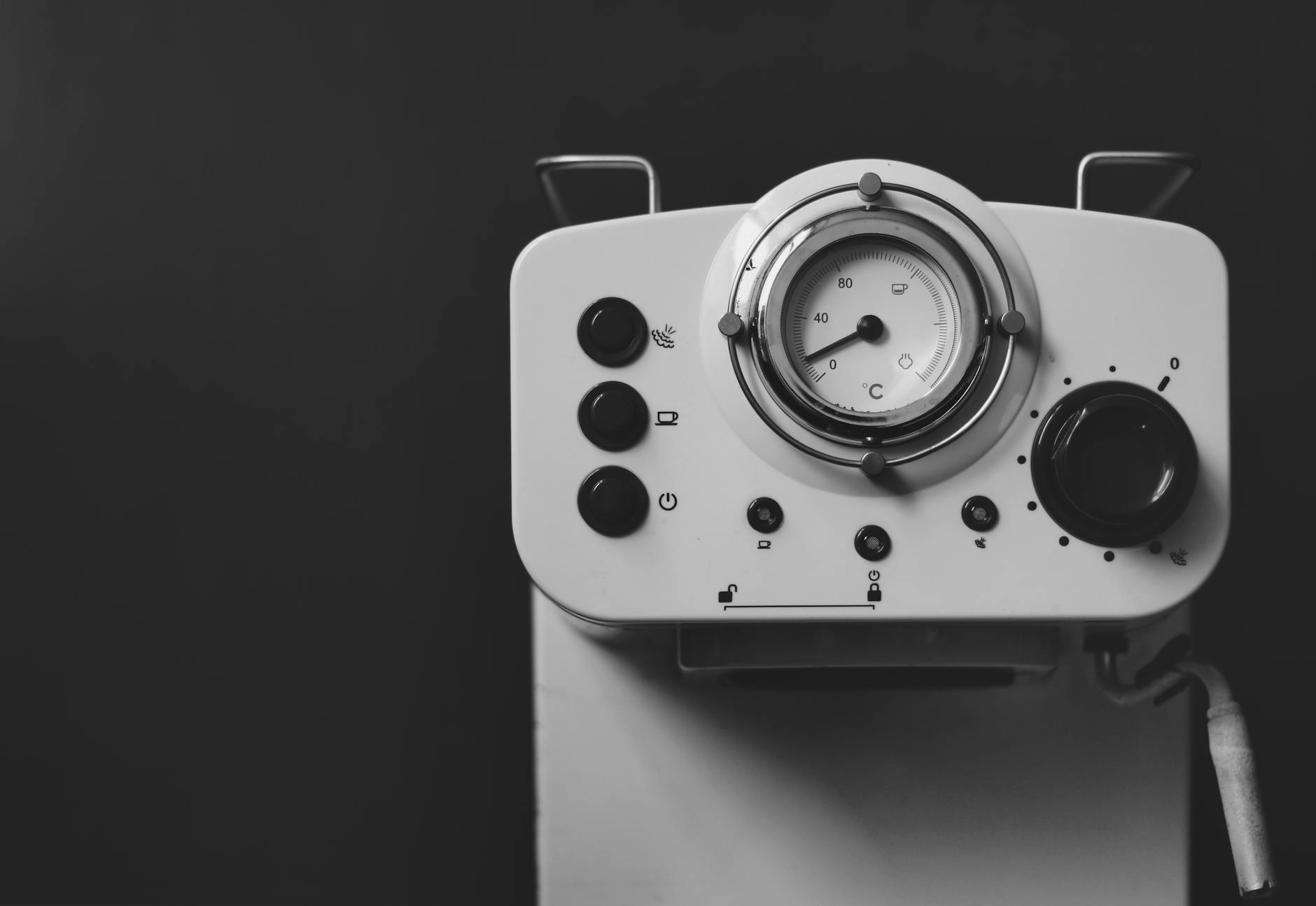
The Gaggia Classic is a legendary machine in the world of home espresso, celebrated for its robust build and potential for producing cafe-quality shots. However, its Achilles’ heel has always been its rudimentary temperature control. Many enthusiasts turn to a PID (Proportional-Integral-Derivative) controller to achieve the thermal stability needed for consistent espresso. While the benefits for shot quality are well-documented, a crucial and often overlooked advantage is the positive impact a PID has on the long-term durability of the machine’s heart: the aluminum boiler. This article will delve into the mechanics of how the Gaggia Classic’s stock system operates, how a PID changes the game, and why this upgrade is a significant investment in the machine’s longevity.
Understanding the Gaggia Classic’s factory temperature control
To appreciate the impact of a PID, we must first understand the system it replaces. The stock Gaggia Classic uses simple bimetallic thermostats to regulate the temperature of its boiler. These function like a basic light switch. When the boiler’s temperature drops below a certain point, the thermostat clicks on, sending full power to the heating elements. Once the temperature rises past a set threshold, it clicks off completely. This crude on/off cycle is the source of the infamous temperature surfing ritual for Gaggia owners.
This mechanism creates a very wide temperature range, often called a “deadband,” which can be as large as 10-15°C (20-30°F). The boiler is constantly subjected to a cycle of rapid heating, overshooting the target temperature, and then cooling down significantly before the cycle repeats. This relentless fluctuation is the primary source of thermal stress on the boiler and its associated components.
How a PID controller revolutionizes heat management
A PID controller is a sophisticated digital brain for your espresso machine. Instead of the stock thermostat’s blunt on/off approach, a PID uses an intelligent algorithm to maintain a precise temperature. It works in conjunction with a Solid State Relay (SSR) to pulse the power to the heating elements.
- Proportional: It looks at the current error (the difference between the actual temperature and your set temperature) and applies power proportionally. A big difference gets more power.
- Integral: It considers past errors, eliminating the “droop” or offset that proportional control alone can cause, ensuring it reaches the exact target.
- Derivative: It anticipates the future by looking at the rate of temperature change, preventing it from overshooting the target temperature by slowing down as it gets close.
By constantly making these micro-adjustments and pulsing the heating element, the PID holds the boiler temperature incredibly stable, often within a single degree of the set point. This smooth, controlled heating process is fundamentally different and far gentler than the violent swings of the stock system.
The direct link between thermal stability and boiler longevity
The core benefit for durability comes from the dramatic reduction in thermal stress. Metal, including the Gaggia’s aluminum boiler, expands when heated and contracts when cooled. The stock thermostat’s wide temperature swings force the boiler through a constant, aggressive cycle of expansion and contraction. This process, known as thermal fatigue, is a major contributor to long-term material wear.
Over thousands of cycles, this stress can weaken the metal itself and, more commonly, the components connected to it. Gaskets and o-rings are particularly vulnerable. The constant expansion and contraction cause them to harden, become brittle, and eventually fail, leading to leaks. Similarly, the heating elements themselves benefit. Instead of being slammed with full power and then cut off, they are gently pulsed by the PID, which can extend their operational lifespan.
By maintaining a stable temperature, a PID minimizes these expansion and contraction cycles. The boiler and its components exist in a state of thermal equilibrium, drastically reducing the wear and tear associated with fatigue and ultimately extending the life of the entire assembly.
A comparative overview of operational impact
The difference in how these two systems treat the boiler is stark. A direct comparison highlights why a PID is not just a performance upgrade but also a preservation tool.
| Feature | Stock Bimetallic Thermostat | PID Controller |
|---|---|---|
| Control method | Mechanical on/off switch | Digital algorithm with power pulsing |
| Temperature swing | Large (10-15°C or 20-30°F) | Minimal (< 1°C or < 2°F) |
| Heating element operation | Full power on, then full power off | Gentle, rapid pulsing of power |
| Thermal stress on boiler | High – Constant, aggressive expansion/contraction | Very Low – Stable temperature minimizes stress |
| Impact on gaskets/seals | Accelerated wear, hardening, and failure | Extended lifespan due to stable environment |
Conclusion
While the immediate allure of a PID controller for the Gaggia Classic is undoubtedly the vast improvement in espresso consistency, its long-term value should not be underestimated. By replacing the machine’s crude bimetallic thermostat with a sophisticated, predictive system, a PID does more than just hold a steady temperature. It fundamentally changes the way the machine operates, transforming it from a system of stressful, high-impact heating cycles to one of gentle, controlled stability. This dramatic reduction in thermal stress directly translates to a longer, healthier life for the boiler, heating elements, and gaskets. Therefore, installing a PID is not just an upgrade for your coffee; it’s a critical investment in the long-term durability of your Gaggia Classic.

 No products in the cart.