

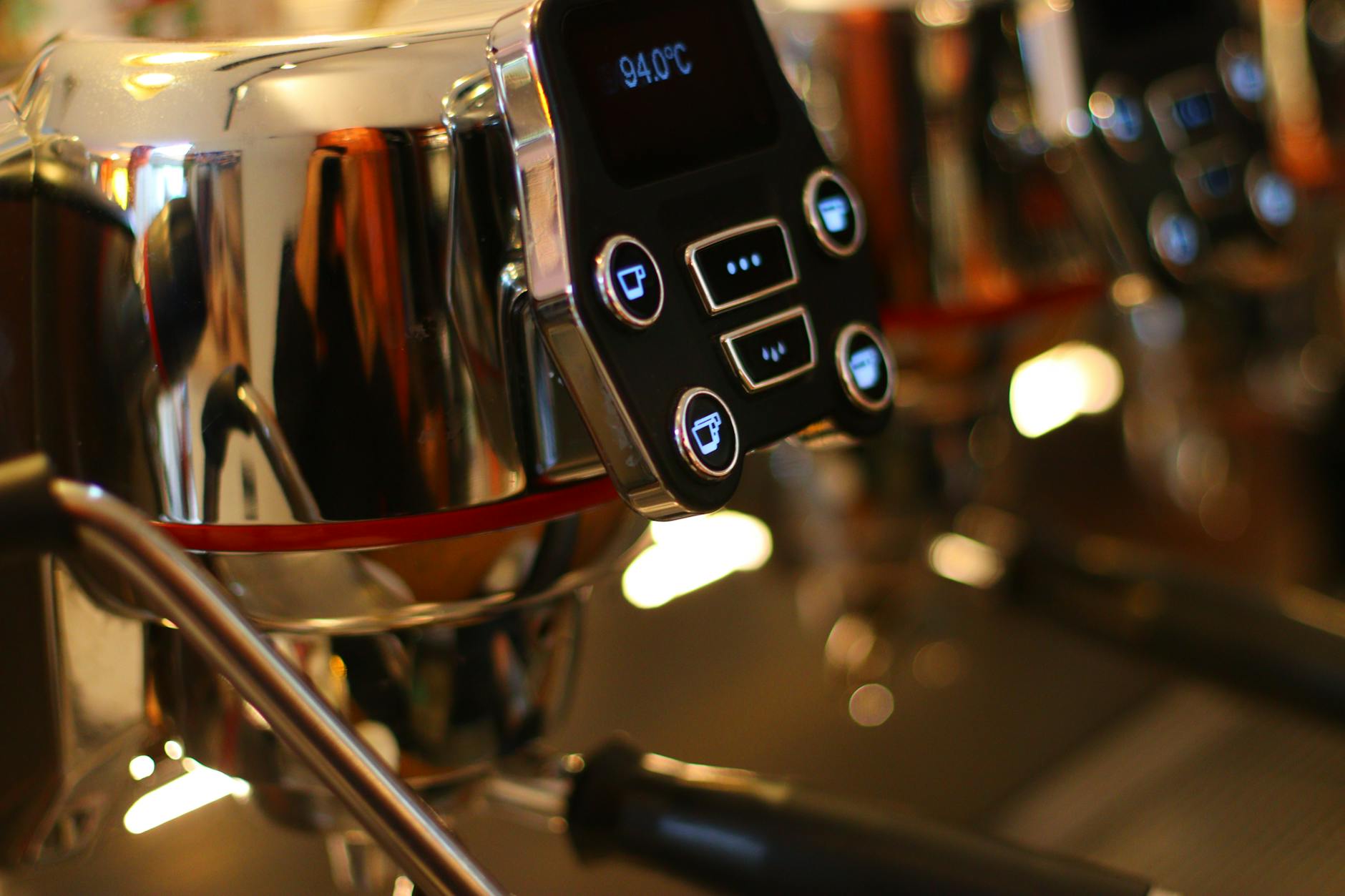
Mastering your Gaggia Classic: A deep dive into group head temperature stability
The Gaggia Classic is a legend in the world of home espresso, celebrated for its robust build and potential to produce café-quality shots. However, unlocking that potential requires understanding its biggest challenge: temperature instability. For the new owner, inconsistent shots—sometimes bitter, sometimes sour—can be a source of immense frustration. The culprit is often the machine’s thermal behavior, specifically the temperature at the group head where water meets coffee. This article will delve into the critical importance of group head temperature stability during an espresso shot on the Gaggia Classic. We will explore the machine’s inherent design limitations, discuss why stable temperature is non-negotiable for good extraction, and outline practical methods for evaluating and ultimately controlling this crucial variable.
The Gaggia Classic’s thermal design challenge
To understand the Gaggia Classic’s temperature swings, we must first look at its core design. It is a Single Boiler, Dual-Use (SBDU) machine. This means a single, small aluminum boiler is responsible for heating water for both brewing espresso (around 90-96°C) and producing steam for milk frothing (around 140°C). This boiler is bolted directly to the machine’s heavy-duty chrome-plated brass group head, which is a fantastic feature for thermal mass and retention.
The problem, however, lies in how the temperature is regulated. A stock Gaggia Classic uses a simple bimetallic thermostat. This acts like a basic on/off switch. It tells the heating element to turn on when the temperature drops below a certain point and turn off when it rises above another. This range, known as the deadband, can be quite wide, often spanning 10-15°C. This means your boiler water could be anywhere from 95°C to 110°C when the “ready” light is on, leading to massive inconsistency before you even start your shot.
Why stable temperature is critical for extraction
Espresso extraction is a delicate chemical process where hot, pressurized water dissolves solids and oils from finely-ground coffee. Temperature is one of the most powerful variables in this equation because it dictates the solubility of different flavor compounds.
- Too hot: If the water temperature is too high, especially at the start of the shot, it will over-extract the coffee. This pulls out unwanted, bitter, and astringent compounds, resulting in a harsh and unpleasant taste.
- Too cold: Conversely, water that is too cool will fail to properly dissolve the desirable sugars and organic acids. This leads to an under-extracted shot, which tastes sour, thin, and lacks sweetness and complexity.
While the starting temperature is important, the stability during the shot is arguably more so. As you pull a shot, cold water from the reservoir is introduced into the small boiler to replace the water being pushed through the coffee puck. On a machine like the Gaggia Classic, this can cause a dramatic temperature drop mid-extraction. A shot that starts hot can end cold, extracting different compounds at different rates throughout the 25-30 second pull, creating a muddled and unbalanced flavor profile.
How to measure and analyze temperature performance
Evaluating your machine’s temperature stability is the first step toward controlling it. There are several methods, ranging from basic techniques to more advanced modifications.
The most common beginner technique is temperature surfing. This involves learning the machine’s heating cycle by watching the ready light. An owner might flush a specific amount of water through the group head to trigger the heating element and then start the shot a set number of seconds after the heater turns off. This provides a degree of control over the starting temperature but does little to prevent the temperature drop during the shot. It’s a method based on feel and timing, but it lacks precision.
A more accurate method is to use an external thermocouple attached to the side of the group head. This gives you a real-time reading of the brass temperature, which is a good proxy for the water temperature. This allows you to see the heating cycle and the temperature drop much more clearly.
The gold standard for many home enthusiasts is installing a PID (Proportional-Integral-Derivative) controller. This aftermarket kit replaces the stock thermostat with a sophisticated digital controller and a precise temperature sensor. The PID not only allows you to set your target brew temperature to a fraction of a degree but, more importantly, it pulses the heating element to keep the temperature incredibly stable, minimizing both the idle swing and the drastic drop during a shot.
The shot temperature profile: Stock vs. PID
The difference a PID makes to intra-shot stability is not subtle. When you pull a shot on a stock Gaggia Classic, the influx of cold water into the small boiler quickly overwhelms the thermostat-controlled heating element. The result is a significant temperature decline from the beginning of the shot to the end.
In contrast, a PID-controlled machine anticipates this temperature drop. It can apply power to the heating element more intelligently throughout the shot, holding the temperature within a very narrow range. This ensures that the coffee is extracted evenly and consistently from start to finish.
Let’s look at some representative data of what happens to the water temperature at the group head during a 25-second shot.
| Time (seconds) | Stock Gaggia Classic (Surfed) | PID-Controlled Gaggia Classic |
|---|---|---|
| 0 (Shot Start) | 96°C | 93.0°C |
| 5 | 93°C | 92.8°C |
| 10 | 90°C | 92.5°C |
| 15 | 88°C | 92.2°C |
| 20 | 86°C | 92.0°C |
| 25 (Shot End) | 84°C | 91.9°C |
| Total Temperature Drop | ~12°C | ~1.1°C |
As the table clearly shows, the stock machine suffers from a massive temperature crash, which inevitably leads to under-extraction in the latter half of the shot. The PID-controlled machine, however, maintains remarkable stability, creating the ideal conditions for a balanced and repeatable extraction.
Conclusion
In summary, the Gaggia Classic is a capable machine hindered by its basic thermostat-controlled design, which creates significant temperature instability. This fluctuation, particularly the severe temperature drop during a shot, is a primary cause of inconsistent espresso, often leading to sour and unbalanced flavors. We’ve seen that this instability stems from its single boiler design and the large deadband of its stock thermostat. Evaluating this behavior can be done through rudimentary temperature surfing or more precisely with external thermocouples. However, for those seeking true mastery over their espresso, the data proves that installing a PID controller is the most effective solution. It transforms the machine by providing rock-solid group head temperature stability, turning a machine of potential into one of precision.


 No products in the cart.