

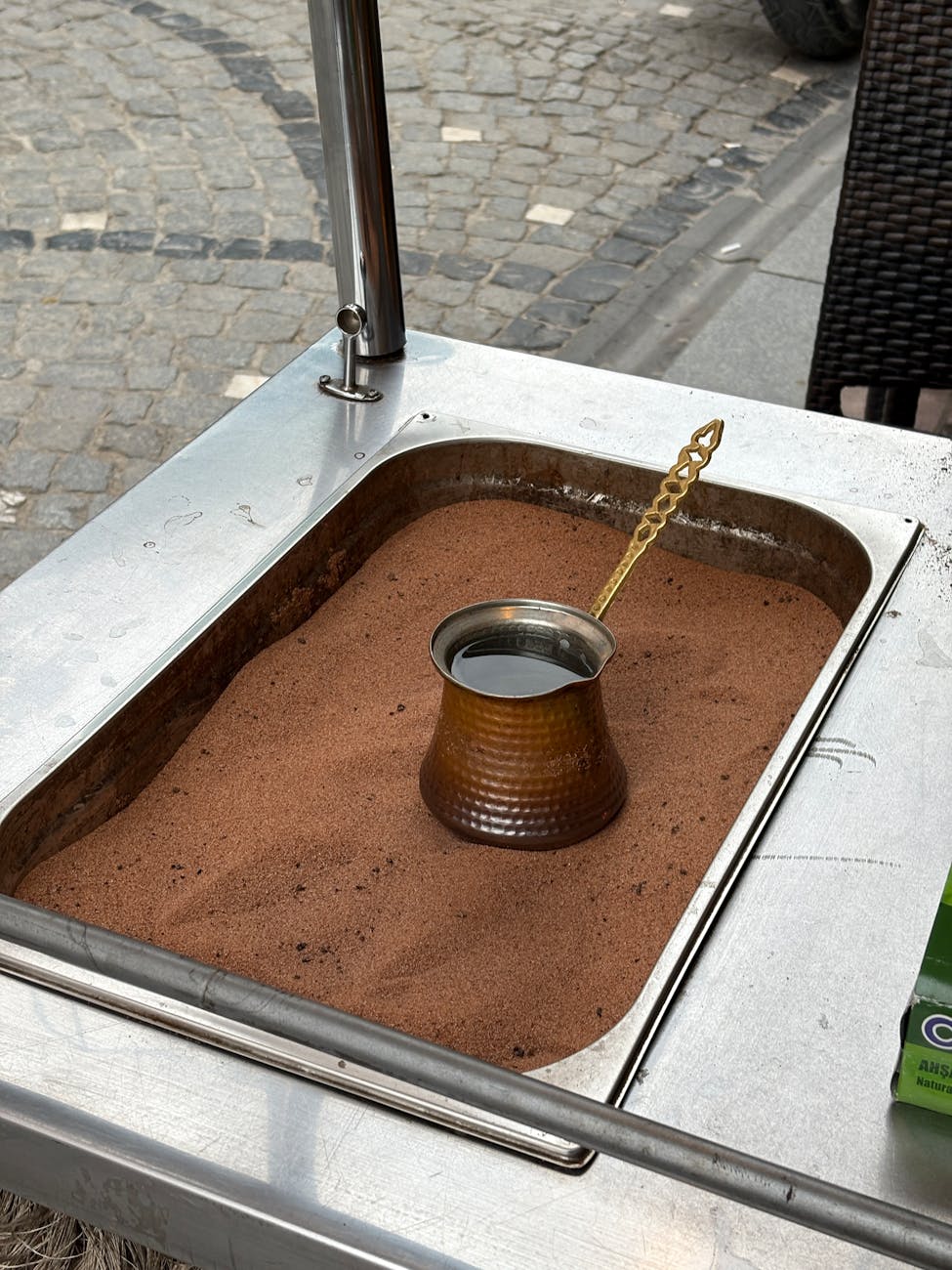
The worlds of espresso and Turkish coffee can seem miles apart. One is a product of high-pressure, modern machinery, celebrated for its speed and intense concentration. The other is an ancient, intimate ritual, brewed slowly over gentle heat in a traditional cezve. Yet, for the skilled espresso barista, the path to mastering Turkish coffee is shorter than you might think. The core principles of precision, sensory analysis, and extraction control that define a great barista are not confined to the portafilter. They are universal truths of coffee preparation. This article will explore the essential espresso skills that provide a powerful foundation for brewing an exceptional cup of Turkish coffee, bridging the gap between two beautiful, yet distinct, coffee cultures.
The foundation of flavor: Grind consistency and sourcing
Every barista knows that the grinder is arguably more important than the espresso machine itself. The pursuit of a uniform, consistent grind to prevent channeling and ensure an even extraction is a daily discipline. This very same principle is the first and most crucial step in making authentic Turkish coffee. While the target grind is different, moving from fine espresso to a superfine, powder-like consistency, the concept is identical. An inconsistent Turkish grind, with larger particles mixed in, will result in a gritty, muddy cup where some grounds over-extract into bitterness while others under-extract, leaving a hollow taste.
Furthermore, a barista’s expertise in coffee sourcing is directly transferable. Understanding how a bean’s origin, processing method, and roast profile impact flavor is vital. You know that a light-roasted Ethiopian bean will yield a bright, acidic espresso. When applied to Turkish coffee, that same bean will produce a brew with similar characteristics, though the preparation method will mute some of the acidity and highlight different notes. The ability to select a bean, perhaps a medium-roast Brazilian for chocolatey notes or a balanced Central American, is a skill that elevates your brew beyond the generic pre-ground options.
Mastering the variables: Dose, ratio, and water quality
Dialing in an espresso shot is a meticulous process of adjusting variables to hit a target. This methodical approach is a barista’s greatest asset when learning Turkish coffee. The “just a spoonful” method is fine for a casual cup, but for excellence, precision is key.
- Dose: Weighing your dose for an espresso shot to within a tenth of a gram is standard practice. Applying this same precision to Turkish coffee, typically using around 7-10 grams of coffee per cup, ensures your results are repeatable and consistently delicious.
- Ratio: The concept of a brew ratio (the weight of dry coffee to the weight of water) is central to espresso. This thinking translates perfectly. While an espresso might be a 1:2 ratio, Turkish coffee often falls closer to a 1:10 ratio. Understanding how to measure and adjust this ratio gives you direct control over the strength and body of the final cup, a level of control many traditional recipes overlook.
- Water: Baristas are obsessed with water chemistry, knowing that high mineral content or chlorine can ruin a perfect shot. This knowledge is equally important for Turkish coffee, which is over 90% water. Using filtered, quality water is a simple habit that transfers over and makes a significant difference in clarity and flavor.
The art of extraction: Temperature and time management
At its core, brewing coffee is about managing extraction. Espresso uses high pressure and a controlled temperature for a very short duration. Turkish coffee uses low heat over a longer period. While the mechanics differ, the barista’s intuitive understanding of heat’s role in extracting flavor is invaluable. You know that water that’s too hot will scorch the coffee, creating bitter, ashy flavors. This is the cardinal sin of Turkish coffee preparation: never let it come to a rolling boil.
A skilled barista’s ability to manage steam wands and monitor brew temperatures translates to managing the gentle heat source for a cezve. The goal is to create a slow, controlled temperature ramp that allows the coffee to extract evenly and, crucially, to form the thick, rich foam known as kaymak. This foam is the Turkish equivalent of crema, trapping aromatics and indicating a well-made brew. The patience and heat control required to build this foam without boiling the coffee is a skill that feels natural to a barista accustomed to managing precise variables under pressure.
| Skill / Variable | Espresso application | Turkish coffee application |
|---|---|---|
| Grind size | Fine, consistent (prevents channeling) | Powder-like, ultra-fine (for suspension) |
| Dose control | Weighed precisely (e.g., 18g) | Weighed precisely (e.g., 7g per cup) |
| Brew ratio | Controlled (e.g., 1:2) | Controlled (e.g., 1:10) |
| Water temperature | Stable, ~90-96°C (~195-205°F) | Slow ramp up, never a rolling boil |
| Extraction time | ~25-30 seconds | ~2-3 minutes |
| Key indicator | Stable, rich crema | Thick, consistent foam (kaymak) |
From palate to presentation: Honing your sensory skills
Perhaps the most profound skill that transfers is the developed palate. A barista spends their days tasting espresso, identifying notes of sourness (under-extraction), bitterness (over-extraction), and the sweetness of a perfect shot. This sensory training is a universal language. When you taste a cup of Turkish coffee, your palate can immediately diagnose it. You can discern if the brew was rushed, if the grind was off, or if the balance of sweetness and body is just right. This ability to taste, diagnose, and adjust is what separates a technician from a true coffee professional.
This sensory analysis extends to visuals and aroma. Just as you evaluate the color and persistence of an espresso’s crema, you will learn to evaluate the quality of the kaymak. Finally, the barista’s inherent focus on customer experience and presentation translates to the serving ritual of Turkish coffee. The practice of serving the small cup, or fincan, often with a glass of water and a piece of Turkish delight, is an act of hospitality that a service-oriented barista will naturally appreciate and excel at.
In conclusion, the journey from espresso machine to cezve is less a leap into a foreign discipline and more an extension of an existing craft. The foundational skills of a barista, from the technical to the sensory, are not just relevant; they are a significant advantage. The obsession with grind quality, the precision of weighing and measuring, the intuitive management of heat and extraction, and the highly developed palate are all universal principles of excellent coffee. While the equipment and ritual may change, the heart of the craft remains the same. For any espresso barista looking to broaden their horizons, mastering Turkish coffee is a rewarding way to deepen your understanding of coffee extraction and connect with one of its most ancient traditions.



 No products in the cart.