

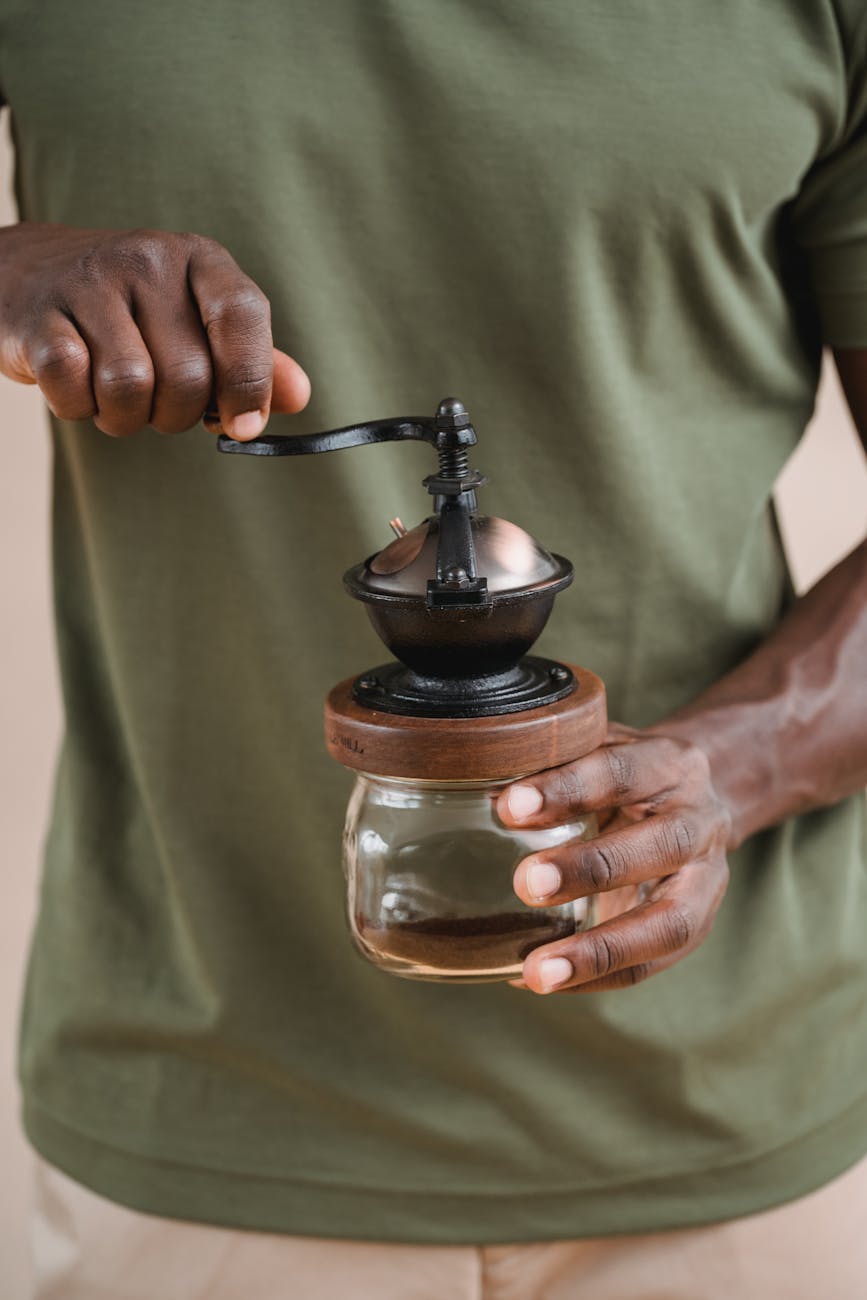
Mastering the art of Turkish coffee at home is a rewarding journey, but it hinges on one critical, often overlooked, element: the grind. Unlike any other brewing method, Turkish coffee requires a grind so fine it resembles flour or powdered sugar. Achieving this ethereal consistency is nearly impossible with a standard blade or stepped grinder. This is where the stepless espresso grinder, a tool prized for its micro-adjustment capabilities, becomes an unlikely hero. While designed for pulling the perfect espresso shot, its precision is exactly what’s needed for the demanding nature of Turkish coffee. This guide will walk you through the detailed process of dialing in your stepless grinder to produce that perfect, powdery grind for a truly authentic and delicious cup.
Why the grind is everything for Turkish coffee
To understand why the grind is so crucial, we must first appreciate the unique nature of Turkish coffee brewing. It’s not a percolation or drip method; it’s a form of immersion brewing where the coffee grounds remain in the water from start to finish and are even consumed in the final sips. The goal is to create a rich, syrupy body and a thick, stable foam on top, known as kaymak. This is only possible with an incredibly fine and uniform grind.
- Texture: If the grind is too coarse, even slightly, the result will be a gritty, unpleasant texture in your mouth. The grounds won’t dissolve properly into the brew, settling like sand at the bottom of the cup instead of creating a smooth, velvety body.
- Extraction: The brewing process is very short, typically just a few minutes. A super-fine grind dramatically increases the surface area of the coffee, allowing for a rapid and full extraction of flavors. A coarse grind leads to a weak, under-extracted, and sour-tasting coffee.
- The Kaymak (Foam): The prized foam is a direct result of gasses being released from finely ground, fresh coffee during the slow heating process. A grind that is too coarse will not produce this signature creamy layer.
In short, the grind isn’t just a preparatory step; it’s the very foundation of the entire Turkish coffee experience.
Understanding your stepless espresso grinder
Not all grinders are created equal, and for this specific task, a stepless grinder is your best ally. Unlike a stepped grinder, which has a set number of predefined grind settings you click between, a stepless grinder allows for infinite adjustments. Think of it as a smooth dial versus a notched wheel. You can make minuscule changes to the distance between the grinding burrs, which is essential when the difference between “almost right” and “perfect” for Turkish coffee is measured in microns.
The key to using your stepless grinder for this purpose is understanding its zero point. This is the setting where the two burrs physically touch, preventing any further tightening. You should never operate your grinder at its zero point, as this can damage the burrs. However, finding this point gives you a crucial reference. Every adjustment you make for your Turkish grind will be a tiny turn away from this zero point. The quality of your grinder’s burrs—whether they are flat or conical, their size, and their alignment—will also play a significant role in producing a consistent, powder-like grind without too many larger particles, or “boulders.”
The step-by-step dialing-in process
Dialing in for Turkish coffee is a process of precision and patience. It requires you to use your senses—touch, sight, and taste—to find the perfect setting. Grab a small bag of inexpensive beans for this process, as you’ll be making several test grinds.
1. Find your zero point: First, make sure the grinder is empty and turned off. Slowly and gently turn the adjustment collar or knob towards the finer setting until you feel resistance or hear the faintest “chirp” of the burrs touching. Stop immediately. This is your zero point. Mark it or remember its position.
2. Back off slightly: From the zero point, turn the adjustment collar back towards a coarser setting just a tiny bit. This is your starting point. It should be the finest possible setting where the burrs are not touching.
3. The feel test: Put a few beans in the hopper and grind them. Take a pinch of the grounds and rub them between your thumb and forefinger. It should feel completely smooth, like flour or cornstarch. You should not be able to feel any distinct, individual particles. If you can, you need to adjust slightly finer, moving closer to your zero point.
4. The brew and visual test: Once the grind feels right, brew a small amount in your cezve or ibrik. Watch the surface as it heats. A good grind from fresh beans will produce a thick, uniform layer of foam (kaymak) that rises to the top. If the foam is thin or dissipates quickly, your grind is likely still too coarse.
5. Taste and refine: Finally, taste the coffee. Let the grounds settle, then take a small sip. Is it rich and full-bodied, or does it taste weak? Is the texture smooth, or do you detect grit? If it’s gritty or weak, you need to go finer. Make one tiny adjustment at a time, repeat the process, and take notes until you achieve that perfect balance of flavor and texture.
Common problems and troubleshooting
Even with a great grinder, you might encounter a few issues along the way. Navigating these challenges is part of mastering the craft. The key is to change only one variable at a time so you can accurately identify the problem. If you adjust the grind, keep your coffee dose, water volume, and heating method consistent.
Here’s a quick guide to troubleshooting common problems:
| Problem | Probable Cause | Solution |
|---|---|---|
| Gritty and sandy texture | The grind is not fine enough. | Make a small adjustment to a finer setting and try again. Rub the grounds between your fingers to check for particles. |
| Weak, watery, or sour coffee | Under-extraction, most likely from a coarse grind. | Adjust the grinder finer to increase surface area and allow for better extraction during the short brew time. |
| No kaymak (foam) forms | Grind is too coarse, or the coffee beans are old and have degassed. | First, try a finer grind setting. If that doesn’t work, ensure you are using beans roasted within the last few weeks. |
| Grinder motor stalls or chokes | The setting is too fine and the burrs are too close, or you are trying to grind too much at once. | Immediately turn off the grinder. Back the adjustment off to a much coarser setting to clear the jam. Clean the burrs and start the dialing-in process again from a slightly coarser position. |
Mastering the Turkish grind is a journey of precision, but it’s far from impossible. By understanding the unique demands of this ancient brewing method and leveraging the micro-adjustment capability of a stepless espresso grinder, you can unlock a new level of quality in your home coffee experience. The process requires patience: finding your grinder’s zero point, making tiny adjustments, and using sensory feedback from touch and taste are all part of the craft. While it may take a few tries to find that perfect, flour-like consistency, the reward is immense. A truly authentic cup of Turkish coffee—velvety, rich, and topped with a perfect layer of kaymak—is a delightful experience that is well worth the effort.


 No products in the cart.