

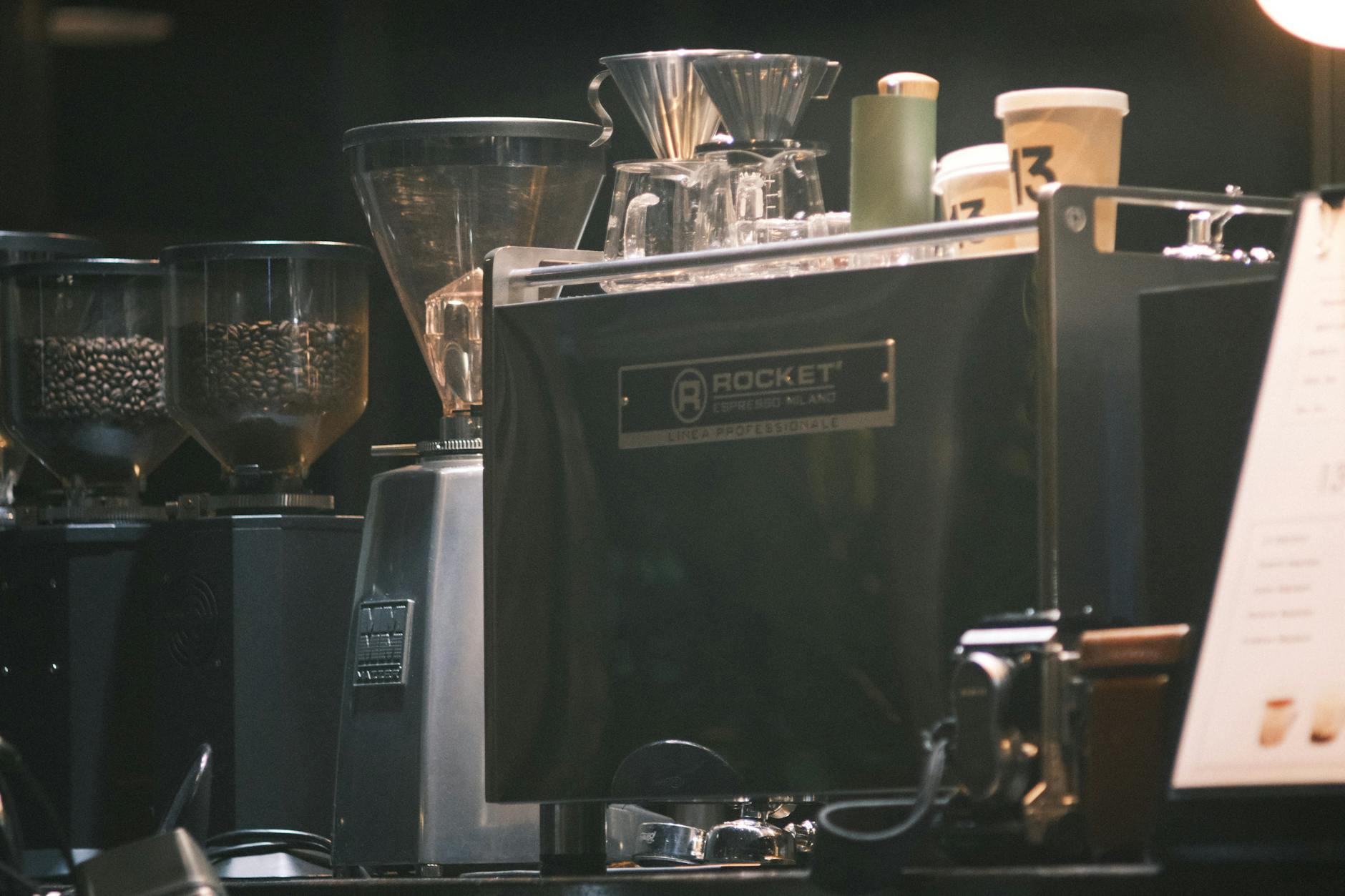
Dialing in The Coffee Bean & Tea Leaf espresso roast for home machines
Bringing the iconic taste of a coffee shop into your kitchen is a rewarding pursuit for any home barista. The Coffee Bean & Tea Leaf’s Espresso Roast is a popular choice, known for its rich, classic flavor profile. However, simply owning the beans isn’t enough; unlocking their full potential requires a process known as “dialing in.” This involves carefully adjusting your grinder and espresso machine to extract the perfect balance of sweetness, body, and aroma. This guide will walk you through a step-by-step method for taming this classic dark roast on your home setup. We will explore the bean’s characteristics, establish a starting recipe, and learn how to troubleshoot your shots until you are pulling delicious, cafe-quality espresso every time.
Understanding the bean’s character
Before you grind a single bean, it’s crucial to understand the material you’re working with. The Coffee Bean & Tea Leaf’s Espresso Roast is a traditional, darker roast. This style profoundly influences how it behaves during extraction. Darker roasts are more brittle and porous than their lighter counterparts, making them more soluble in water. This means they extract their flavors more quickly.
The flavor profile you’re aiming for is one of caramelized sugar, dark chocolate, and a smooth, velvety body with minimal acidity. Because of its high solubility, this roast can easily become bitter and ashy if over-extracted. Conversely, if you under-extract it, the shot will taste disappointingly thin and sour, lacking its signature richness. The goal is to find that perfect sweet spot where the deep, sweet flavors are prominent without any harsh, burnt notes. This understanding is key as you begin to adjust your variables.
Your starting point: A baseline recipe
Every successful dialing-in process starts with a baseline recipe. This gives you a consistent foundation from which you can make small, controlled adjustments. For this specific dark roast, a traditional brew ratio is an excellent place to start. The three core variables of your recipe are Dose (the weight of dry coffee grounds), Yield (the weight of the liquid espresso), and Time (the duration of the extraction).
You will need a few essential tools: a quality burr grinder, an espresso scale with 0.1g precision, and the timer on your machine or phone. Here is a reliable starting point for The Coffee Bean & Tea Leaf Espresso Roast:
| Parameter | Starting Recommendation |
|---|---|
| Dose | 18 grams in a standard double basket |
| Yield | 36 grams of liquid espresso |
| Brew Ratio | 1:2 (one part coffee to two parts water) |
| Time | Aim for 25-30 seconds |
Set your grinder to a setting you believe is in the espresso range. Prepare your portafilter with an 18-gram dose, pull a shot aiming for a 36-gram yield, and note the time. The result of this first shot is just data. Don’t worry if it’s not perfect; it’s the information you’ll use to make your first adjustment.
The adjustment process: Changing one variable at a time
Now that you have your first shot’s data (dose, yield, and time), you can begin the fine-tuning process. The golden rule is to only adjust one variable at a time. This isolates the effect of your change and prevents you from getting lost. For 90% of the dialing-in process, that one variable will be your grind size.
Let’s use your baseline shot as an example:
- If your shot ran too fast (e.g., 36g out in 18 seconds): The coffee grounds are too coarse. Water is passing through the coffee puck too easily, resulting in a weak, sour, and under-extracted shot. Your adjustment should be to make your grind size finer. This will increase resistance, slow down the flow of water, and allow for a more complete extraction.
- If your shot ran too slow (e.g., 36g out in 40 seconds): The coffee grounds are too fine. The water is struggling to get through the puck, leading to an over-extracted shot that will taste bitter, burnt, and harsh. Your adjustment is to make your grind size coarser. This will reduce resistance and allow the water to flow more freely.
Keep your dose (18g) and yield (36g) consistent. Pull another shot after making a small grind adjustment. Repeat this process, making tiny changes to the grind size, until your shot time falls within the 25-30 second window. Once you are in that range, you can move on to the most important step: tasting.
Tasting and troubleshooting your espresso
Time is a great guideline, but your palate is the ultimate judge. Now that your shots are technically correct according to the recipe, it’s time to taste and make final adjustments based on flavor. This is where you truly perfect the espresso for your personal preference.
Here’s how to interpret the taste of your shot and what to do about it:
- If it tastes sour or acidic: This is a classic sign of under-extraction, even if the time is “correct.” The water hasn’t had enough contact time or power to pull out the deeper, sweeter compounds. The solution is to increase extraction. You can do this by grinding slightly finer to slow the shot and extend the time to 30-32 seconds.
- If it tastes bitter or ashy: This means you’ve over-extracted the coffee, pulling out harsh compounds. This is a common issue with darker roasts. The solution is to reduce extraction. Try grinding slightly coarser to speed the shot up, perhaps aiming for the 25-27 second range.
- If it tastes great but is a bit weak: You can slightly decrease the yield. Instead of 36g, try stopping the shot at 32-34g. This will create a more concentrated, syrupy shot, often called a ristretto.
Don’t forget puck preparation. If your shots are inconsistent despite a consistent grind, you may have channeling. Ensure you are distributing the grounds evenly and tamping level to promote a smooth, uniform extraction.
Conclusion: The rewarding journey to the perfect cup
Dialing in The Coffee Bean & Tea Leaf’s Espresso Roast is a process of patience and precision. By understanding its dark roast character, you can anticipate its quick extraction and potential for bitterness. Starting with a solid baseline recipe—like an 18g dose to a 36g yield in 25-30 seconds—provides a structured framework for your adjustments. Remember to change only one variable at a time, with grind size being your primary tool for controlling the extraction speed. Ultimately, your taste buds are the final arbiter. Use them to diagnose sour or bitter flavors and make those final, subtle tweaks to the recipe. This methodical approach transforms a potentially frustrating task into a rewarding ritual, culminating in a consistently delicious cup of espresso that captures the rich, chocolaty essence of the beans.

 No products in the cart.