

Diagnosing and fixing low flow rates from an E61 group head
The E61 group head is an iconic piece of espresso engineering, beloved for its thermal stability and role in creating beautiful, complex shots. However, when the steady, nine-bar flow of water you expect turns into a disappointing trickle, it can ruin your morning routine. A low flow rate is one of the most common issues E61 owners face, but it’s often a symptom with multiple potential causes. This guide will serve as your roadmap to diagnosing the problem, moving systematically from the simplest user-level checks to more involved component inspections. By understanding the path water takes through your machine, you can methodically identify the bottleneck and restore your espresso machine to its full glory, ensuring perfect extractions every time.
First steps: Ruling out simple issues
Before you grab your toolbox, it’s crucial to eliminate the most common and easily fixed culprits. Often, a low flow rate isn’t a sign of a major mechanical failure but rather a simple maintenance oversight or a user-error issue. The first thing to check is your coffee preparation itself. Are you grinding too fine or using too much coffee in your portafilter? This can create a coffee puck so dense that the pump struggles to push water through it, a phenomenon known as choking the machine. To test this, run the group head without the portafilter in place. If you get a strong, steady flow, your problem likely lies with your dose or grind setting, not the machine itself.
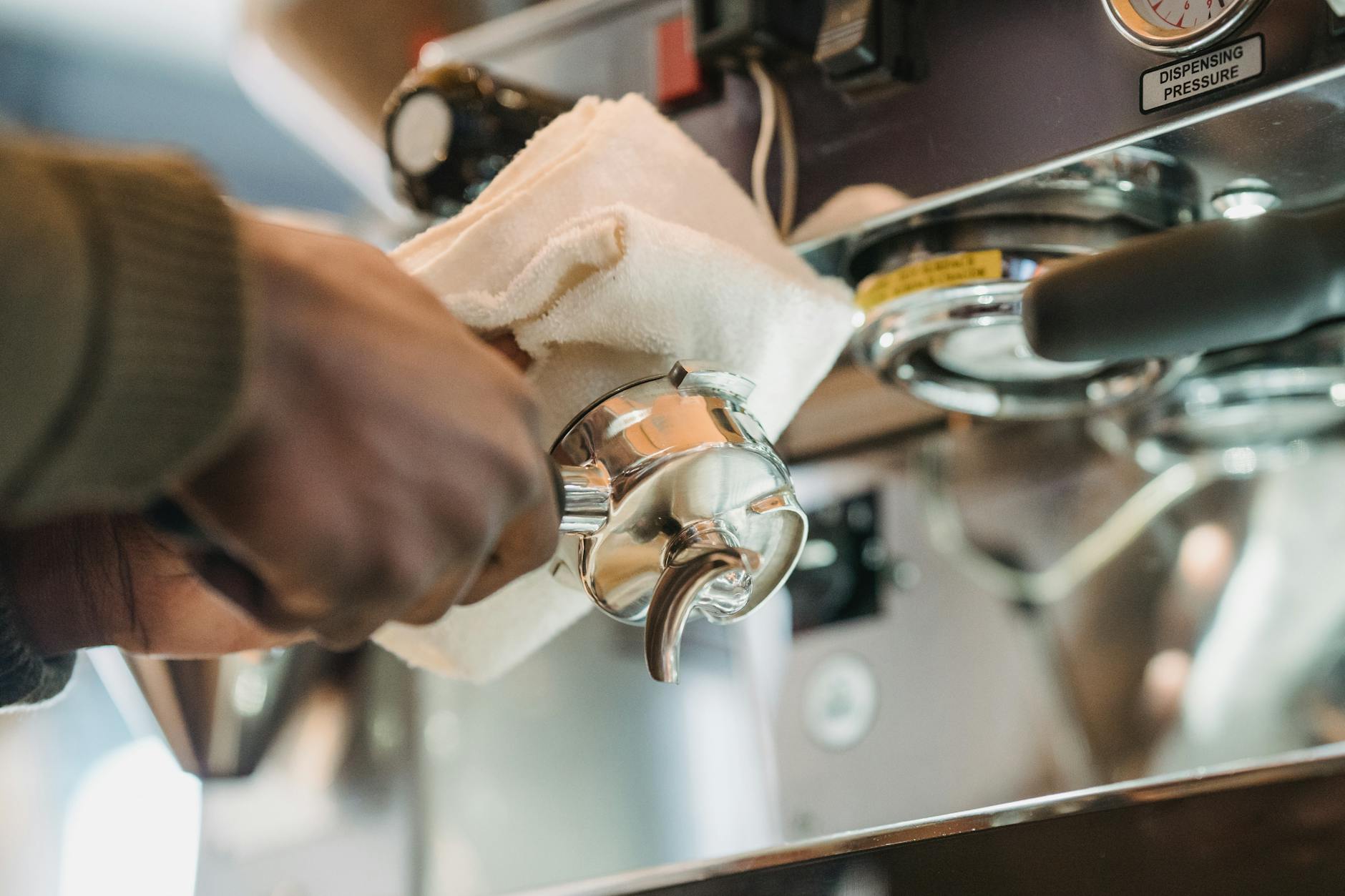
If the flow is still weak without the portafilter, the next step is basic cleaning. A dirty dispersion screen or a group head clogged with old coffee oils can severely restrict water flow. When was the last time you performed a chemical backflush? Regular backflushing with an espresso machine detergent is essential for keeping the internal water pathways clear. If it has been a while, this should be your immediate next step. This simple maintenance routine dissolves built-up coffee residue and can often restore flow instantly.
The usual suspects: Scale in the water path
If basic cleaning and puck preparation aren’t the issue, the most probable cause is scale buildup, especially if you live in a hard water area. Limescale acts like cholesterol for your espresso machine, slowly clogging its delicate internal arteries. The two most common blockage points within the E61 group are the gicleur and the mushroom valve.
The gicleur, also known as a jet breaker, is a tiny nozzle with a very narrow opening (often less than a millimeter) that controls the flow rate of water into the group head chamber. Because of its small size, it’s extremely susceptible to being clogged by even a single flake of scale. To inspect it, you’ll need to remove the top nut or screw on the group head. The gicleur is located just underneath. You can typically clean it by soaking it in a descaling solution and carefully clearing the opening with a needle or a single bristle from a wire brush.
Deeper inside the group is the mushroom valve, which directs water flow when you lift the brew lever. Scale can build up on its surfaces and in the small passages of the valve chamber, impeding water movement. Accessing the mushroom valve requires unscrewing the entire front section of the group head. Once removed, you can inspect it for a coating of scale. If it’s chalky and white, a good soak in descaler and a scrub with a non-abrasive brush will be necessary to restore its function.
Checking pump pressure and performance
What if you’ve cleaned the group head components and the flow is still low? The problem may lie further back in the system, with the pump. It’s important to distinguish between low flow and low pressure. You can have adequate pressure but a low flow rate if there’s a blockage. Conversely, a failing pump will produce a low flow rate because it can’t generate enough pressure. To check this, use a backflush blind basket in your portafilter and engage the pump. Watch the machine’s pressure gauge. It should ramp up to its target pressure (typically 9-10 bar) and hold steady.
If the pressure struggles to build or is erratic, your pump might be failing. Vibratory pumps, common in many home E61 machines, are wear items and can lose their effectiveness over time. If the pump sounds weak, excessively loud, or different than usual, it’s a strong indicator that it may need replacement. A failing rotary pump is less common but can also be a cause. At this stage, you’re moving from a cleaning issue to a potential component replacement.
A systematic troubleshooting guide
To avoid guesswork, it’s best to follow a logical diagnostic process. Start with the easiest and least invasive checks before moving on to disassembling parts of your machine. The table below provides a clear, step-by-step approach to identifying and solving the root cause of your E61’s low flow rate.
| Symptom | Possible Cause | Diagnostic Step | Solution |
|---|---|---|---|
| Low flow with portafilter, normal flow without. | User error: Choking the machine. | Coarsen your coffee grind or reduce the dose in the basket. | Adjust grind/dose until you achieve a proper extraction time (e.g., 25-30 seconds). |
| Low flow with and without portafilter; water is dirty. | Maintenance issue: Clogged dispersion screen or dirty group. | Run a chemical backflush cycle. | Perform regular backflushing (daily with water, weekly with detergent). |
| Low flow, especially during pre-infusion; machine is slow to pressurize. | Scale buildup: Blocked gicleur (jet). | Remove and inspect the gicleur at the top of the group head. | Soak the gicleur in descaler and clear the opening with a fine pin. |
| Low and inconsistent flow; lever action feels stiff. | Scale buildup: Clogged mushroom valve. | Disassemble the group head to inspect the mushroom valve. | Descale and clean the mushroom valve and its chamber. Lubricate cam with food-safe grease. |
| Very low flow; pressure gauge reads below 8-9 bar with a blind basket. | Component failure: Weak or failing pump. | Test brew pressure with a blind filter. Listen for unusual pump noises. | Replace the vibratory or rotary pump. |
Conclusion
A low flow rate from your E61 group head can be frustrating, but it is almost always a solvable problem. By approaching the issue systematically, you can effectively diagnose the cause without unnecessary frustration. Begin with the simplest explanations: your coffee grind and basic machine cleanliness. These often resolve the issue with no tools required. If the problem persists, move on to the most common culprits of internal blockage—the gicleur and the mushroom valve—which are frequent victims of scale buildup. Finally, if all water pathways are clear, assess the heart of the machine: the pump. Using this step-by-step method not only helps you fix the immediate problem but also deepens your understanding of how your machine works. Remember, preventative maintenance, especially regular cleaning and using softened water, is the best strategy to ensure consistent, delicious espresso for years to come.

 No products in the cart.