

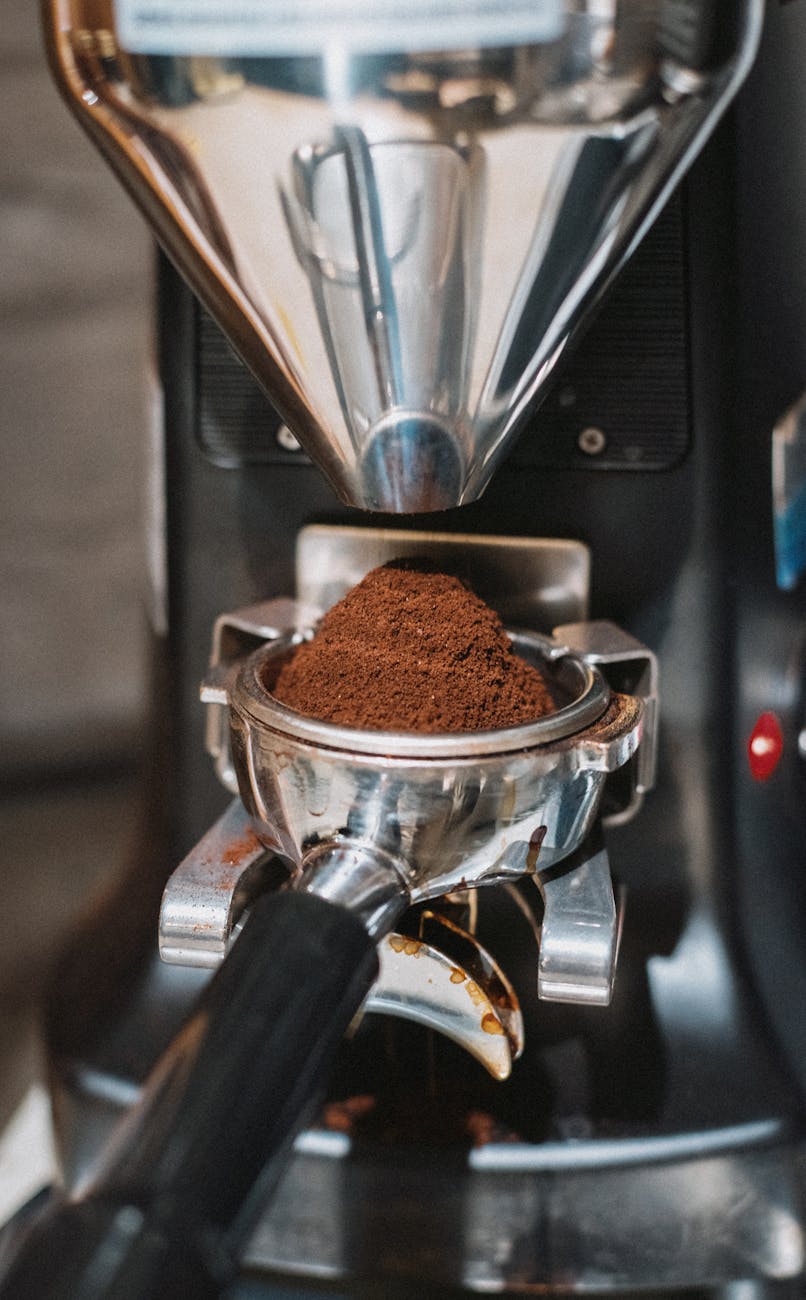
The journey into the world of home espresso can be exhilarating, but it’s often paved with confusing choices. You’ve selected the perfect beans and a gleaming espresso machine, yet the most critical component is often an afterthought: the grinder. A great grinder is not just an accessory; it’s the foundation of every delicious shot. But with a market flooded with features like conical burrs, stepless adjustments, and zero-retention designs, it’s difficult to discern which specifications are essential and which are just marketing noise. This article will cut through the jargon. We will explore the core features of espresso grinders, explaining precisely how they impact the grinds in your portafilter and, ultimately, the taste and quality of the coffee in your cup.
The heart of the matter: Burrs
Everything starts and ends with the burrs. They are the components that do the actual work of crushing your coffee beans into the fine, consistent particles required for espresso. Understanding the differences in burr design is the first step to choosing the right grinder.
The most fundamental choice is between conical and flat burrs. Each produces a different grind profile, which directly influences the flavor of your shot.
- Conical burrs: These feature a cone-shaped inner burr that sits inside a ring-shaped outer burr. They tend to produce a bimodal grind distribution, meaning a mix of both very fine and slightly larger particles. This often results in a shot with more body, a richer texture, and a more blended, forgiving flavor profile. They also typically run at lower RPMs, generate less heat, and retain fewer grounds.
- Flat burrs: This design uses two parallel, horizontal burr rings that face each other. They produce a more unimodal distribution, meaning the coffee particles are more uniform in size. This consistency tends to highlight clarity, sweetness, and complex acidity in the coffee. If you enjoy chasing the nuanced flavor notes of single-origin beans, a flat burr grinder might be for you.
Beyond the shape, burr size is a critical factor. You’ll see grinders advertised with burrs ranging from 40mm to 83mm and beyond. In general, bigger is better. Larger burrs have more cutting surface, allowing them to grind the same amount of coffee at a lower speed (RPM). This generates less heat, which is crucial for preserving the delicate aromatic oils in the coffee beans. Less heat means more flavor. Larger burrs also tend to produce a more consistent grind with fewer fines, leading to a cleaner-tasting and more balanced extraction.
Dialing it in: Adjustment mechanisms
Once you understand the burrs, the next question is how you control them. The ability to make tiny, precise changes to your grind size is non-negotiable for espresso. This is where the adjustment mechanism comes into play, and the primary distinction is between stepped and stepless grinders.
A stepped grinder has a predetermined number of settings or “clicks.” While this can be convenient for other brew methods, it’s a significant limitation for espresso. The perfect grind setting for a particular coffee bean might lie somewhere between two clicks, leaving you unable to dial in your shot perfectly. You’ll be forced to choose between a shot that runs a little too fast (under-extracted) or a little too slow (over-extracted).
This is why a stepless grinder is considered essential for serious espresso. Instead of fixed clicks, a stepless mechanism allows for infinite, minute adjustments along a continuum. This gives you the precision needed to make tiny changes to your grind size, enabling you to control the flow rate of your shot with pinpoint accuracy. This level of control is what allows you to unlock a coffee’s full potential, adapting perfectly to different beans, age, and even changes in humidity.
Workflow and consistency features
How you get the coffee from the burrs into your portafilter is just as important as the grind itself. Features related to dosing and retention have a massive impact on your day-to-day workflow and the consistency of your shots.
One of the biggest enemies of good coffee is retention. This refers to the amount of old, stale grounds left inside the grinder’s chute and burr chamber after grinding. A high-retention grinder means that your first dose of the day contains a significant amount of coffee from yesterday. This stale coffee will negatively affect the flavor of your shot. To combat this, you have to “purge” a few grams of beans before your first real dose, which is wasteful.
Modern grinders increasingly focus on low-retention or zero-retention designs, especially those built for single dosing. A single-dosing workflow involves weighing your beans for each individual shot and grinding only that amount. This ensures maximum freshness and minimizes waste, but it requires a grinder designed to expel virtually all the grounds it takes in.
The dosing method also affects consistency. Most home grinders are on-demand, meaning they grind directly into your portafilter. This can be controlled by time or by weight.
- Timed dosing: You set a timer for how long the grinder should run. While convenient, the actual weight of the coffee can fluctuate based on the bean type, roast level, and how full the hopper is.
- Weight-based dosing: This is the gold standard for consistency. These grinders have a built-in scale and will grind until your exact target weight (e.g., 18.0 grams) is reached. This removes all guesswork and ensures every single shot is based on a perfectly consistent dose.
Putting it all together: A feature comparison
Choosing a grinder involves balancing these features against your budget and goals. An entry-level machine will have the basics, while a high-end model will provide ultimate precision and convenience. Prioritizing features is key. For espresso, a stepless adjustment is more important than massive burrs. For consistency, low retention is more critical than a fancy digital display.
This table provides a general overview of what to expect at different levels:
| Feature | Entry-Level Espresso Grinder | Prosumer Grinder | High-End / Specialty Grinder |
|---|---|---|---|
| Burr Type & Size | Often smaller conical burrs (40-50mm) | Medium-to-large flat or conical burrs (55-64mm) | Large flat burrs (64mm+) for clarity or large conical (68mm+) for texture |
| Adjustment | May be stepped, or basic stepless | Stepless with clear markings, often with micro-adjustment | Precise stepless worm-gear or digital adjustment |
| Dosing | Manual on/off button or simple timer | Programmable timed dosing | Grind-by-weight or optimized for zero-retention single dosing |
| Retention | Moderate to high; may require purging | Moderate to low; designed to minimize trapped grounds | Very low to near-zero retention is a primary design goal |
Ultimately, your choice depends on what you value. If you want rich, traditional espresso, a grinder with conical burrs is a fantastic choice. If you are chasing the delicate, bright flavors of a light roast, large flat burrs will serve you better. But for anyone serious about espresso, the non-negotiables are a stepless adjustment mechanism and a build quality that ensures consistency.
In conclusion, the path to better espresso is paved with fine, consistent coffee grounds. While many features can enhance the user experience, only a few are truly fundamental to quality. The most crucial of these is a stepless adjustment mechanism, which gives you the absolute control needed to dial in a perfect shot. Following closely behind are the burrs themselves—their type (conical or flat) will shape the flavor profile, while their size contributes to grind consistency and flavor preservation by reducing heat. Finally, features like low retention and weight-based dosing elevate your coffee by guaranteeing freshness and repeatability. Don’t be swayed by aesthetics alone. Instead, invest in the core mechanics that deliver a uniform grind, and you’ll unlock a new level of depth and deliciousness from your coffee beans.

 No products in the cart.