

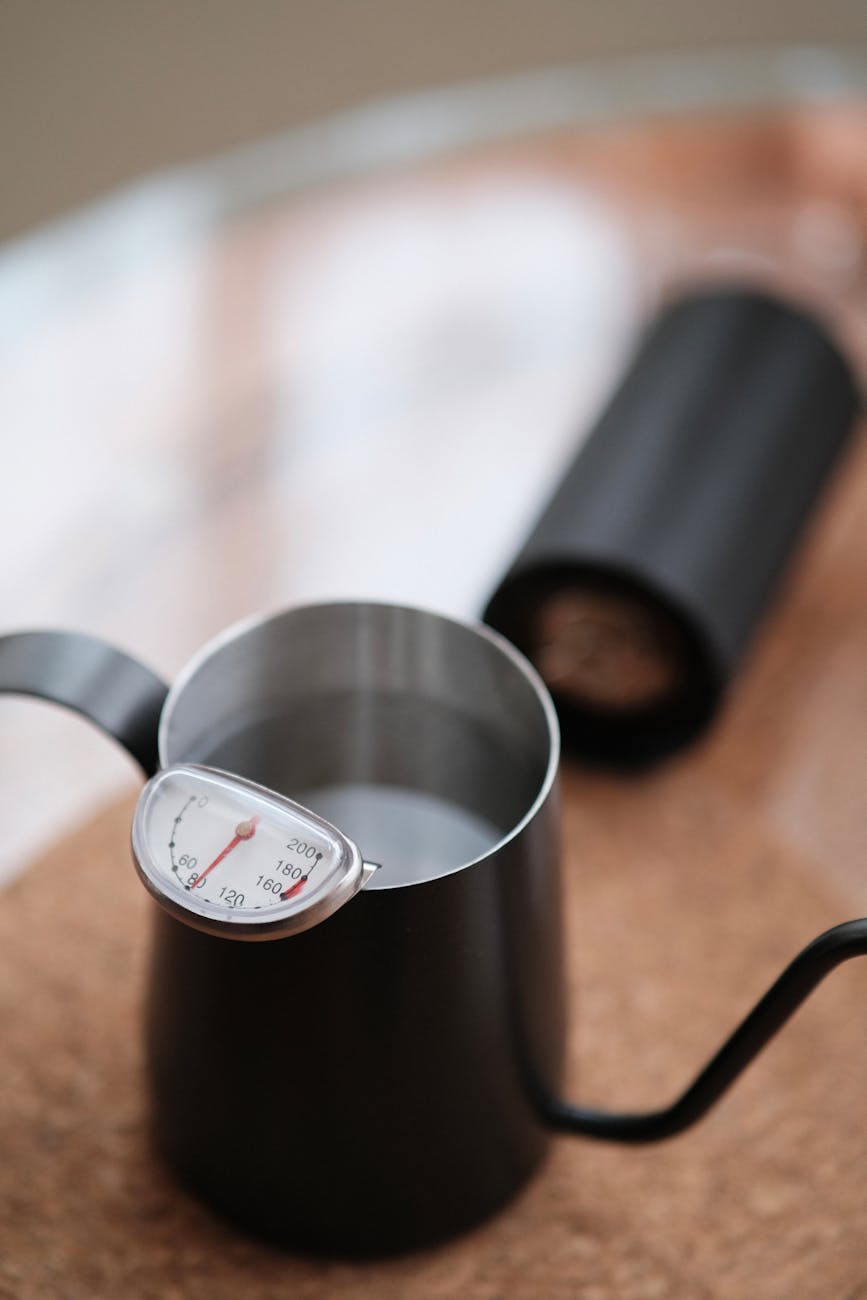
Unlock the flavor: The best water temperature for The Coffee Bean & Tea Leaf dark roasts
There’s nothing quite like the rich, bold, and comforting flavor of a dark roast from The Coffee Bean & Tea Leaf. Whether you prefer the smoky notes of their French Roast or the deep, caramelized sweetness of the Italian Roast, you’ve chosen a coffee known for its intensity. However, many coffee lovers find their home-brewed cup tastes bitter or harsh, a far cry from the smooth experience at their favorite café. The culprit is often a single, overlooked variable: water temperature. Using water that is too hot can scorch these delicate beans, resulting in a bitter brew. This guide will delve into the science of extraction and provide the precise temperature range you need to unlock the perfect balance of flavor in your CB&TL dark roast.
Why water temperature matters for dark roasts
To understand why temperature is so critical, we first need to look at the coffee bean itself. The roasting process fundamentally changes a bean’s structure. Dark roasts, by definition, have been roasted for a longer period at higher temperatures. This process breaks down the bean’s cellular structure, making it more porous and brittle than its light or medium roast counterparts. Consequently, the flavor compounds in a dark roast are much easier to extract.
This is where water temperature comes in. Hotter water acts as a more aggressive solvent, extracting flavors more quickly. When you pour boiling water (212°F or 100°C) directly onto a highly soluble dark roast, you get a phenomenon called over-extraction. The water rapidly pulls out all the desirable compounds—like those responsible for chocolate and nutty notes—and then continues to extract the bitter, ashy, and astringent compounds that should have been left behind. This results in a cup that tastes hollow and unpleasantly sharp. By lowering the temperature slightly, you slow down the extraction process, giving you more control to pull out only the sweet, rich flavors you desire.
The ideal temperature sweet spot
While the Specialty Coffee Association (SCA) recommends a broad brewing range of 195°F to 205°F (90°C to 96°C), dark roasts thrive at the lower end of this spectrum. For The Coffee Bean & Tea Leaf’s dark roasts, the ideal sweet spot is between 195°F and 202°F (90°C to 94°C).
Think of this range as a dial for flavor:
- Starting Point (195°F – 198°F / 90°C – 92°C): This is the safest and often the best place to begin. This gentler temperature minimizes the risk of bitterness and highlights the smoother, sweeter side of the roast. You’ll notice more notes of dark chocolate, molasses, and toasted nuts, with a rounder body and less harshness.
- Bolder Flavors (199°F – 202°F / 93°C – 94°C): Pushing the temperature up slightly can introduce more of the classic “roasty” and smoky characteristics. This range can work well for shorter brew methods where you need a bit more energy to extract flavor quickly. However, it requires more precision, as it’s easier to stray into bitter territory.
Starting at 195°F allows you to taste the coffee’s inherent sweetness. If it tastes weak or sour (a sign of under-extraction), you can gradually increase the temperature in your next brew until you find the perfect balance for your palate.
Adjusting for your brew method
The perfect temperature is not a one-size-fits-all number; it interacts directly with your brewing method. The amount of time the water is in contact with the coffee grounds (contact time) is the key factor. Longer contact times require lower temperatures to prevent over-extraction.
Here’s a simple guide to help you dial in the temperature for your favorite brewer:
| Brew Method | Recommended Starting Temperature | Reasoning |
|---|---|---|
| French Press | 195°F (90°C) | Full immersion with a long contact time (around 4 minutes). A lower temperature is crucial to prevent a muddy and overly bitter cup. |
| Drip Coffee Maker | 200°F (93°C) | Most automatic machines brew too hot. If yours is adjustable, set it here. Otherwise, let boiled water sit for 45-60 seconds before pouring it into a manual dripper. |
| Pour-Over (V60, Kalita) | 198°F (92°C) | You have full control. This temperature provides efficient extraction for a 2-3 minute brew time without scorching the grounds. |
| AeroPress | 195°F (90°C) | The AeroPress is very versatile. A lower temperature combined with a 90-second steep time creates a remarkably smooth, concentrated brew. |
How to control water temperature at home
Achieving a specific water temperature is easier than you might think. You don’t need a full laboratory to get it right. Here are three simple methods:
- The best method: A variable temperature kettle. This is the most accurate and convenient tool. You simply set your desired temperature, and the kettle heats the water and holds it there for you. It’s a worthwhile investment for any serious coffee drinker.
- The budget method: A standard kettle and a thermometer. Heat your water in any kettle and use a simple kitchen thermometer (digital is best) to check the temperature as it cools. Pour when it hits your target.
- The no-tools method: Time it. Bring your water to a full boil (212°F / 100°C), then take it off the heat and let it sit with the lid off. After about 45 to 60 seconds, the water will have cooled to roughly the 195°F-202°F range, perfect for brewing your dark roast.
Remember to also pre-heat your brewer and mug with hot water. This prevents the cold ceramic or glass from immediately dropping your water temperature, ensuring a more stable and consistent extraction from start to finish.
Conclusion
Mastering your brew of The Coffee Bean & Tea Leaf’s dark roasts comes down to controlling extraction, and water temperature is your most powerful tool. By abandoning boiling water and embracing a slightly cooler range, you can transform a potentially harsh, bitter cup into a smooth, rich, and flavorful experience. Remember that dark roasts are more soluble and extract easily, making them sensitive to high heat. The ideal temperature range of 195°F to 202°F (90°C to 94°C) serves as your perfect starting point. Adjust this based on your specific brewing method, using lower temperatures for longer immersion styles like French press. Don’t be afraid to experiment. Start with our recommendations, taste the results, and make small adjustments. You’ll be brewing your perfect cup in no time.


 No products in the cart.