


The legendary E61 group head is an icon of espresso history, renowned for its beautiful design and exceptional thermal mass, which contributes to delicious, stable extractions. However, that same thermal mass can present a challenge when you need to serve multiple guests or simply crave another coffee right away. Pulling back-to-back shots on an E61 machine isn’t as simple as just reloading the portafilter and starting again. It requires a specific workflow to manage the group head’s temperature and ensure your second, third, or fourth shot is just as delicious as the first. This article will guide you through the best practices for achieving shot-to-shot consistency, transforming your E61 from a single-shot master into a reliable workhorse for any occasion.
Understanding the E61 and thermal dynamics
Before we dive into the workflow, it’s crucial to understand why an E61 group head needs special attention. Unlike modern, electronically heated groups, the E61 relies on a passive heating system called a thermosiphon. This system circulates hot water from the boiler, through a loop of copper tubing, and into the heavy, chrome-plated brass group head. This design keeps the massive 9-pound (or ~4kg) group at a stable brewing temperature during idle periods.
When you pull a shot, fresh, cooler water from the line or reservoir enters the system to brew the coffee. After the shot, the thermosiphon works to reheat the group. On a heat exchanger (HX) machine, the water in the group can become superheated while idling, sitting well above the ideal brewing temperature. On a dual boiler (DB) machine, the temperature is more stable, but still benefits from a consistent routine. This is the core challenge: managing the group’s temperature swing between shots to ensure each extraction starts at the correct, repeatable temperature.
The crucial role of temperature management
Consistency in espresso is all about controlling variables, and brew water temperature is one of the most critical. A few degrees can be the difference between a sweet, balanced shot and a bitter, over-extracted one. The primary tool for managing temperature on an E61, particularly an HX model, is the cooling flush.
A cooling flush is the act of running water through the group head with no portafilter attached. On an HX machine, you’ll often see the water exit the group sputtering and flashing to steam before it settles into a steady, liquid stream. This process serves two purposes:
- Purging superheated water: It expels the overly hot water that has been sitting in the heat exchanger and group head.
- Stabilizing the group: It introduces cooler water into the system, bringing the overall temperature of the massive brass group down to your target brew temperature.
The length of this flush is key. Too short, and your water will be too hot, leading to bitterness. Too long, and you’ll cool the group too much, resulting in a sour, under-extracted shot. Mastering this “temperature surfing” is the art of using an E61. While a group head thermometer is a fantastic tool for precision, you can also learn to do it by sound and sight, listening for the sputtering to stop.
A repeatable workflow for consecutive shots
Developing a consistent, repeatable routine is the secret to taming your E61 for back-to-back performance. Every step should be performed in the same order and with similar timing for every shot. This minimizes variables and makes it easier to diagnose any issues. While workflows may vary slightly based on your specific machine (HX vs. DB), the following provides a solid foundation for a heat exchanger model, which requires the most management.
Here is a step-by-step guide to pulling a second shot immediately after the first:
- Complete your first drink: After your first shot finishes, steam your milk if you are making a latte or cappuccino. This allows the group head to begin recovering its temperature.
- Clean and prepare: Immediately unlock the portafilter. Knock out the used puck, wipe the basket clean and dry with a microfiber towel, and briefly flush the shower screen to remove any stray grounds.
- Perform a brief cooling flush: This is the most important step. Since the group hasn’t been idle for long, it won’t need a long flush. Run the water for just a few seconds until it runs smoothly. The goal is to purge the hottest water and bring the group back to the ideal starting point.
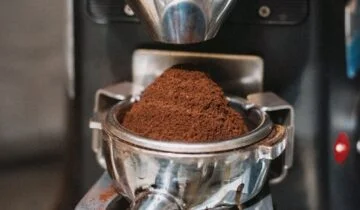
- Dose and prep: Dose your freshly ground coffee into the dry portafilter. Distribute and tamp your puck as you normally would. This puck preparation should be swift to minimize the time the group head is left idle.
- Lock and brew: Immediately lock the portafilter into the group head and begin your second extraction.
By following this routine, you create a thermal rhythm, ensuring the group head is at a very similar temperature at the start of each shot.
Tips for speed and ultimate consistency
Once you have a basic workflow down, you can incorporate additional tools and techniques to improve both your speed and the quality of your consecutive shots. The goal is to make every action deliberate and efficient, reducing the time between extractions and keeping the machine’s temperature as stable as possible.
Consider this optimized approach for serving multiple people:
| Technique | Description | Impact on Consistency |
|---|---|---|
| Pre-dose your beans | Use a scale to weigh out the beans for each shot you plan to make into small cups or cellars. | High. Ensures identical coffee mass for each shot, removing a major variable. Speeds up workflow significantly. |
| Use a group head thermometer | An aftermarket thermometer that screws into the E61 group gives you a precise temperature reading. | Very High. Takes the guesswork out of the cooling flush, allowing you to start every shot at the exact same temperature. |
| Prepare multiple portafilters | If you have a second portafilter, you can have it cleaned and ready for dosing while the first shot is pulling. | Medium. Primarily a speed enhancement, which indirectly helps thermal stability by reducing idle time. |
| Master your puck prep | Utilize tools like a Weiss Distribution Technique (WDT) tool and a calibrated tamper to ensure every puck is identical. | High. Eliminates channeling and ensures even extraction, making shot-to-shot comparisons more reliable. |
By integrating these practices, you move from simply making coffee to crafting it with intention. The less time the machine sits idle between shots, the less temperature management you’ll have to do. A fast, efficient workflow is a thermally stable workflow.
In conclusion, mastering back-to-back shots on an E61 espresso machine is a rewarding skill that elevates your barista game. It’s not about complex magic but about understanding the principles of its thermosiphon system and developing a disciplined, repeatable routine. The core of this routine is diligent temperature management, primarily through a well-timed cooling flush, which ensures each extraction begins under identical conditions. By cleaning your equipment promptly, preparing your next dose efficiently, and executing a consistent flush, you create a rhythm that tames the machine’s thermal swings. Incorporating tools like a scale and a group head thermometer can further refine this process, moving from guesswork to precision. Ultimately, a consistent workflow is what transforms your beautiful E61 into a reliable powerhouse, capable of producing exceptional espresso, shot after shot.

 No products in the cart.